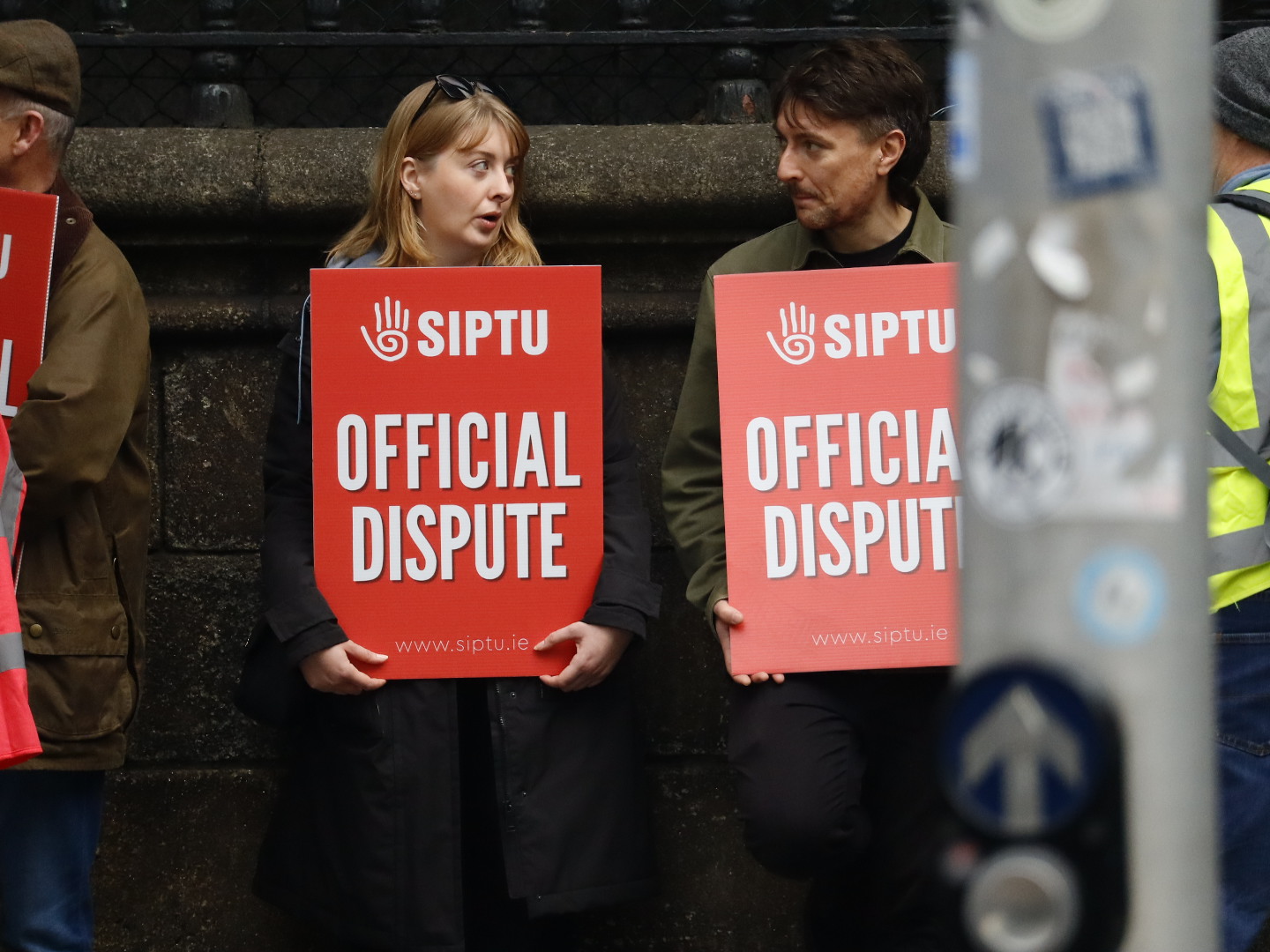

According to official College communication, all campus activities, including lectures, labs, and tutorials, will remain open on Thursday. Public sector-wide industrial action is currently suspended after the Irish Congress of Trade Unions (ICTU) and the government came to a 10.75 per cent pay agreement in the early hours of the morning, a last-minute move to prevent a sector shutdown. The deal comes after weeks of contentious negotiations and protests from public sector workers after talks opened following a 24-hour work stoppage on October 14th.
“Trinity will be open […] for business as usual”, Chief Operating Officer Noel Gorman and Vice-Provost Orla Shiels wrote in a college-wide statement. Ahead of last month’s strike, Dr Shiels announced a preparedness group established by Dr Gorman, which has since provided updates to staff and students about College operations in relation to industrial action.
The proposed deal seeks to alleviate some of the key demands unions have prioritised since the deal’s predecessor (10.25 per cent) expired in June of this year, primarily the issue of fair pay. The government initially proposed a 7.75 per cent agreement weeks prior, and a 10.5 per cent agreement several days ago.

ICTU agreed to suspend action to allow unions to ballot their members and consider the proposed deal. Fórsa, the Services Industrial Professional Technical Union (SIPTU), Irish Nurses and Midwives Organisation (INMO), and the Irish Federation of University Teachers (IFUT), among others, have been unwavering in their efforts for a better pay deal. Legally unrecognised groups like the Postgraduate Workers Organisation (PWO) have also been staunch allies of the workers’ unions, citing their own demands to be recognised for their status as workers among other key pillars.
The revival of public sector strikes came after weeks of fruitless negotiations for trade unions. Industrial action would have aligned with the arrival of dozens of European leaders in Dublin for a host of meetings, dinners, and assemblies as part of Ireland’s EU Presidency. Heavy traffic is predicted for the duration of the week as a result, with significant road closures and diversions making it difficult to head into the city centre.
Unrest arrives at a precarious time for Irish universities regarding government funding. Higher education institutions severely lack funds necessary to adequately invest in Ireland’s future, with Provost Linda Doyle estimating a third-level education sector deficit of €250 million. Ireland currently sits in 36th place out of 37 Organisation for Economic Co-operation and Development (OECD) countries, yet to make up for massive economic losses sustained in the 2008 financial crash.
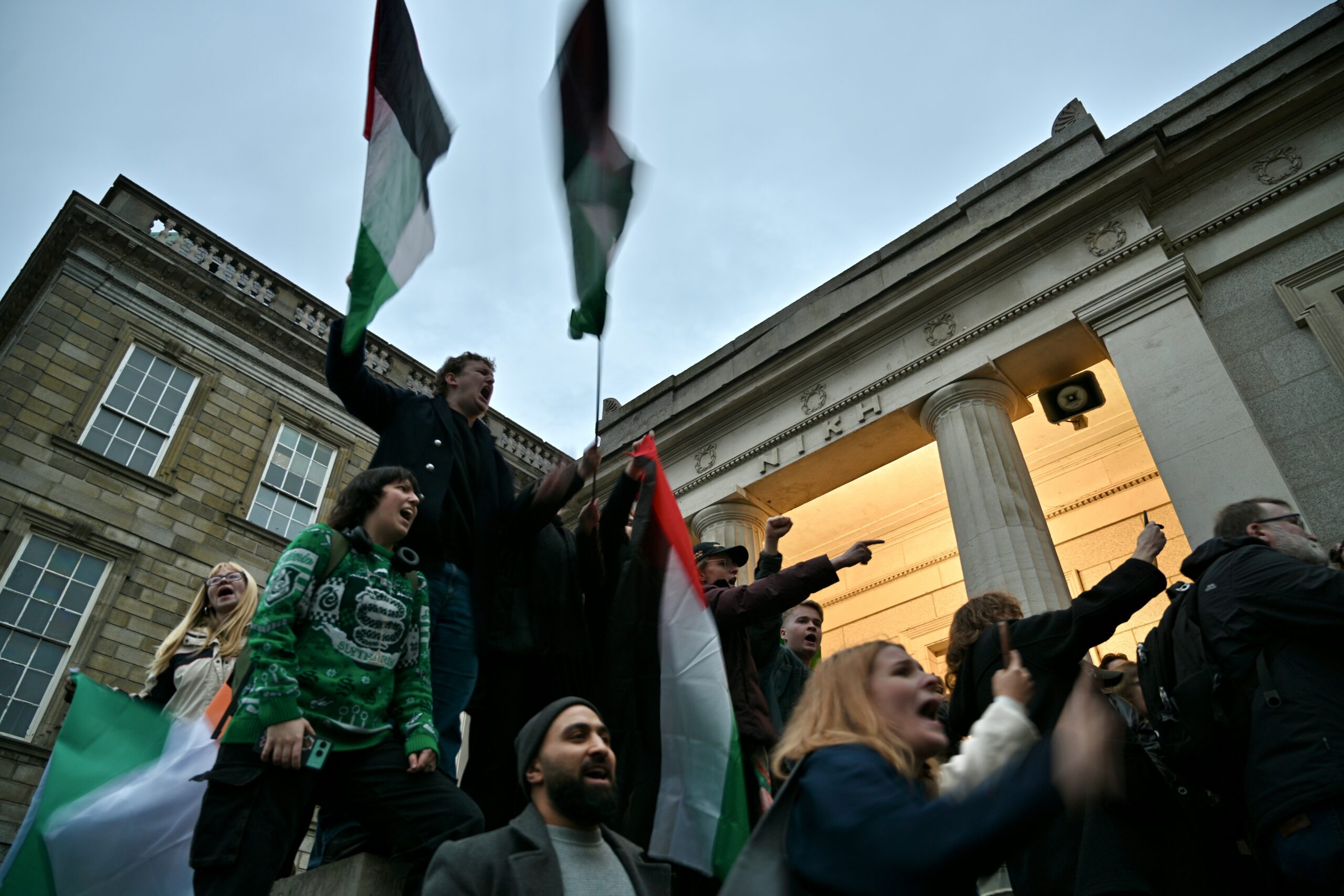
While a win for unions, the deal appears to have no clear benefits for postgraduate researchers — who are still classified as students by the Irish government. PWO, while an ally to the public sector, has strayed from official union action in choosing to demonstrate on October 21st despite unions suspending their participation.
PWO and its members are not alone. Across the globe, PhDs are striking in demand of improved pay and protections. Harvard’s Graduate Students’ Union is now weeks into its second set of strikes this year, holding a host of demonstrations on campus. Their demands closely align with PWO’s, including “higher wages and benefits, protections for noncitizen workers, and an independent process for harassment and discrimination complaints”. At George Washington University, graduate students reached a successful collective bargaining agreement after eighteen months of negotiations.
PWO has not announced plans for continued industrial action on Thursday.