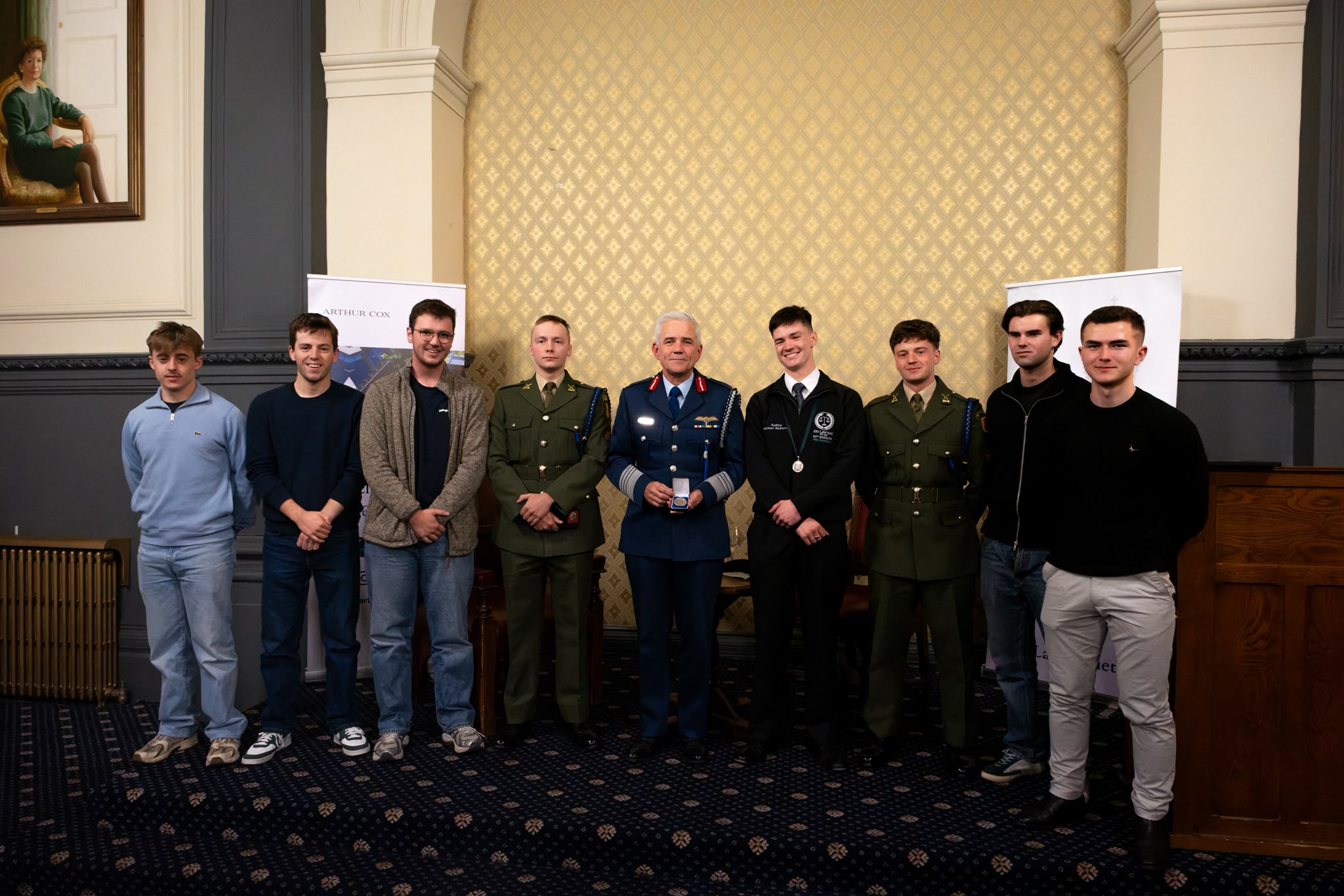

A society looking to connect students to the Irish Reserve Defence Force (RDF) is seeking signatures to be approved by the Central Societies Committee (CSC). The leaders of the petition are a group of Trinity students who are current members of the RDF.
The proposed society — which will be called DU Reserves — founded by Law Soc Editor Michael McKeever and second year law student Alex McArdle is currently made up of ten army reservists. According to McArdle, the additional eight members all joined in the last week.
The proposed society will look to “facilitate networking among reservists”. On this, McArdle said, “many of us serve in different battalions across the country, and so do not have the opportunity to encounter each other. The society would be a platform for more experienced reservists to advise new recruits on what to expect and how best to balance their studies with their service in the RDF.” He added that the society would also host informational events about the RDF and the avenues toward membership.

McArdle was clear to add that the society would not be a political one. He specifically mentioned that it would not be a platform for members of the Defence Forces to “express opinions regarding Ireland’s policy of neutrality, the Triple Lock, or membership of NATO.”
The RDF is the country’s part-time military reserve. It is made up of people who combine military training with civilian employment or study.
Their duties can include logistical support, maritime tasks, ceremonial duties, and assistance during emergencies. For example, the Naval section of the reserves were used to support COVID-19 testing in 2020. Recent changes have expanded opportunities for reservists to volunteer for operational duties domestically and overseas.
McKeever, who — on top of his duties as LawSoc Auditor — is a private in the 1st Mechanised Infantry Company Army Reserve, talked about how joining the reserves is “the best college job.” He said that people who talk to him about his service are often surprised to hear that the reserves pay their members to “learn new skills and socialise.”
To become an official society, recognised by the CSC, they must gather 300 signatures. McArdle told the university times that, at the time of writing they have received 80 but, “still have a long way to go.”