In a recent press conference, Oxfam Ireland, CEO Jim Clarken, urged the government to “hold its resolve” and enact the Occupied Territories Bill.
The conference, held in the National University of Ireland last Monday, was chaired by Clarken, who spoke at the event, along with Senator Frances Black and Christian Aid’s Head of Advocacy and Policy, Conor O’Neill.
The conference was held in tandem with the release of the new “Stop Trade with Illegal Settlements” report to increase the pressure on the Irish government to pass the Occupied Territories bill.

Senator Black, who tabled the first version of the bill back in 2018, said:
“The time for talk and for endless debate is over”
As it stands, the bill has been amended by the government to prohibit the trade of only goods between Ireland and illegal Israeli settlements instead of goods and services as originally proposed. All three speakers spoke out against this amendment, calling for the bill “to be done and done right”.
If the current version of the bill is passed, trade of services with settlements would still be allowed, and Ireland would continue to “bankroll the genocide in Gaza”, according to Clarken.
The new report finds that services make up a markedly large proportion of trade between settlement-linked companies and the EU. This included financial services such as loans and underwriting services from large European banks with branches in Ireland.
At the conference, Christian Aid’s Conor O’Neill stated that there is no legal basis for separating goods and services and that a ban on goods would “only be partially compliant with international law”.
O’Neill also spoke of the EU sanctions placed on Occupied Crimea in 2014, which did not include the same goods/services distinction as the current version of the Occupied Territories Bill, drawing attention to this distinction’s latent “hypocrisy”.
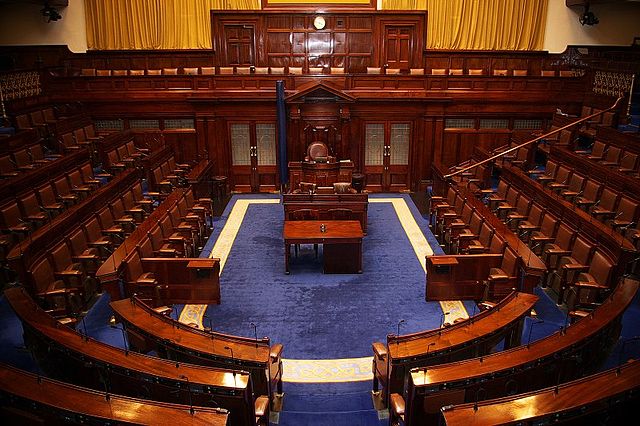
Senator Black ended the conference on a hopeful note, pledging to continue for the bill as the Dáil resumes on Wednesday, September 17th, stating that she and her colleagues are aiming for the bill to be passed by December of this year.