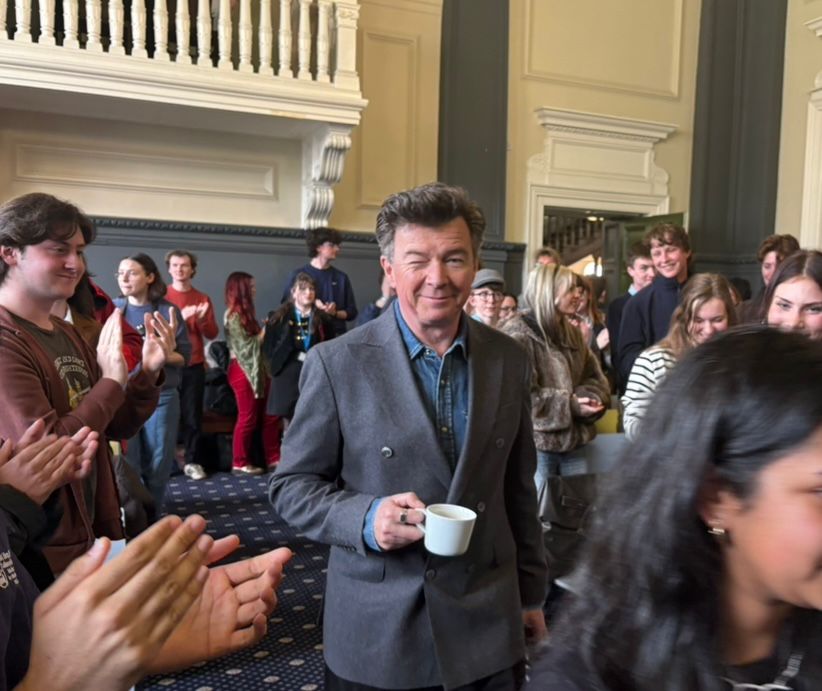
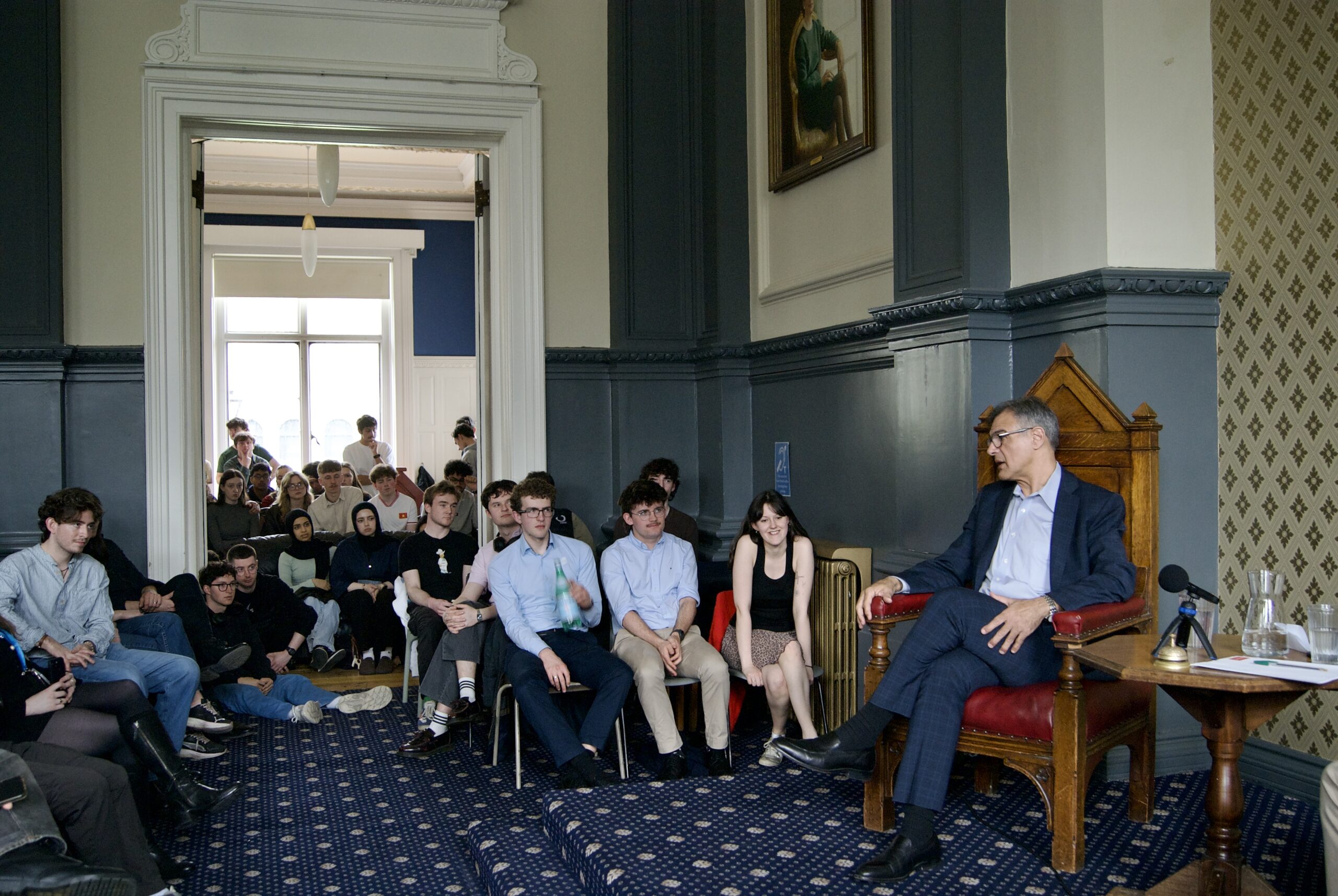
The GMB drew a new and eager crowd on the evening of Friday, September 26th, as the Dublin University Consulting Group (DUCG) hosted a panel titled “Building and Backing Start-Ups”. The event brought together veteran venture capitalist John Flynn alongside two teenage founders, Liam Fuller and Sam McCay, for an open discussion on raising capital, building companies and Ireland’s start-up ecosystem.
John Flynn, Managing Director of Act Venture Capital, has overseen more than 100 investments in the past two decades. He said that at the earliest stage of a business, what matters most is not the product but the people behind it.
“At seed stage, we’re really looking at the entrepreneur … [we] want to see a risk taker”, Flynn explained. What he really looks for is resilience and someone who is “high on passion” because of those “dark days” that you can’t let get to you when it comes to growing a business. “Failure is something you learn an awful lot from,” Flynn said. He urged the future entrepreneurs in the audience to “move on from something that isn’t working and move towards the people that can help you”.

Flynn also highlighted how the European ecosystem has matured. While venture capital was almost unheard of in Ireland in the 1990s, now, “when you jump in a taxi, everyone knows what venture capital is”. Flynn remarked that tech funding in Europe has grown tenfold in the past 15 years. Yet challenges remain, particularly at the pre-seed stage, where early cheques are still hard to come by.
The questioning then turned to McCay and Fuller, two entrepreneurs whom Flynn described in the moment as “real risk takers”.
Liam Fuller first drew attention as a teenager when his LinkedIn post depicting him taking a business call in the school bathroom went viral, racking up over three million views and even landing him a suspension from school. As the Founder of Source AI, he started with a €10,000 cheque in Dublin. Once he dropped out of secondary school, he went to Australia to find angel investors to give his company the speedy funding it needed at the time. By building momentum and even sparking competition between funds, he went on to raise millions while still a teenager.
For the two young founders, international fundraising was essential.
Sam McCay, whose company Induct has raised over half a million euros, described flying to San Francisco with only one investor meeting lined up after cold emailing around 300 investors the week prior. After a 40-minute conversation, an angel investor offered him a cheque on the spot. Much of his capital has since come from the US.
John Flynn chimed in: “If you ask for money, you get advice. If you ask for advice, you get money”, which reflected Liam Fuller’s whirlwind experience in raising funds.
Both argued that Ireland’s pre-seed environment lags behind. “The only pre-seed you can really get is Enterprise Ireland,” McCay noted. Flynn added that more generous tax reliefs for angel investors, similar to those in the UK, would help unlock that private capital. Deals from his side would take anywhere from three months to finalise.
Questioning from DUCG committee member Eric Grelet then moved to what each of the guests thought of AI’s impact on society’s workforce.
Fuller’s company focuses on applying AI to retail operations, and he argued that the timing could not be better. His team has already used AI tools to assemble early versions of their product quickly, lowering the technical barriers to building software. Fuller also described how Large Language Models (LLMs) can remove around 15 hours of manual data work per week for customers. Flynn suggested this shift could open up entrepreneurship to non-technical founders, since AI allows prototypes to be built faster and cheaper than ever before.
The panel also debated the role of higher education. Flynn pushed back on the idea that college no longer matters: “It’s a valuable experience and a safety net”. But McCay admitted he does not weigh degrees heavily when hiring, saying customer results and practical skills are far more persuasive. Fuller encouraged students to use their time in college to experiment, build projects and test ideas, even if they do not intend to finish their degree.
The event left students with a clear message: Ireland’s start-up ecosystem is improving, but early funding gaps push many young founders abroad. Still, with resilience, creativity and the ability to prove traction, it is possible to build from anywhere.