
Bruce Murphy is a Professor in the Department of Mechanical, Manufacturing and Biomedical Engineering at Trinity College Dublin. He also runs a medical device design incubator lab.
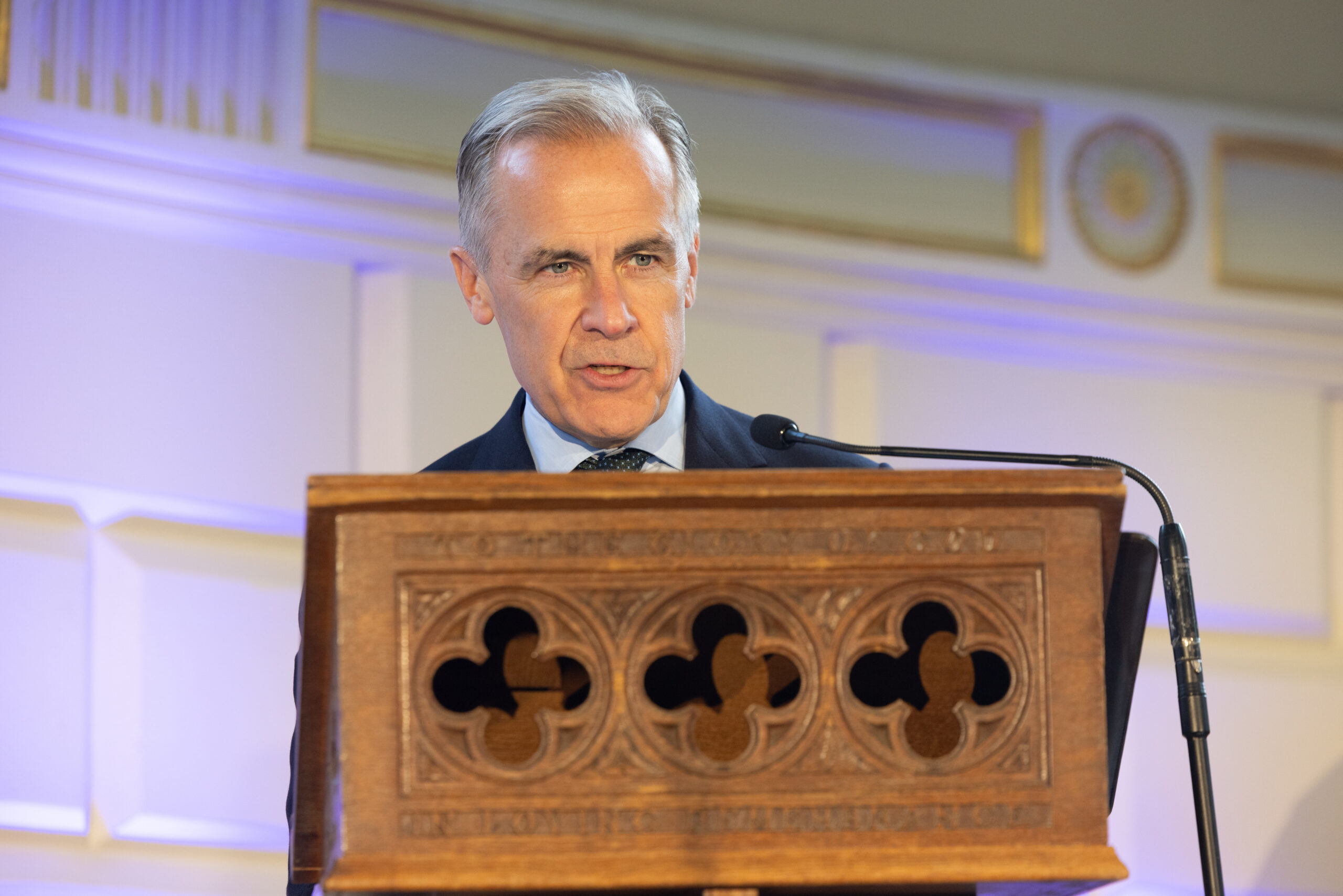
Since today marks both Canada Day and the start of Ireland’s EU Presidency, I find myself reflecting on Canadian Prime Minister Mark Carney’s recent visit to Trinity College Dublin. To be clear, I didn’t get the invite to his speech (which was mainly a tribute to John De Chastelain)!
But I did spot some interesting comments. Before he went to his ancestral home in Mayo, he called our University a “veritable wellspring for ideas, inventions and enduring moral clarity”.

And it is true.
In my specific area, which is biomedical engineering and medical device design, the wellspring is drawing many solutions to solve clinical problems for patients and clinicians.
Five medical device companies have spun out of my lab, with potentially more to come. These companies support over 150 jobs in Ireland and have raised over €200 million in capital. It is a huge success for Trinity, but it’s more than that – this kind of achievement helps Ireland maintain its role as one of the world’s most competitive medical device hubs. Across the board, more than 300 companies in Ireland work in medical technology, including 14 of the 15 top companies in the world.
When I look back at how I arrived in the position I am in, I was fortunate to have great mentors. I graduated from my PhD at Trinity, which was supervised by Prof Patrick Prendergast and continued my career working with Prof Peter McHugh at the University of Galway. This was in the late 1990s and early 2000s. I also made some great friends who remained in research, such as Fergal O’Brien at the Royal College of Surgeons Ireland (RCSI). It was not just the mentorship and friendship that drove success. There was money in the system that supported my mentors’ research and infrastructure.
A significant portion of the research money at that point in time came from the Programme for Research in Third Level Institutions (PRTLI), Ireland’s first large investment in research infrastructure and people, which kicked off in 1999 and proceeded with five cycles of funding until 2010.
This funding supported me, and a significant number of my current colleagues in academia.
It seeded the Trinity Centre for Biomedical Engineering and the National Centre for Biomedical Engineering Sciences in the University of Galway, and funded the Trinity Biomedical Sciences Institute (which is the building my lab is based in).
This investment in infrastructure and people was key to the Irish university sector becoming internationally competitive in medical device innovation.
And yet, reality bites; Mark Carney’s visit came at a time when there is enormous uncertainty around the funding for third-level education in this country. Just weeks ago, the Irish Universities Association pointed out that the Government had agreed in 2022 that the sector was underfunded by over €300 million annually. Four years on, despite massive increases in spending elsewhere, €133.5m of the original annual deficit remains compounded by new emerging pressures on student numbers and pay awards.
If universities are to continue to be the engine room of Ireland’s innovation ecosystem, they need to be consistently supported in that endeavour. And yet, a few months out from Budget 2027, the anxiety over how to keep our sector running is as high as ever.
Yes, the current Minister for Further and Higher Education, James Lawless, is promising a successor to the Programme for Research in Third-Level Institutions (PRTLI), as well as upgrades to further and higher education infrastructure and an expanded student accommodation programme. That’s all welcome.
But when I started a PhD in Trinity in 1997, I was operating in a vastly different world. It was the dawning of the free fees era, the time just before the university sector exploded. There were fewer universities and far fewer students. Back then, the government was covering the vast majority of all third-level funding across the country. Today, Trinity’s core state grant accounts for about 15% of its funding.
For a wellspring to work, it should not be drawn on for a decade, then run out, to be topped up again for a few years.
There are so many PRTLI success stories out there.
Lucy O’Keeffe completed a PhD at the University of Limerick. She is now the CEO of CroíValve, a clinical-stage medtech developing a minimally invasive device to treat tricuspid regurgitation – a severe cardiac disease, which has just completed a round of Series B funding for $36million.
This funding also supported Liam Mullins, currently the Chief Technology Officer of Perfuze, a Galway-based medtech firm working on catheter-based aspiration technology. These two companies alone are world-leading in their fields and employ approximately 100 people.
Eoin O’Cearbhaill was also funded by the PRTLI money during his PhD. He now leads the UCD Medical Device Design Group. The research group has assisted in the creation of medical device spin-out companies LaNua Medical, Latch Medical and Lia Eyecare.
There are many more examples of people and impactful medical device innovation arising from this funding cycle.
All of these people were also hugely supported in their journey by the excellent staff, funding and network that Enterprise Ireland provides. Individuals in Enterprise Ireland, such as Maura Glennon, who I worked with in Galway and in Trinity, are key to this success. Her tireless commitment to supporting innovation has facilitated numerous medical device spin-outs in Galway and Dublin.
Ireland needs a consistent funding model for universities that will ensure we can draw on our “veritable wellspring for ideas, inventions and enduring moral clarity”, thereby ensuring Ireland remains competitive as we move into a future that is changing very fast.
As Mark Carney said when he was here in Trinity, we must imagine better possibilities. Quoting Edmund Burke, he challenged us to create a future worthy of ‘those who are living, those who are dead, and those who are to be born.’
On this hopeful day for Ireland and for Europe, we want to take him up on that.