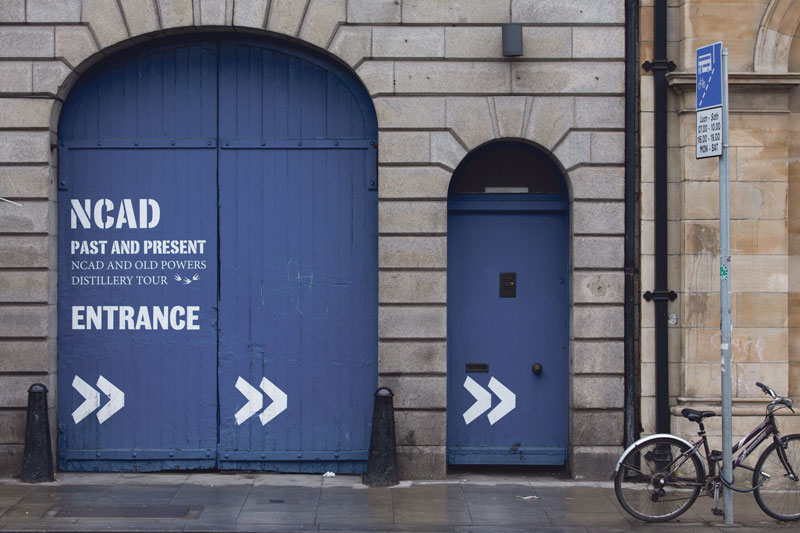

The University Times spoke with a young artist living in Gaza who is currently trying to obtain a student visa in Ireland to pursue a BFA at the National College of Art and Design (NCAD). Hasan Mohammad Hasan Al-Zaanin is 20 years old; he currently lives in Gaza City after being displaced 13 times and losing his family home in Beit Hanoun.
Right now, he posts his art online on Instagram and Twitter, and is fundraising to meet the financial requirements of the visa at https://chuffed.org/project/ireland-bfa-4-hasan.
In a conversation with the University Times, edited and condensed for clarity, he discussed his art, the visa application process, and aspirations to come to Ireland.

How have the past few years been for you? How much has your life changed?
My life has changed completely. I lost my family home and was forced to move between different areas in Gaza. I have been displaced 13 times, and each displacement meant losing another part of my life.
I lost my paintings, my art materials, my books, and many of the works I was creating at the time. Many of my ideas and projects had to be left behind because I could not return to collect them.
These circumstances forced me to stop practising art and continue my studies for long periods of time, not because I lost my passion, but because the conditions made it extremely difficult to continue. Despite this, I always tried to start again with whatever resources were available.
Your art takes many forms: photography, painting, digital art, and video. What do you see as the common connection between them? What is your favourite?
For me, all these different forms are different ways of expressing the same ideas.
Painting is the closest form of art to my heart. Every time I hold a brush, I feel a strong need to express everything I cannot always say with words. Each moment when I am able to paint feels valuable, because it means I have a chance to create, to reflect, and to transform my experiences into something meaningful.
Practising art in Gaza has become extremely difficult. Art materials are often unavailable, and there is not always a safe or suitable space where I can work and create.
When I cannot paint because I do not have the necessary materials, I turn to photography because it is the most accessible option for me. When I cannot even take photographs, I keep my ideas in my mind and wait for the opportunity to bring them to life.
Some ideas have stayed with me for years because I have not had the chance to create them yet. For me, creativity does not disappear, even when the process of creating becomes impossible.
The common connection between all my work is myself. My personality, my emotions, and the way I see the world.
My goal is to express my personal experiences and feelings through art. I want my work to reflect my own perspective and my inner world.
Do you feel that you create art because you have to, or because you want to? How do you think your art will change if you leave Gaza?
I create art because I love expressing myself through it, not because I feel forced to do so.
Art is the way I communicate my thoughts and emotions in a language that feels more natural to me than words. It allows me to express parts of myself that are sometimes difficult to explain.
If I have the opportunity to leave Gaza and continue my studies abroad, I believe my art will develop significantly. I will be exposed to different artistic approaches, meet artists from different backgrounds, and gain new experiences and perspectives.
Having access to proper materials and creative spaces will also allow me to develop ideas that I have carried with me for a long time but have not been able to fully realise.
What inspires you?
My greatest motivation is my desire to become an artist who can express himself honestly.
Alongside my own artistic practice, I organise art workshops with children, young people, and artists in Gaza. Through these workshops, we try to create a safe space where participants can explore themselves, share their experiences, and express their emotions through art.
Working with young people inspires me deeply. Seeing them create and hearing their stories brings me back to my own artistic practice and reminds me why I continue creating.
Where do you get your materials from? Do you lack anything?
Access to art materials in Gaza has become extremely difficult. Because of this, we sometimes try to create using whatever resources are available and find alternative ways to produce artwork.
For me, the need is not only about having materials for myself. I especially want to provide resources for the children and artists who participate in our workshops.
These spaces give them an opportunity to express themselves, create artwork, and eventually share their experiences through exhibitions and artistic projects.
What is your internet connection like? You share your art online; how easy or difficult is that?
Internet access is a major challenge. Many times, we have to travel long distances just to find a place with a weak connection that allows us to send messages, communicate, or share our artwork online.
This difficulty affects not only my ability to share my art, but also my ability to apply for universities, scholarships, and opportunities that could support my educational and artistic journey.
How often do you think about leaving?
I think about leaving every day because my main goal is to continue my education and develop my artistic career.
I do not see leaving as abandoning my connection to Gaza. I see it as an opportunity to learn, grow, and gain experiences that I can carry with me in my future work.
What I hope for is simply the opportunity to continue my education and pursue my dream as an artist, like any other student.
How do you feel about leaving?
I would be happy because leaving would give me the opportunity to continue my education and develop my artistic career in a new learning environment: something I have dreamed of for a long time.
At the same time, I would feel sad because I would be leaving my family and friends behind, especially while they continue to experience very difficult circumstances. Leaving Gaza would not be an easy decision.
How is your family?
My family’s life has changed significantly in recent years.
We used to live together in a large family home, but after losing our home, our living conditions changed completely. We now live in a small tent of approximately 4×6 metres, which is a very limited space for a family of six.
Moving from a home to a tent has been a major change, but it has also made us more connected and more appreciative of the simple things in life.
Who taught you to become an artist?
I learned art mainly through personal experience and self-learning.
In Gaza, there are limited opportunities for studying art academically, so I developed myself through continuous practice, reading, experimentation, and learning from artists I have met both inside and outside Gaza.
Every experience and every artist I encountered contributed in some way to shaping my artistic vision.
Why did you choose Ireland?
I chose Ireland because it has a rich history in culture and the arts, and I believe it offers an environment where I can grow as an artist.
I want to study within a diverse artistic community, learn from different experiences, and develop my artistic language.
I also hope to rebuild my relationship with art in an environment that provides more opportunities for learning, creativity, and exploration.
What does the BFA programme at the NCAD mean to you?
Receiving a full tuition fee waiver from the National College of Art and Design has been a significant support because it has given me the possibility to access the kind of artistic education I have been hoping for.
For me, this programme is not only a degree; it is an essential step toward building my future as an artist.
What has the process of obtaining an Irish visa been like? What kind of work does Trinity College Dublin’s evacuation team do?
I have received an offer from the National College of Art and Design with a full tuition fee waiver for the four years of my programme. However, the scholarship only covers tuition fees and does not include living expenses.
I was fortunate to find a host family in Ireland who is willing to provide accommodation. This means that €12,500 of the expected annual accommodation cost would be covered through their support. However, I would still need to demonstrate and secure additional funds to cover my living expenses in Dublin.
According to the information available to us, the Irish government’s website states that international students are generally required to demonstrate access to approximately €10,000 per year for living expenses. However, we have been informed that students from Gaza are expected to demonstrate a significantly higher amount, approximately €25,000 per year, including around €12,500 for accommodation and between €10,000 and €13,000 for living expenses in Dublin, in addition to other costs such as flights, immigration registration fees, and health insurance.
For a four-year undergraduate degree, this could mean that a student may need to demonstrate access to approximately €100,000 in total. This amount is extremely difficult for me to secure as a student from Gaza, especially when my tuition fees are already covered by a university scholarship.
The biggest challenge for me is that I am still trying to understand exactly what financial requirements I need to meet in order to be considered eligible for a visa and evacuation process.
These requirements have created a great deal of uncertainty among Gazan students who have received university offers. Many of us are trying to understand whether meeting the financial requirements alone would guarantee the possibility of obtaining a visa and being able to travel.
I only became aware of the details through the efforts of student advocates and organisations supporting Gazan students. I am grateful for everyone who has been trying to support us, but there is still confusion about the exact process and what students need to do to have a realistic chance of obtaining a visa.
My hope is that there will be clearer guidance, transparency about the requirements, and a practical pathway for students who already have confirmed university places and scholarships to continue their education.
Do you have friends or contacts whose visas to Ireland were refused or accepted? How did they feel?
Yes, I know some students who have faced significant difficulties during this process.
For many of them, these educational opportunities represented an important hope for continuing their studies and building their futures.
When a student faces major obstacles after years of hard work to reach an educational opportunity, it can be extremely difficult emotionally, especially under the circumstances we are currently experiencing.
Do you feel that things are moving forward?
At the moment, I feel that the process is still very challenging, but I am continuing to look for solutions.
I believe that clearer communication between students and the relevant organisations could make the process easier and more understandable for everyone.
How do you feel?
When I felt that this opportunity might be at risk, I felt anxious and afraid of losing an important part of my future.
However, I am still trying to hold on to hope because I believe that education and art can open new paths, and that the effort I have made over the past years deserves a chance to continue.
What would you like anyone reading this in Dublin to do?
I hope that people who read my story can support students who are facing similar challenges, whether through practical support, sharing their stories, or helping their voices be heard.
For me, any support that helps me meet the required living costs or access this educational opportunity would make a significant difference.
I also hope there can be greater understanding of the challenges faced by students coming from exceptional circumstances, and that they can receive clear information and fair opportunities to continue their education.
Is there anything else you would like to add or make sure everyone reading this understands?
I want one simple message to reach people: behind every university application there is a person with a story, dreams, and ambitions.
I am not only looking for an opportunity to leave a difficult situation. I am looking for an opportunity to learn, develop myself as an artist, and one day return with the knowledge and experience I gain to continue working with children, young people, and artists in my community.
I hope people can see my story as the story of a student and artist who is trying to protect his dream despite all the challenges.
See Hasan Al-Zaanin on Instagram here: https://www.instagram.com/hasan._elzaneen/
See Hasan Al-Zaanin on Twitter here: https://x.com/hasan_elzaneen?s=11
See Hasan Al-Zaanin’s fundraiser here: https://chuffed.org/project/ireland-bfa-4-hasan