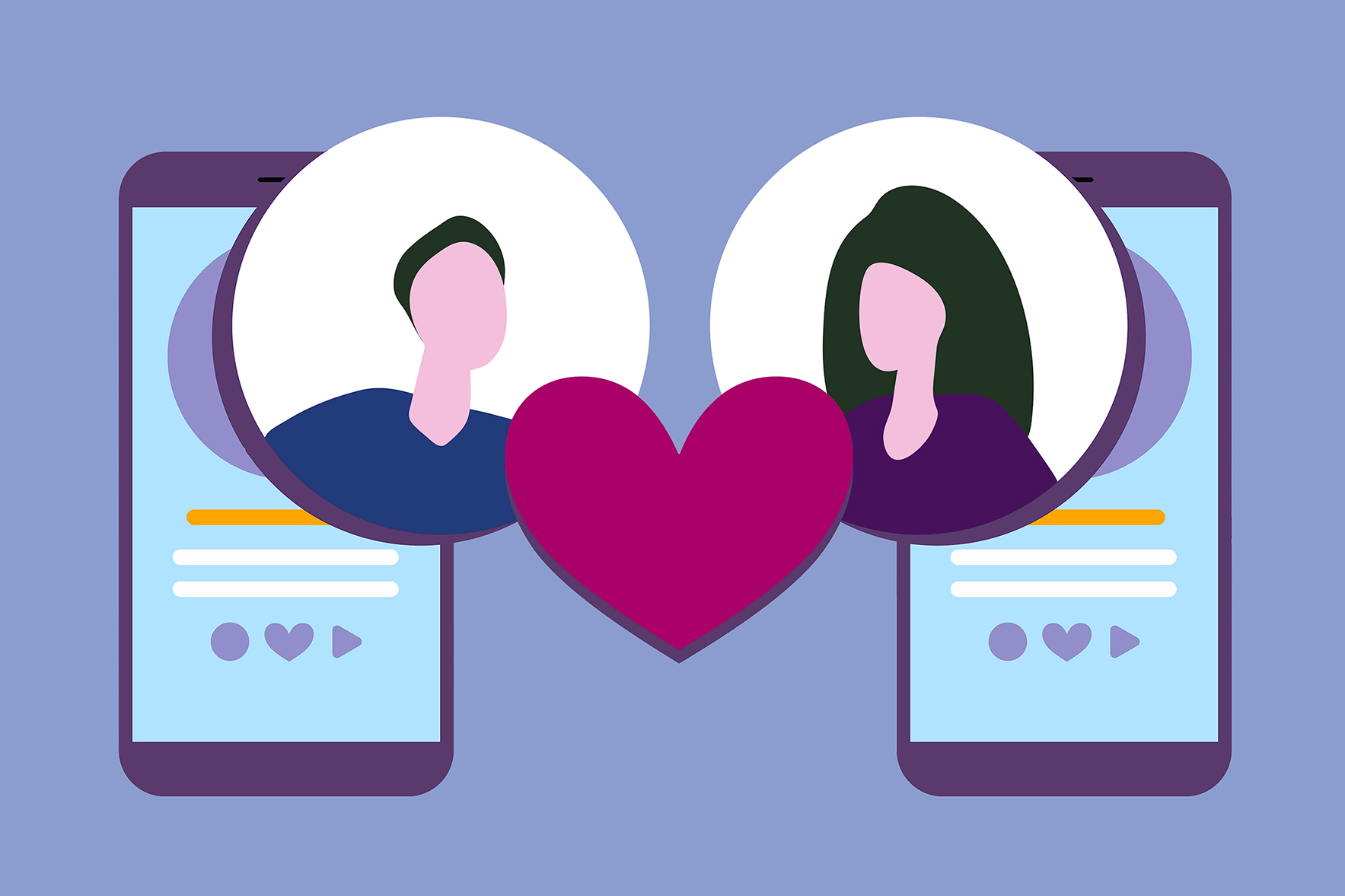

He was sitting alone at the bar, and I sat down beside him. We got to talking, and he bought me a drink, but — of course — this exchange was digitally premeditated. I had already surveyed him, and not from across a crowded pub or lecture hall. Instead, I came across a total of six curated pictures and three sarcastic prompts, and from that, I decided he was worthy of a date. In other words, we matched on Hinge.
The lights were low, and the music was just loud enough to warrant some disruptive “whats?” or hollow laughs when I still didn’t catch the story he repeated. We were sitting close enough to comfortably touch. The setting could be Fidelity in Smithfield, Big Romance on Parnell, or Caribou at the end of Drury Street. The place is interchangeable, and the cocktails are all equally expensive. The guy may be interchangeable, too, but at least he’s the one paying. So, we talked. Maybe we ran out of things to say, maybe we hit it off, maybe we went back to his place. But in the end, he says he had a good time, and I say I did, too. Naturally, we don’t reconnect, and he’s destined and damned to be the first viewer of all of my Instagram stories, and the last person I would want to encounter in a future tutorial. But that’s all right. I have another date lined up next week.
It’s an anecdotal story, but it’s not exactly mine. In fact, the “I” could be just about any student at Trinity. When asking a friend or acquaintance how their love life is going, it’s nearly inevitable that they will bring up Hinge, and it’s likely their most recent conquest will sound a lot like the scene I imagined. Dating apps are integral to the romantic habits on campus, and therefore the default topic when it comes to discussing love.

The consensus of these conversations solidifies a certain mood on campus: Our relationship with Hinge is dire and thankless at times, but in the long run, it’s a relationship that yields a surplus of algorithmically delivered suitors, and a surplus of sex. It’s ultimately a stoic, resilient philosophy. A bad date can be easily remedied by going on another, and a rough breakup only gives you more of a reason to find a quick, available rebound. If your standards are low, and your libido is high, there is no real excuse for celibacy.
This mood takes its most realised form in the infamous Instagram account Tringe, where students write rather prolifically (and at some points fictitiously) about their abundant comedic sexual escapades and desires. Online, a rosy picture of college romance appears, and it suggests that dating at Trinity must be full of carefree debauchery. We’re sensual, highly social, and sexually uninhibited. But to parrot a neo-Luddite cliché, what we see online is likely not what it seems. Unfortunately for Tringe’s worldview, a reliance on dating apps is anything but social. On the contrary, it fosters a deep-rooted avoidance.
If experts have already declared social media socially atomising, it is no far cry to claim that it’s not just our platonic social skills that are eroding. Our flirting abilities, too, have sustained a critical blow. It is much easier to craft a witty text back than it is to organically banter. Who needs to practise the quick and careful art of face-to-face rapport when you can turn off read receipts and choose your next words prudently? Why graze their arm and finally break the touch barrier if you can more easily hide behind the emotional fortress that is your phone?
The appeal of dating apps lies most critically in their ability to provide clarity. If someone likes your profile, and you like theirs, it is already established that there is a baseline level of mutual attraction, or at the very least, aesthetic appreciation. And from a single page, you will know if they’re looking for a short-term relationship, and if they’re open to one that is long-term. You’ll know their zodiac sign, if they’re a smoker, if they plan on having any kids down the road. There is nothing inherently surprising about seeing them on a date because you’ve already cautiously prepared. At most, you just have to hope that they’re not a disguised serial killer or conman, and with Hinge’s verification feature, that worst-case scenario is almost impossible.
But this curated clarity rarely lends itself to romance. Time after time, a Hinge date will fail to ignite a spark. But this is a natural feature of dating apps, not a one-off bug. With the invention of online dating, we have forgotten that attraction is enigmatic, and not a sensation to be algorithmically decided. Technology strives to optimise every aspect of life, but it robs us of truly living in the process. Love, like all other aspects of the human experience, should not be frictionless. It is in longing and ambiguity where romance grounds itself and flourishes.
When we lose the tools to express ourselves intelligently and emotionally — or, most critically — exist in uncertainty, we will succumb to crippling anxiety and avoidance. If we cannot comfortably be left to our own devices without a mediating screen, we are robbing ourselves of true interpersonal connection. Ambiguity is frustrating, excruciating, and above all, painful. Yet that pain is a sign of emotional growth. It takes no effort to dismally doom scroll through a collection of faces, making split-second judgements based on some curated, aesthetic value these people may or may not have. It takes more courage to look someone in the eyes and ask for their name than to send off a like, hoping for a witty response in return. The heart is a muscle, and like any other form of exercise, you can’t do reps on your phone. Go to the bar, buy yourself a drink, approach a stranger, and train it. If it breaks, you’ll only be stronger.