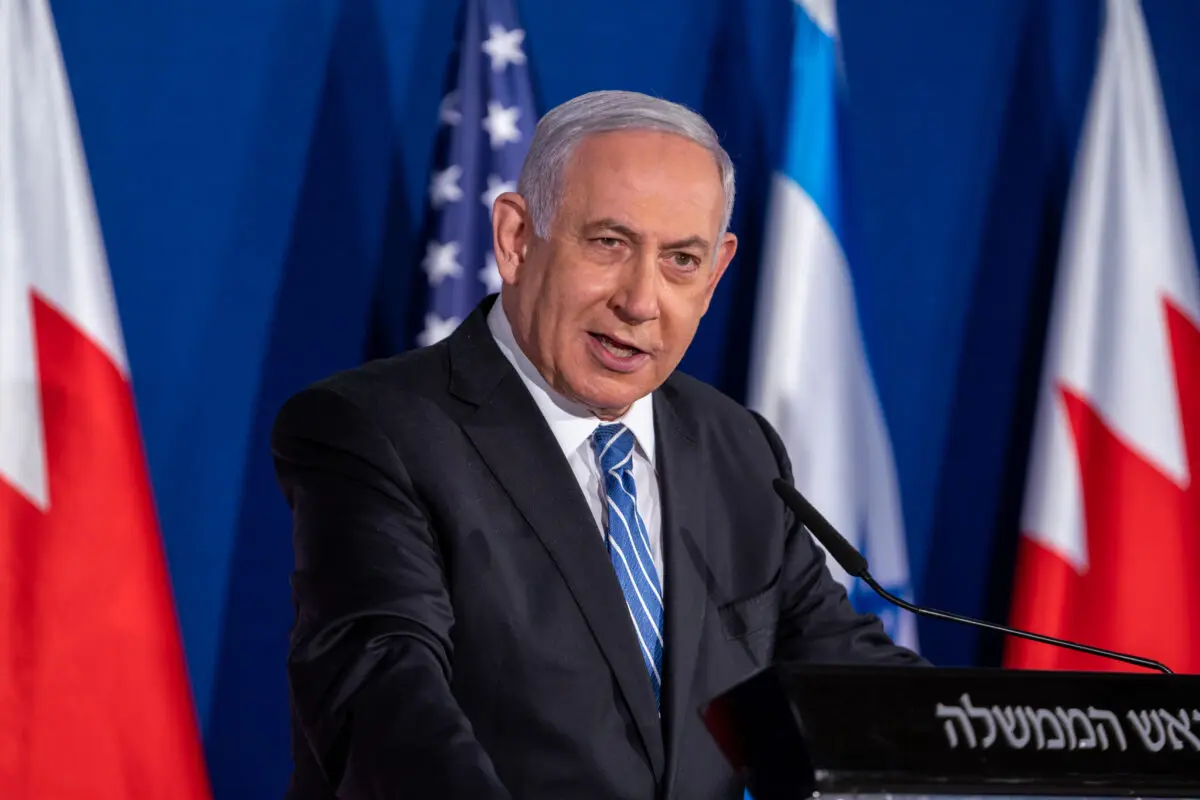

Yesterday, Israel went to the polls in an election that many of its citizens regard as the most important since the state was founded, as Time correspondent Gabrielle Weininger said. This is not hard to believe, since the stakes are perceived as existential by the population, which will vote for the first time since October 7th. In recent years, much has changed, both within the country and in how it is perceived abroad. Exit polls have not yet shown a clear winner.
On the international stage, particularly in Western societies, perceptions of Israel have shifted radically. Settlers’ systematic violence in the West Bank and the genocide in Gaza that has killed more than 73,000 people in Gaza have alienated most of its support among its historic allies. Various states, including the UK and France, have recognised Palestine and recently denounced Israel’s illegal settlement activity in the West Bank. Nonetheless, Israel’s government has maintained solid relations with its most important ally, the US, with Trump endorsing Netanyahu’s election campaign. On Truth Social, Trump said: “Vote for Bibi Netanyahu for Prime Minister, we have to finish the job that we started!”
The situation has also changed within Israel’s borders. October 7th diminished the population’s perception of safety, while the militarisation of public life has strained the country’s order. Meanwhile, a crucial demographic change is now upending the balance within society.

A sense of distance from its traditional allies and a sense of insecurity and violence towards external and internal enemies seem to be the current trends in Israel’s politics ahead of the election.
Israel’s election: how does it work?
The voting system is proportional and representative, so the citizens will vote for a single party, which will then occupy a proportional number of seats in the parliament. The Knesset, Israel’s unicameral parliament, has 120 seats, meaning a government must hold 61 of them to have a majority. In the country’s history, no party has ever won a direct majority; therefore, it has always been a game of coalitions to form a government.
The official results will be published on November 4th. Israel’s president Isaac Herzog will then consult with party leaders and invite the leader with the best chance to form a government. On paper, it is a simple process but, in fact, is very long and difficult. The consultations could go on for weeks, and if no candidate succeeds in forming the government, new elections would be called, with the outgoing prime minister who will act as a caretaker during that period.
Cooperation between Israeli parties is difficult, and the spectre of a government impasse is real. Interviewed by Israeli broadcaster Ynet, President Herzog said: “he would do absolutely everything he can to prevent repeat elections”.
Who is in Netanyahu’s coalition, who are his rivals and who is ahead in the polls?
Netanyahu’s reign has lasted for 19 years, from 1996 to 2026, and his party, Likud, is still the one to beat. To govern over the last four years, he had to lead an extended coalition, which has been the most right-wing government in the country’s history. Indeed, his coalition included both the ultra-Orthodox parties UTJ and Shas and the far-right parties captained by Bezalel Smotrich and Ben Gvir. The latter two were crucial voices in Israel’s most violent actions in the past years and will likely be present again in a Netanyahu coalition, with Ben Gvir wanting to become defence minister. To exemplify his position, The Guardian reported that he set out a plan for “an illegal forced displacement of 2 million people” in Gaza, with the goal of a complete forced emigration in seven years. As the Financial Times predicts based on the average of polls, this coalition is projected to obtain 51.2 seats on average and will rely on post-election negotiations to form a majority.
Neck and neck in the same prediction, with 51.6 expected seats, stands what could become an opposition coalition, which now seems just a puzzle of different identities. The big name in this coalition would be Gadi Eisenkot, who formed his “Yashar!” party only last year and lost his son in Gaza. He was chief of staff of the IDF and part of Netanyahu’s government. Alongside him could be formed a motley and extended coalition which could include Yair Golan’s Democrats — the most left-wing and the only one open to talks with the Arab parties — and former prime minister Naftali Bennet’s right-wing party B’Yachad.
Then, with a projected average of 13.4 seats, there would be the Arab parties, representative of nearly a fifth of Israelis who are Arabs or consider themselves “Palestinian citizens of Israel”. Neither Netanyahu nor Eisenkot wants to hold talks with them, so each will do everything possible to form a majority without them.
On which subjects the election will be decided
A lot has changed since the 1993 Oslo Accords, and now almost none of the contenders are considering a peaceful option with Palestine that complies with international law. As reported by CNN, Netanyahu said: “There will be no Palestinian state, this territory belongs to us.” His coalition is supported by ultranationalist Zionists such as Smotrich, who, Al Jazeera reports, said that he wants to “cancel Oslo Accords [while] encouraging migration from Gaza and the West Bank”. But also, the opposition is on the same line: “I’ve never said that the solution is two states for two peoples” (Eisenkot, as reported by The Guardian).
Then, as David Halbfinger, Jerusalem bureau chief for The New York Times, reports, the main topic in the parties’ campaigns has been security, with Netanyahu presenting himself as “Mr Security” and claiming his results on a war on “seven fronts”. Eisenkot’s opposition, instead, holds him responsible for October 7th, insisting on a commission of inquiry, something that Netanyahu has avoided and which is now fueled by reports on the warnings he may have ignored before the attack. The opposition also warns about the judicial reform Netanyahu was pursuing, which was described as anti-democratic and led to mass protests before October 7th.
In a state of war, another huge theme is ultra-Orthodox conscription. The ulra-Orthodox Jews have a historic exemption from military service and often live in “bubbles” far away from other citizens. They are often unemployed, with low levels of secular education, and they spend their lives studying religious texts such as the Torah and Talmud. Once a minority, they now represent almost 14 per cent of society, and their participation in military duty has been seen as a priority by other groups. In 2024, a Supreme Court decision stated that they must fulfil this duty, unleashing clashes between ultra-Orthodox Jews, the police, and other Israeli citizens. Netanyahu, heavily supported by x ultra-Orthodox parties, promised to work to overturn the verdict, while Eisenkot’s opposition supported it.
This issue is linked to a crucial development happening in Israel: the demographic transformation. As Asia Times reports, then-president Rivlin said in 2015, “Israel is a society of four tribes”, warning that these groups were living in separate entities and developing radically different styles of life and ideas. According to the Israel Democracy Institute, ultra-Orthodox families have 6.5 children on average, while secular Jews only have about 2. This points to a significant shift in the population balance, with the ultra-Orthodox and Religious Zionists, a growing political power with radical views, claiming more space in the new government. This is then a crucial factor behind why, for different groups in Israel’s population, this election is perceived as the most important ever.
Palestine and the West Bank
That said, what would it mean for the people in Gaza and in the West Bank?
This is the main theme on which most of the world is turning, but, as emerges from the analysis of parties’ speeches, and as David Halfbinger said, “Palestine is not so much discussed, for them [Israelis] it is more about the fate of their democracy”.
After years of destruction, killings, and crimes in which Israel annihilated thousands of civilians’ lives with its aggressive actions, this election could have been an opportunity for those people to hope for a different future. But whoever wins, for Palestinians, there seems to be little hope of change.
As we analyse the election’s results, we should not forget how it will affect the lives of millions of people.