
“What credibility do we have if we continue to stand idle in the face of Gaza?” Emmanuel Macron declared at his final United Nations General Assembly address last month. One year earlier, 12 countries, including France, the UK, and Canada, had recognised Palestinian Statehood for the first time. Initially, this seemed to be a historic step forward and the “beginning of the end of the bloodshed in Gaza”; today, however, it is clear that not much has changed. The truth is, as Ireland’s Micheál Martin has pointed out, the international community has “failed Palestine”, and the ongoing inaction of the countries who have so far recognised its statehood has, frankly, been embarrassing.
Three years after the brutal violence and systematic killing in Gaza began, France, the UK, and Ireland have finally recognised Palestine. An estimated 70,000 people have been killed in Gaza, according to the Ministry of Health, a figure likely far higher, given how many journalists have died, making accurate reporting impossible. Meanwhile, the United Nations has put forward the “New York Declaration”, a 42-point document signed by the above-mentioned countries, promising help and aid; however, have they actually delivered? In reality, not nearly enough.
France

France’s recognition of Palestinian statehood in 2025 followed fierce public backlash against President Macron and his record of suppressing Palestinian demonstrations and protests. In fact, according to Radio France Internationale, France banned mayors from raising the Palestinian flag on public buildings on the very day it recognised Palestinian statehood. This has set the tone for French policy, which has expertly staged a “performance” of solidarity with Palestine while in reality granting further concessions to Israel.
The goals of French recognition of Palestine have been, in Macron’s words, “to revive the Two-State solution”, “disarm Hamas”, “empower the Palestinian Authority (PA)”, “reevaluate trade agreements with Israel”, and “end military conflict and facilitate relief”. This has been reflected in the New York Declaration, along with the requirement to release hostages captured by Hamas. In reality, France has failed on all but a few of these goals. To its credit, France has ended trade with illegal Israeli settlements in the West Bank (which have surged by 40% since 2023) and helped facilitate the return of hostages, finalised in January 2026. Yet much remains unfulfilled. Despite claims by Prime Minister Sebastien Lecornu on June 6th 2025 that “There are no weapons being sold to Israel”, this is patently false. According to a report by People’s Embargo for Palestine titled “EXPOSING FRENCH MILITARY SHIPMENTS TO ISRAEL”, France has flown at least 525 shipments of military-related equipment to Israel since October 2023, including 117 fighter jet parts between April 2025 and October 2025, during and after the period of French recognition of Palestine.
UK
The UK’s policy and conduct since recognising Palestinian statehood has largely mirrored France’s: it too has signed the New York Declaration and publicly condemned Israel, yet within its own borders it has systematically and aggressively suppressed free speech on the question of Palestine. The UK officially banned Palestine Action, an organisation which coordinated protests across Britain in July 2025, a mere two months before its formal recognition of the State in September. Palestine Action simply promotes “civil disobedience and non-violent direct action”. Since then, over 3,600 people have been arrested for peacefully protesting in support of a “terrorist organisation”.
Britain’s conduct abroad has not been much better than its conduct at home. The government claims to be “fully committed” to ending the genocide and lifting the blockade in Gaza, yet conditions for survival there remain as grim as ever. Israel’s “Yellow Line”, a so-called military withdrawal position, has continued to move westwards, squeezing Palestinians into an ever-smaller area. Médecins Sans Frontières (Doctors Without Borders) reports treating more than 1,200 cases of violent trauma in June and July alone, while skin diseases and dehydration continue to run rampant, proof that the “ceasefire” in Gaza is a ceasefire in name only.
Ireland
Europe, including Ireland, continues to serve the interests of the United States and, by extension, Israel. While the Irish people have been among the most steadfast supporters of Palestine in Europe, their government has failed to follow suit. Ireland is Israel’s second largest trading partner worldwide, behind only the United States. This is due in large part to its economic reliance on the US and other multinational tech companies, whose imports contain parts such as electronic integrated circuits, semiconductors, and high-tech components, amounting to more than €3 billion in trade, according to Al Jazeera.
Unlike France and the UK, though, Ireland has been a global leader in Palestinian advocacy and diplomatic support. Ireland is one of the first European countries to recognise the state of Palestine and joined the South African case against Israel in the ICJ, accusing Israel of committing a genocide. Ireland has also contributed funding to international relief agencies, such as the UNRWA, Red Cross and more since before the genocide. However, this means very little in reality. Faith in international institutions is at an all-time low, as it has become all the more obvious that the power and influence of the US and Israel prevent any institution from enacting any real change.
Conclusion
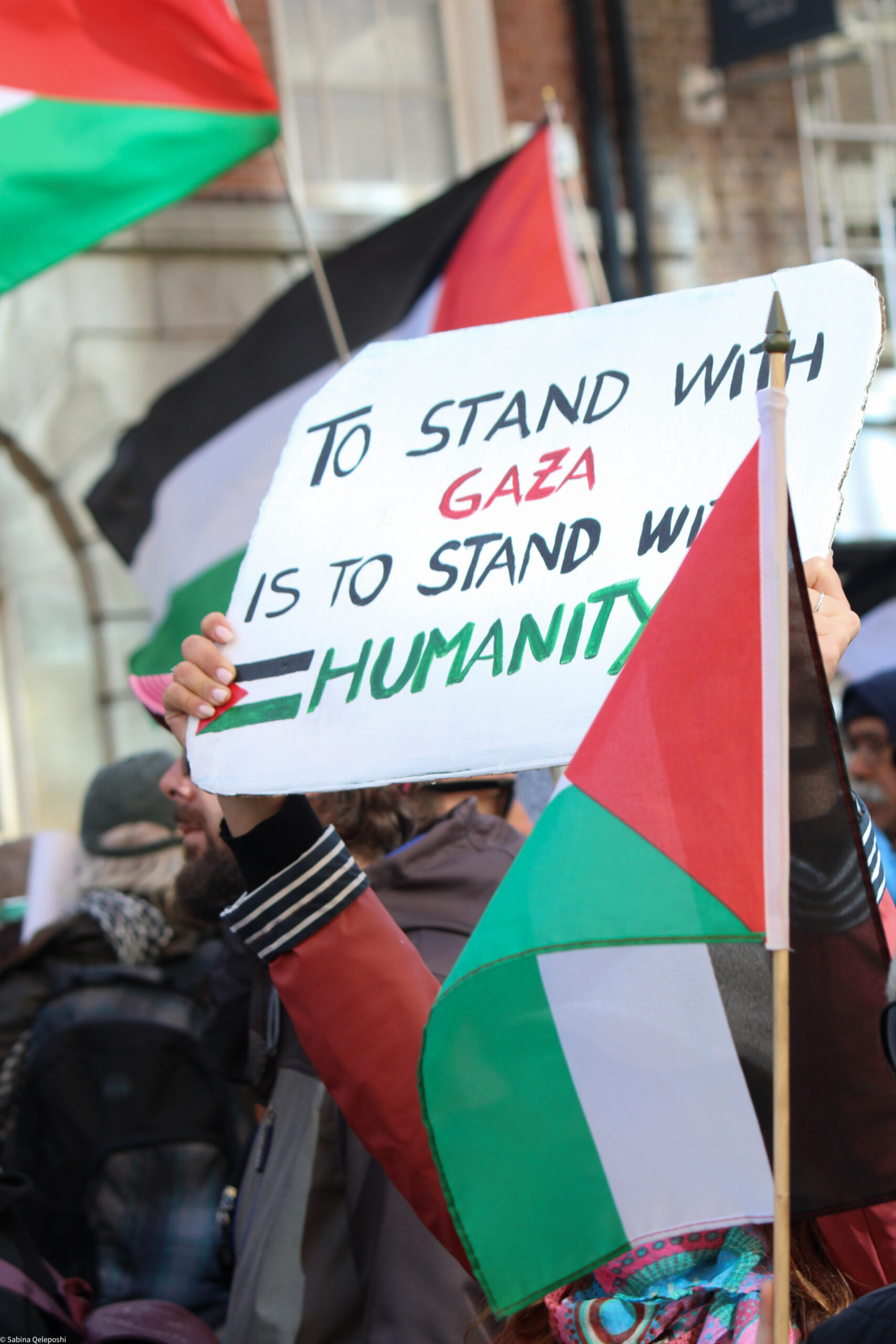
The truth, unsurprisingly, is that the world has failed Palestine. Global and European states have maintained the facade of doing their utmost to support Palestine, yet in reality their actions have brought more harm than good upon its people. All the money these states claim to have given towards Palestinian aid has barely kept Palestinian lives afloat, with most of it never even crossing international borders due to the blockade. State leaders may “take responsibility” as often as they like, but it falls to citizens to hold them accountable. As long as the Palestinian people continue to suffer, people must take direct action to challenge their complicit states into honouring their so-called promises.