
Media freedom is the cornerstone of any democratic society. Recognition of its importance stretches back to the writings of 17th-century English poet John Milton, who argued vigorously against licensing laws which restricted publications criticising the government. It is a principle that receives fundamental protection from constitutional articles regarding freedom of expression, and ultimately serves to ensure that a polity is well-informed and able to hold its representatives and governing officials accountable. To constrict this freedom is to constrain the very lifeblood of a polity and prevent the true exercise of popular expression. And this is not limited to national press and outlets but to every publication that strives to keep its viewership informed, including those published on campus. Indeed, student journalism plays a crucial role in ensuring that issues which would be neglected by established media receive necessary coverage, especially those matters directly regarding the student population. The cost of living for young people, conditions in university digs, and student union politics are all subjects which directly impact this cohort but ultimately are not given the right attention by traditional publications. Student journalism must therefore fill that gap to ensure that student voices are recognised and represented.
The importance of editorial independence with regard to student media has been highlighted by a recent report by the Student Publications Association (SPA) published just last week. The survey, which received responses from 85 student publications across the UK and Ireland, found concerning levels of encroachment by student unions on these outlets. Nearly half were published by the student unions themselves, and it was these publications specifically that criticised the lack of autonomy they possessed. One noted that their student union “had the right to take down or edit any content that they see fit”, whilst another highlighted that they were “not allowed to report anything negative about the university”. Four student unions required sign-off before anything could be published, and five of the publications did not have any independent editorial oversight from their student union. The report noted that positive relationships were defined largely by a “hands-off” approach taken by the publisher, whilst negative relationships involved obstruction or even control over the publication. The consequences of such relationships were highlighted by the likes of the Redbrick, the University of Birmingham’s student newspaper, which reported being unable to publish on issues regarding sexual assault or criticism of the university due to vague legal objections raised by their student union publisher. Overall, the report suggested that approximately a quarter of the total respondents lacked complete independent editorial oversight, and 56 per cent described their relationship with their publisher as being “negative” or “mixed”. The survey has received mainstream coverage, with the general secretary of the National Union of Journalists in the UK describing it as being “deeply concerning”.
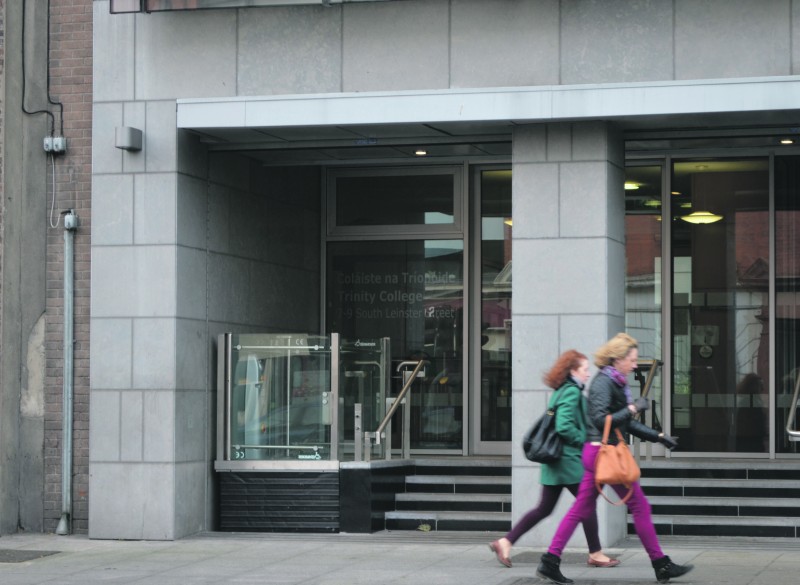
The University Times was one of the respondents to the survey, with Editor Harper Alderson describing the “breach of trust” that was caused by the referendum in October of last year. The referendum, titled “Clarifying the responsibilities of the Editor of the University Times”, had been initiated by the Trinity College Dublin Students’ Union (TCDSU/AMLCT) to create greater oversight over the role of the UT Editor through the required submission of a report at every Comhairle (this is despite the fact that the Editor cannot speak at Comhairle unless requested to do so). Furthermore, the position was made impeachable,via either Comhairle or a petition by the student body, and the Editor can be censured at Comhairle. The vote was brought about despite active opposition from the publication itself, with the Editorial Board arguing that impeachment should only be brought about by the publication’s staff themselves (a policy the paper ultimately implemented themselves in order to counteract these new measures). Alderson, who acted as the manager of the “No” campaign for the referendum, also argued after it passed that the electorate were not given the opportunity to “fully understand the implications of the referendum”, given it was brought during Freshers Week. Issues were immediately created by ambiguity over what the contents of the Editor’s report to Comhairle should contain, as well as uncertain interpretation over the paper’s budget, which resulted in two late submissions. Regardless, a motion of censure was raised against the Editor Charles Hastings, which ultimately failed (the first time, it should be noted, that such a motion had been raised against a sabbatical officer for late reports).

The report thus highlights that this referendum should not be seen in a vacuum. It represents a broader trend of overreach upon the editorial independence of student publications. Whilst on the surface, the actions taken by the TCDSU/AMLCT were simply measures that sought to create greater accountability of the paper, the trigger-happy use of the censure against Hastings over a misunderstanding reflects something more malicious. The principle of freedom of the press must be respected, no matter how much umbrage is taken with the opinion or critiques expressed in an article. Otherwise, situations occur like that which happened at Oxford University two years ago, where the students’ union pressured the Oxford Student newspaper to amend an article regarding an apology from the union to a former president or risk the newspaper’s website being suspended. This story, and those cases highlighted by the SPA’s report, therefore serve as a cautionary tale that the TCDSU/AMLCT must listen to if they wish to promote those same democratic principles that allowed their election in the first place.
In a world where the divide between reality and distortion is becoming increasingly blurred, the importance of journalism to modern society grows ever more tangible. The only antidote to misinformation is the promotion of the truth, which can only be expressed through a free exchange of information, and thus a right of editorial independence that must be granted to the media. It may be a difficult pill for student unions to swallow, considering they are funding their own criticisms and complaints, but it is a central tenet on which a democratic society is based. The SPA’s report highlights the importance of protecting this principle, both here on campus and abroad, as infringements on this autonomy must be treated as attacks on the very ability to freely express oneself. Arguments made on a questionable legal basis cannot be used to mask attempts to control the student narrative, nor to muzzle student journalism. Our student union, and every student union, must respect the freedom of the press, regardless of what that entails.