
Over recent weeks, Trinity has become awash with talk about the internal squabbling of the Workers’ Party TCD, which culminated in a heated EGM, burned membership cards and stolen books.
The story, in all its high drama, has been framed as yet another example of leftist infighting.
Less discussed on campus, however, was the Fine Gael Ard Fheis, held in Cork over the first weekend of November.

Far from inspiring a “new energy”, the same old Fine Gael was on full display as party members bickered about what exactly it was they stood for.
Tánaiste Simon Harris, in his address, lambasted social welfare recipients, tried to adopt a tough-on-crime attitude, and called for more stringent immigration policy.
His tone was no doubt a response to a grassroots motion by Fine Gael members in the run-up to the Ard Fheis, which called for the party to establish itself as distinctly centre-right, distancing itself from the “woke left”.
This motion was left on the Ard Fheis cutting room floor following the executive committees’ objections. However, the tone of Harris’s speech made it clear that its message had been heard.
Here, we saw internal squabbling in Fine Gael culminating in a hardening of positions. We saw a direct and immediate response to internal criticism through an increase in populist rhetoric.
Why is it that when the left pivots or disagrees, it’s “infighting,” but when Fine Gael does it, it’s seen as the grassroots speaking power to the executive?
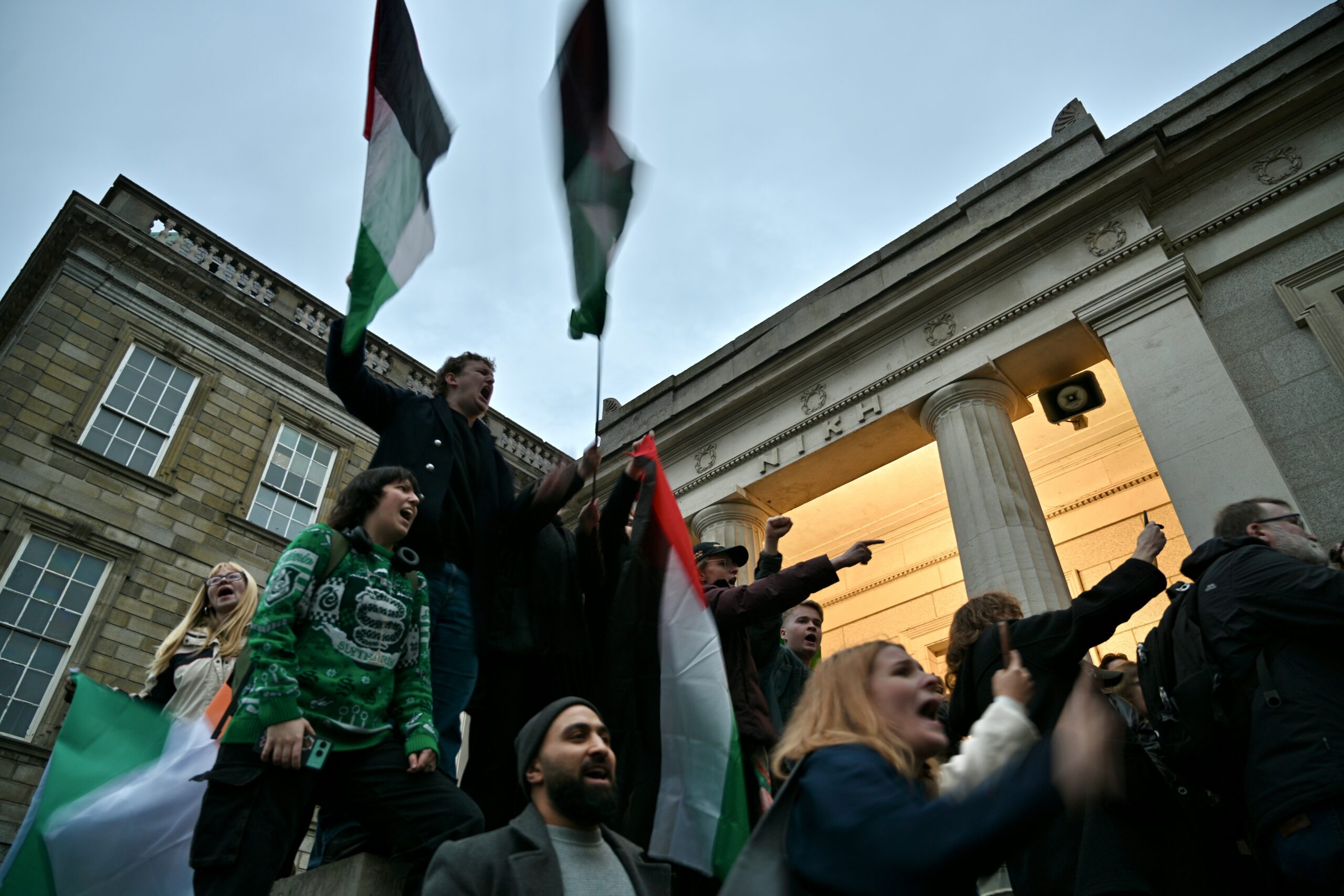
Whatever infighting or criticisms that have been rallied against the new committee of the Socialist Republican Society (formerly the Workers’ Party TCD) were surely washed away on Thursday, November 10th, when its rapid mobilisation for an emergency protest kick-started a large-scale rebuke of President Biden’s unannounced presence on campus.
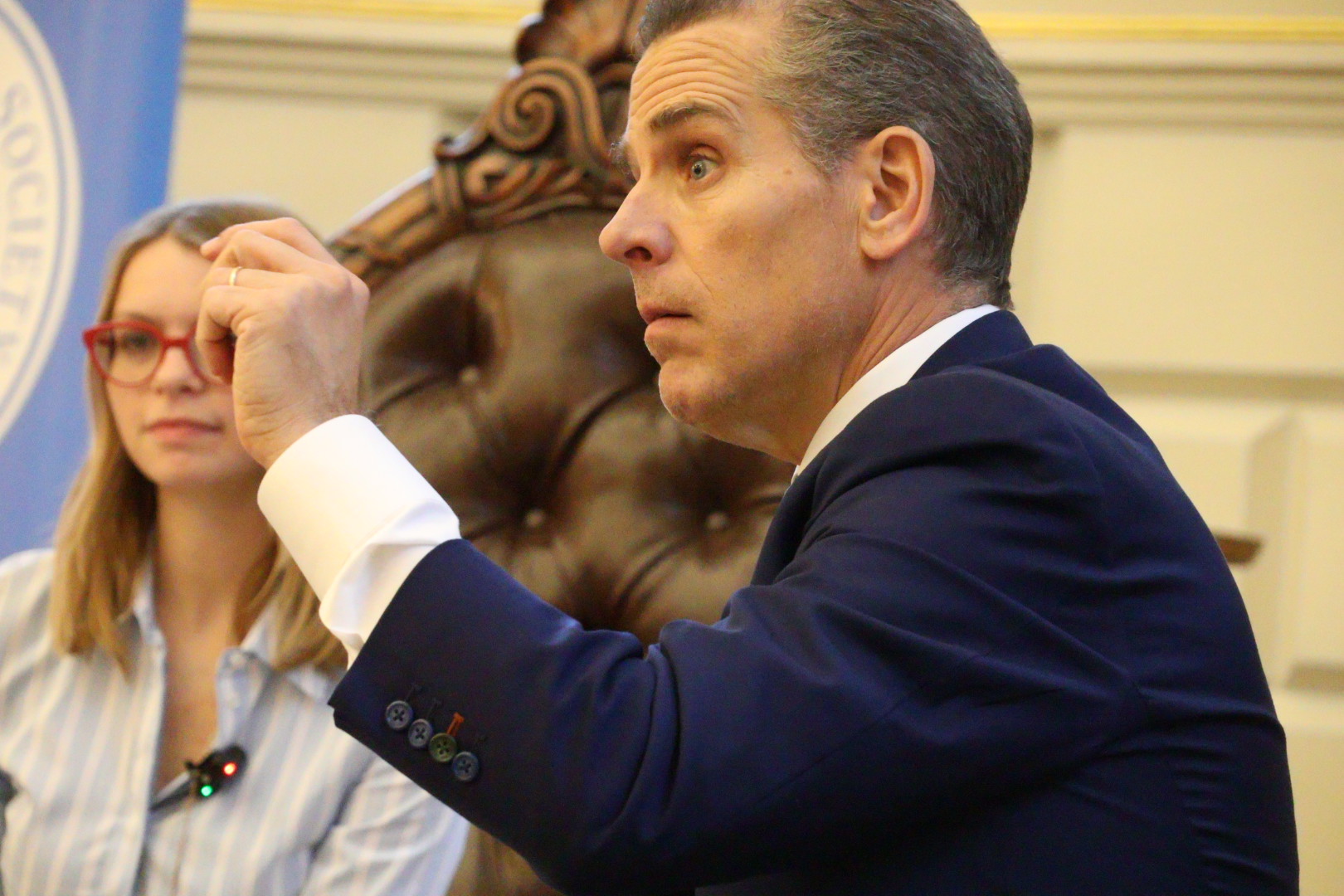
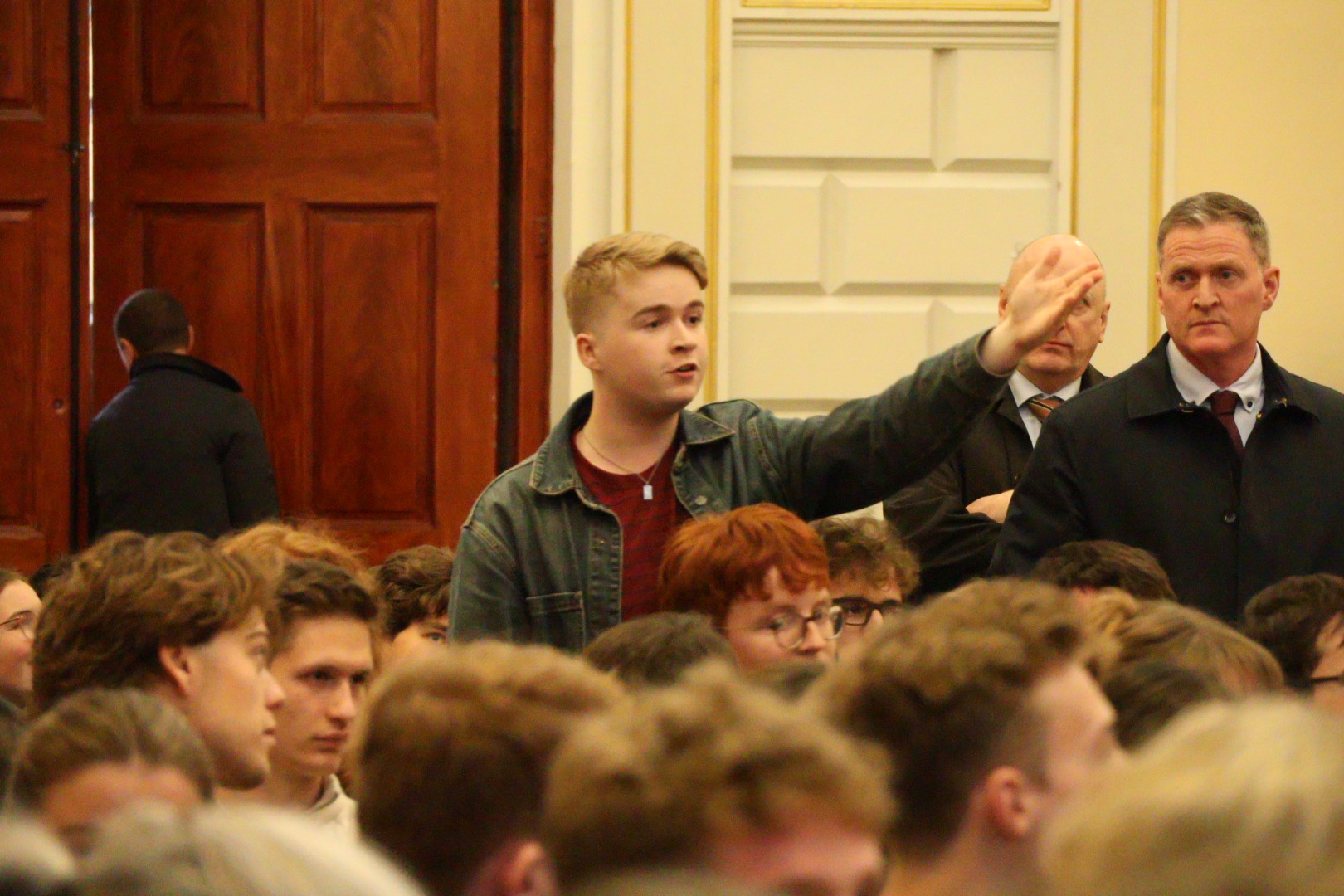
I attended the College Historical Society’s (Hist’s) gold medal award for Hunter Biden that evening. As the talk began, a gasp rippled through the exam hall — former President Joe Biden entered stage left. Within minutes, my phone was filled with notifications as plans began for an emergency demonstration.
Later, following my interruption of proceedings to question Mr Biden about Gaza, I felt like the only person in the room aware of the picket we had unintentionally crossed, despite the growing noise of counter-protesters creating an almost siege-like atmosphere.
It was not my intention to disrupt proceedings; however, it would have been unconscionable for me to not speak up before President Biden left.
As a member of the Hist, I felt I was put in a position that was both uncomfortable and avoidable. I simply felt a need to express my disappointment at President Biden’s presence, and to force the elephant in the room to be addressed.
Upon leaving the exam hall and being greeted by hundreds of protestors, I was left with a sense of awe at the students’ ability to mobilise and pragmatically act, casting aside differences when a common goal was identified.
Flags were sourced, megaphones seemed to appear from nowhere, contacts with campus groups were made, and following the arrest of three activists, assurances of their safety were sought out.
In an evening of heightened emotion, it was the Hist and college staff, the “grown-ups” in the whole affair, who seemed out of touch. The students, by comparison, acted quickly and decisively, showing the foresight and campus understanding that was lacking from the event organisers, who should surely have anticipated what Biden’s presence might provoke on Ireland’s most solidly pro-Palestinian campus.
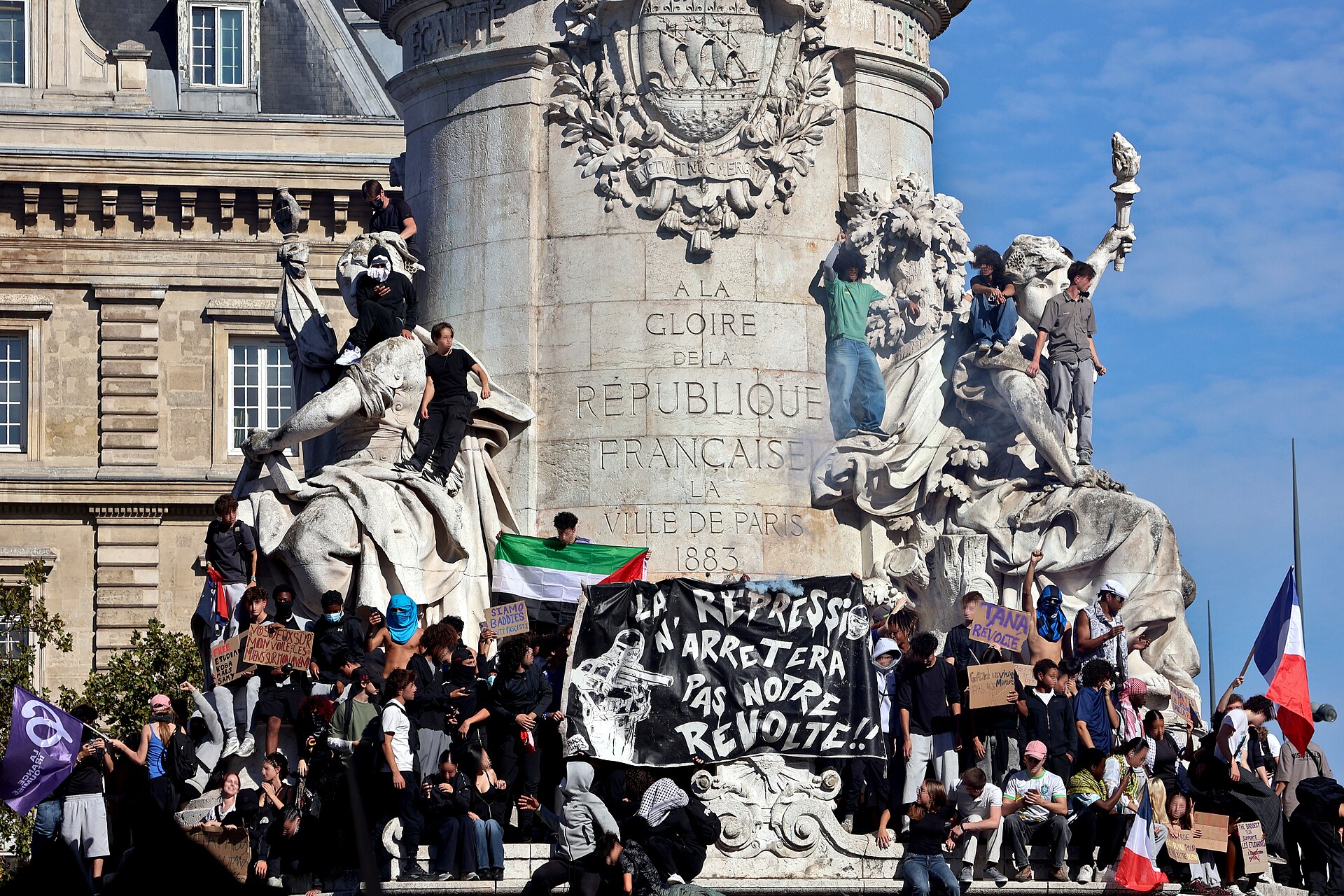
This episode was yet another case study of what is becoming clear across the globe: whether in Paris or Dublin, Cornell or Columbia, student power cannot be ignored.
These mobilisations and the leftist groups who organise them on campus ought not to be dismissed as products of petty squabbles. Instead, they should be understood as a temperature check on the mood of students.
So, while it is easy to let Fine Gael off the hook for infighting, while treating the left like a nonentity, when it comes to pragmatic and immediate mobilisation on issues that matter to members, it is not Ireland’s government party that seems effective or indeed rational. Instead, it’s the student societies.
They are the emerging voice of the Irish students, who are so quick to leave down their books and other commitments when their fellow students come calling.
To quote the great protest singer Phil Ochs:
“Oh, I am just a student, sir, and only want to learn
But it’s hard to read through the rising smoke
From the books that you like to burn,
So, I’d like to make a promise and I’d like to make a vow
That when I’ve got something to say, sir, I’m gonna say it now”
Fionn Ó Catháin-Ó hÁgáin is a member of Trinity BDS, the Hist and the Socialist Republican Society