
Disclaimer: this article refers to birth control and menstruation as “women’s” health issues. It is important to acknowledge that not all people who menstruate or are able to become pregnant identify as women, and that some people who identify as women are unable to menstruate or become pregnant. It is also important to acknowledge that there has historically been medical stigma around and gaps in research and funding for “women’s” health and bodies that lasts well into the present day.
It seems only yesterday that women’s health, especially mental health, stopped being dismissed as simple “hysteria” and started being taken more seriously. And yet, amidst establishment cries that insist men’s and women’s bodies are studied the same, women are still more likely to get delayed physical diagnoses, and oftentimes their symptoms are so normalised that they are ignored or — if considered at all — blamed on stress. Not only is there undoubtedly a strong bias in diagnosing women, but there also seems to be a general reticence in talking about women’s health — especially when it comes to sexual and mental health. Birth control and menstruation (as well as the hormones that are caused or disrupted by them) can be fundamental to the female body’s health; but because they are exclusive to it, they have been severely clinically understudied. The mental health effect of the hormonal imbalances caused by menstruation and birth control are even more severely understudied. This shows how, not only is there still much work to be done in terms of women’s physical health and deconstruction of the stigma around it, but also that there is a whole area of women’s mental health that still needs to be explored.
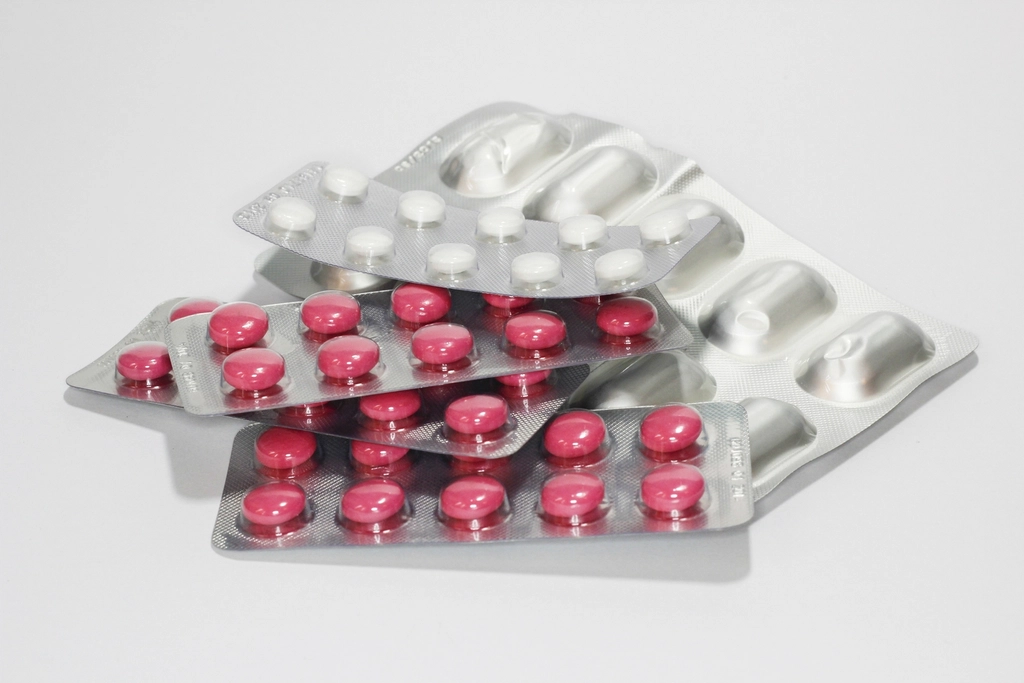
The idea of birth control wasn’t invented yesterday. Ancestors of condoms have been documented since ancient times — but they imply that a male partner will agree to wear them. women have had to take matters into their own hands since very early in history: natural remedies that acted as a modern diaphragm have also existed for as long as four thousand years. But medically trialled contraceptive methods, such as birth control, only began in the mid-1950s.
According to the Contraception Policy Atlas Europe 2026, in many European countries (with a noticeable difference between Western and Eastern Europe) contraception isn’t easily available: there is little coverage within the national health system, and there is often little to no coverage for minority groups or young people.
Ireland can classify itself among the countries that are least conservative in this sense. According to the Health Services Executive (HSE) website, if one is aged between 17 and 35, and has a PPSN, one can get prescribed one of multiple forms of contraception by their GP without paying a penny for the prescription nor for the contraception itself. The GP appointment is needed to figure out which form of contraception the patient might use, because what medication works for a person might not work for another. But even for countries like Ireland — which ranks sixth in the Contraception Policy Atlas Europe 2026 — there is still lots to do.
Though the side effects are still under-researched, the pill is provided or obtained really easily, with little or no consideration of the impact that a hormonal therapy, like oral contraceptives, can have on one’s mental health.
Maia Kelly Murphy, a Junior Sophister Film student, and Dearbhail Loughran, a Junior Fresher Ancient History & Archaeology student, reported on their experiences of how hormonal contraceptives affected their everyday mental health. Maia started the pill because of how accessible it is, how immediate its effects are, and because her friends were already on it. But then, mood swings hit her unexpectedly, debilitating her in everyday life. Ultimately, that was what led her to stop that version of the pill and switch to a different one after talking to her doctor. Dearbhail Loughran, on the other hand, did not start the pill for contraceptive reasons, but rather to treat her acne. She still recognised how strongly the pill affected her: it made her more emotional, more irritable, and caused mood swings, which made her everyday life more stressful.
According to Yale researchers Julia Ciarcia and Laura M. Huckins, “observational studies comparing OC (oral contraception) users to non-users have reported increases in symptoms of depression, anxiety, and eating disorders”. But because the individuals who experience mental health side effects are a minority, and because individuals who use OCs for conditions like endometriosis will report an improved mood compared to before taking the pill, “their scores typically fail to shift the mean, leading researchers to conclude that the depressive side effects of OCs are minimal or non-existent”. But, as Ciarcia and Huckins point out, these conclusions are warped, and “for the individuals who are affected by negative side effects, the impact is not insignificant”. According to another study in Sweden, “the first two years of oral contraception (the pill) use is linked with a 71 per cent increased risk of developing depression. This study also reported that women using a contraceptive pill as teenagers had an “even greater risk of feeling depressed”, and that, “overall, more research is needed to conclude a link between the pill and mental health”. There is, evidently, a link between a decline in mental health and starting hormonal contraception. But this has not been adequately investigated: either because of how easily mental health conditions get pooled with or excused as puberty and everyday stress, or because mental health is stigmatically ignored as a side effect.
Both Maia and Dearbhail reported that they wished their doctors had warned them about the side effects the pill would have on their mental health. Dearbhail goes even further on, saying that “women’s health is not researched and resourced enough, and [the pill] is kind of the go-to for multiple conditions (period, contraception, skin) maybe too quickly.” It is great that the scheme exists, but there should definitely be more knowledge when it comes to prescribing the pill because of its possible debilitating side effects.
In 2026, women are still affected by how late their bodies and minds were taken into decent clinical consideration, and that is a sin of our fathers we have to deal with. But the problem is that progress is moving extremely slowly and uncertainly. When women are guaranteed healthcare adequate to their needs (and not just copy-pasted from men’s health studies), and have the option of contraception that does not devastate their bodies and minds, then we will be able to really talk about equality.