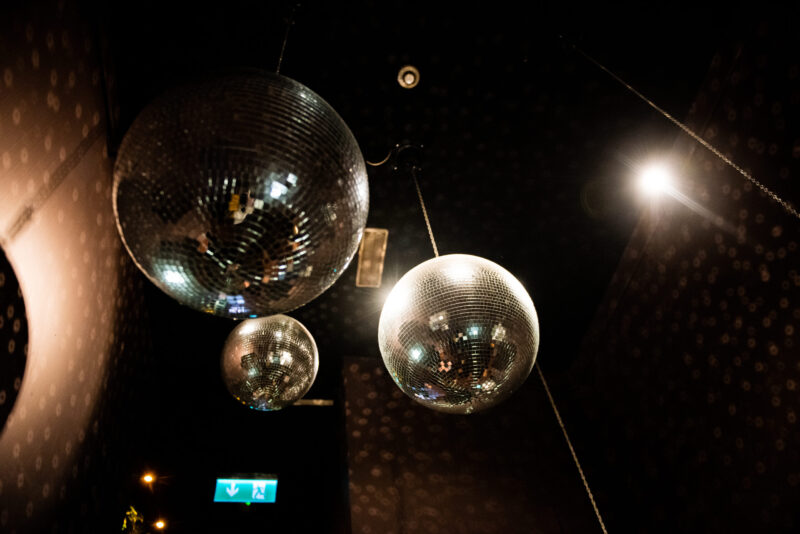

Just off Dame Street, Pawnshop recently held the exhibition “Last Orders” — a funeral for Dublin’s shuttered nightlife venues. Attendees could wander past headstones dedicated to the Tivoli Theatre, the Complex, the old Bernard Shaw and others, reading printed eulogies to the venues and to the communities that formed around them. A common theme drew them together — these venues were more than just clubs: they have hosted art exhibitions, concerts and literary evenings, theatre, workshops, and even wrestling matches — all organised by and for Dublin’s youth.
It’s a hard time to be a young person in Ireland. Between the highly competitive and fluctuating job market, extortionate living costs and one of the most expensive higher education systems in Europe, it can often feel that this isn’t a country made for young people. Coming of age in a housing crisis, seeing budget after budget leave students and young people behind, pinching pennies to afford a takeaway or a pint — it’s little wonder that seven out of ten young people under 25 are considering emigrating. It can often feel that the Irish government not only cannot hear young people’s pleas, but is actively stopping its ears against them.
The plight of Dublin’s cultural spaces exemplifies this trend. A slew of nightlife venues and independent arts spaces have been forced to close in the past few years, often due to leasing issues and rent hikes. Such closures leave young people with fewer and fewer ways to participate in the arts, as patrons and as creatives, while the places that remain open become more expensive and out of reach both to attend and to run events in. The Complex in Smithfield closed in January of this year after its lease expired, despite an appeal to Dublin City Council to purchase the building, and a petition delivered to the Government in December to save it. The venue provided performance spaces, studios and exhibition spaces, to young artists and organisations in particular. The loss of the Complex has become a symbol of Dublin’s dying independent arts scene, with TDs, locals and artists expressing their sorrow and anger at the venue’s closure.

Dublin has a real issue with a lack of access to arts and cultural spaces both for patrons and young creatives. Having spent years organising cultural events for young people, finding venues that won’t bankrupt us is always the biggest headache in planning. Renting a room in one of Dublin’s dedicated arts spaces can cost up to €750 per day, while conferences or talks requiring multiple rooms can run into the thousands, even for youth-led and non-profit groups. Though venues will sometimes be willing to negotiate prices, more often than not this is based around “knowing someone” — having a pre-established relationship with a venue, or the social capital to build one. This phenomenon, all too common across so many areas of life in Ireland, squeezes out young creatives and innovators, in particular those who are not native to Dublin or to Ireland.
The priorities of the Government are clearly at fault in this trend. Despite touting Ireland’s cultural wealth on the international stage, it would appear that they are allowing cultural venues at home to be run out of business in favour of foreign direct investment and tourism. In the Pawnshop exhibition, almost every headstone spoke of the beloved venue’s replacement with a hotel or luxury apartments. In July of this year, Izakaya was forced to wind down its late-night DJ operations after a dispute with the Hoxton Hotel over noise complaints, and the restaurant faces closure this coming December, while the Complex’s closure came as a result of the building owner’s desire to redevelop the site.
To reverse this trend and make it easier for young people to attend and create events requires an overhaul of this country’s cultural policies and development priorities. There is a desperate need for long-term funding models to support private arts venues from rent hikes. In a statement following the closure of the Complex, the Labour Party highlighted the need for an “infrastructure and capital budget” for the Arts Council and for Dublin City Council, while the Social Democrats advocated for a “special commercial rate” for arts venues. An overhaul of the planning framework and licensing laws for venues is also desperately needed.
There is also a serious need for more cultural spaces geared towards young people, with youth-focused infrastructure remaining severely underdeveloped across Ireland. Such spaces could be run on the same model as in Denmark, where “culture houses” are funded by local municipalities and run by volunteers, offering free or inexpensive venue hire to young people to organise artistic and cultural events. These spaces have become community hubs and run everything from drag shows to sustainability workshops and dance evenings, all free to attend. Some “culture houses” also provide studios, rehearsal rooms and workshop space with tools and materials available to use or borrow. Crucially, this model is separate from libraries — while libraries are an important resource, they function primarily as quiet spaces, making them unsuitable for larger and livelier events.
Dublin City Council has outlined a need for expanded cultural spaces in its Development Plan for 2022 to 2028, including the new Parnell Square Library and the Richmond Barracks in Inchicore, which will include cultural spaces. While these developments are significant, progress remains slow, and the proposed projects do not go far enough in addressing the lack of accessible cultural spaces in Dublin. Furthermore, Dublin City Council is yet to complete the majority of its objectives relating to cultural spaces, including conducting a Cultural and Artistic Spaces Audit and the development of an Arts and Culture Infrastructure Policy Document. To help young creatives in the short term, there is a need for a public database of venues available for cultural events, and grants to subsidise the rental costs for nonprofits and individual creatives.
Universities could also play a role in expanding access to arts and cultural spaces in Dublin. Trinity’s society ecosystem is well and truly alive and thriving, but it is almost completely cut off from the rest of the city, as is access to College’s spaces. Trinity does not offer room hire to outside organisations during term time, and there are strict rules around inviting organisations or groups not associated with the university as guests to society events. This exclusivity has the twofold effect of depriving Dublin City of a lively arts and culture milieu, while also making it harder for students and student organisations to make connections outside of the university bubble. Trinity is purported to be a public higher education institution; why then shouldn’t its spaces be accessible to everyone?
Nightclubs and arts spaces are a cornerstone of Dublin’s cultural scene. Although Irish culture and the arts have gained international recognition in recent years, a fact that the government never fails to celebrate, the growing inaccessibility of arts and culture for young people deprives young people of opportunities to create art, and of ways to enjoy culture, socialise and make memories. Without a swift overhaul of local and national cultural policy, cultural spaces will continue to disappear, leaving us with a city that is slowly having the soul sucked out of it to make way for apart-hotels.