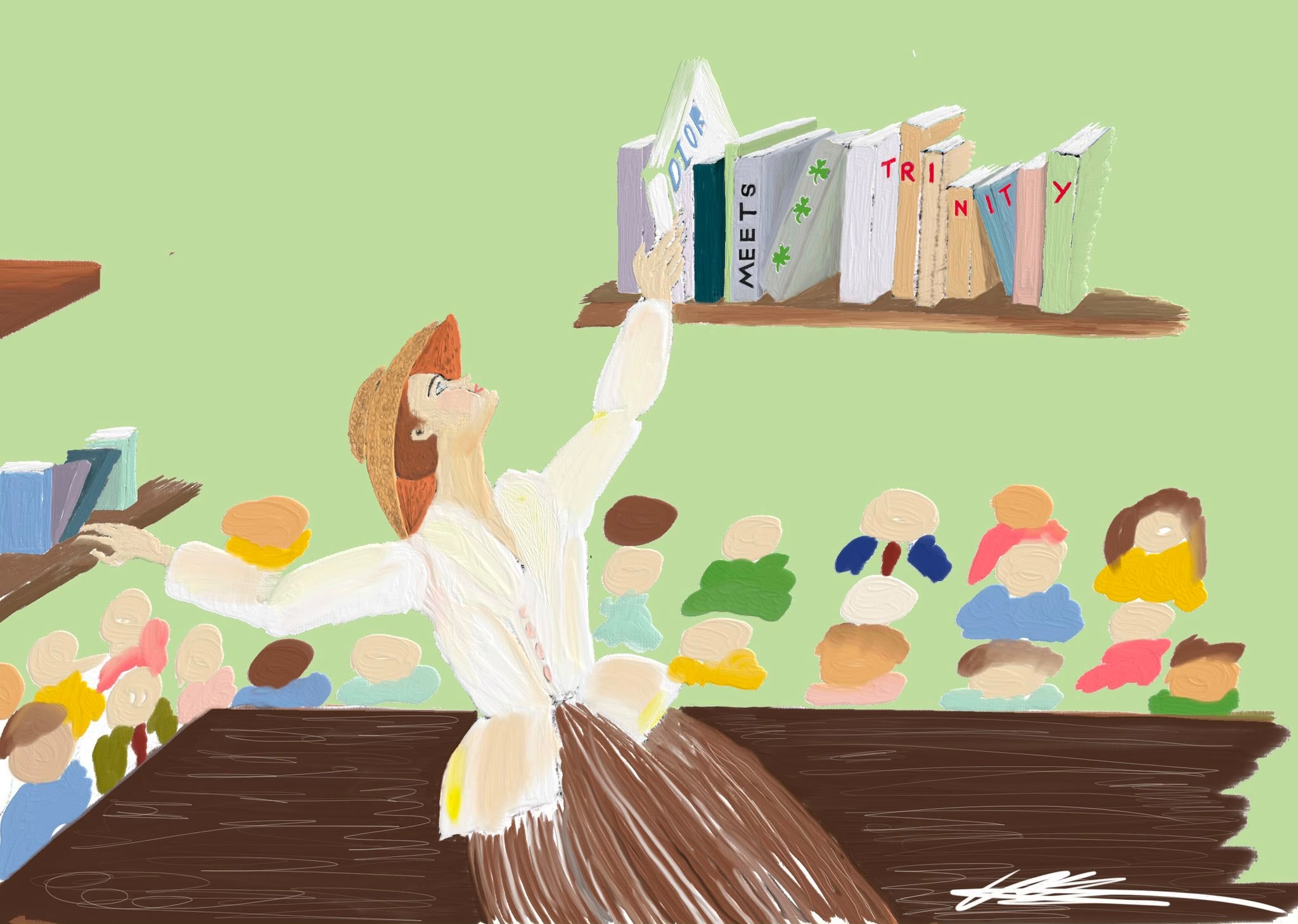

This December, Dublin will host Dior’s first-ever runway show in Ireland, marking a historic moment for the industry internationally. The iconic Trinity Long Room will be transformed into the venue for the Dior Pre-Fall 2027 collection, placing the city at the centre of the fashion world this December 4th, 2026. This event will be more than another runway show; it represents a significant homecoming for Dior’s Creative Director, Jonathan Anderson, and could signal the beginning of a new chapter of opportunities for Irish fashion.
The breathtaking Long Room at Trinity is widely regarded as one of the world’s most beautiful libraries. Not just a striking venue but also representing a place where knowledge, history, and imagination can come together, a perfect setting for Anderson’s thoughtful approach to his designs.
Anderson recently shared his announcement on Instagram, posting that he was “so excited and proud,” alongside an illustration of a four-leaf clover titled, “It’s quite a revolution… your dresses have such a new look.” While the message celebrates his arrival at Dior, the imagery also hints at the new creative direction he is bringing to the brand and the renewed attention his homecoming could bring to Ireland’s own fashion industry.
Released by BBC, Anderson said that “Showing at Trinity College Dublin is a dream come true. I began my career in Dublin, so returning here feels deeply personal.” His words reflect his high regard and connection to Ireland, alongside bringing such a prestigious fashion house back to the city where his career first began. The admiration in which he values his home-grown roots can be attributed to the role Dublin had in his career.
The rise of Jonathon Anderson’s success to the top of the fashion industry is truly a remarkable story. Born in Magherafelt, he attended Blackrock College before studying menswear at the London College of Fashion. In 2008, he launched his own luxury label, JW Anderson, which quickly gained popularity for its innovative designs. Subsequently, his talent soon attracted the attention of the renowned LVMH, which acquired a minority stake in the brand, recognising its great creative potential.
Before Dior, Anderson went on to transform Spanish luxury house Loewe during his position as Creative Director, reinventing the brand through a specific focus on craftsmanship and artistic collaboration. His success ultimately led to one of the most prestigious appointments in fashion: becoming Dior’s sole Creative Director, overseeing womenswear, menswear and exclusive couture collections.
Yet before his international success, Anderson’s career first began at Brown Thomas, the classic Irish department store, and worked as a merchandiser on the menswear floor. Therefore, his return to the city with Dior is more than a professional milestone — it’s a full-circle moment to his homecoming. The great achievements of this renowned Irish fashion designer on the global stage demonstrate the impact Irish designers can have at the highest level of luxury fashion. Bringing Dior’s latest collection back to the heart of Dublin celebrates Anderson’s journey at the highest level. The upcoming runway show will reflect not only his own journey but also shine a spotlight on Ireland’s growing potential and creative talent in the fashion industry.
As mentioned, such a prestigious fashion house hosting a runway in Dublin is unprecedented. The wide extent of impact on Irish society can be similarly compared, as the show will generate significant international publicity and spotlight Irish fashion. The Dior show will attract an influential audience of fashion editors, buyers, designers, celebrities and content creators from around the world. The event could demonstrate that Dublin is capable of hosting world-class luxury fashion events, potentially encouraging other global brands to consider Ireland as a destination for future shows and collaborations.
The excitement surrounding the event is already beginning to build. Dior has unveiled accessories featuring four-leaf clovers, floral motifs and spring-inspired details, a subtle nod to Anderson’s Irish roots and the upcoming Dublin show. Many of the collection’s charms are exclusive and collectible, further reinforcing the sense that this homecoming is more than a runway presentation; it is a celebration of Irish identity woven into one of the world’s most prestigious fashion houses. Anderson’s effort to incorporate unique Irish details, celebrating his loyalty and admiration for Ireland, should be greatly attributed to his attentive nature. The clear initiative to feature his country in hosting his successes endorses his character, as he does not neglect his identity despite having moved abroad.
Irish fashion brands are often lost in mainstream fast fashion stores that flood the Dublin shopping centers. Brands such as Zara, H&M, and Primark are highly accessible due to their mass production and infrastructure, muting the voices of smaller local names. Aoife McNamara, for example, is the first sustainable Irish fashion brand to be B-Corporation certified, sourcing fabrics and performing business operations transparently and carefully across all measures in their supply chain. McNamara has beautifully woven pieces crafted with thoughtful materials, yet cheap global imports remain strong competition for retail spaces and visibility.
Another local Irish brand, Magee 1866, is a 5th-generation family business who designs and weaves their own thread at their home mill in Donegal. The high-quality clothing is the product of their localized weaving and traditional craftsmanship, which ignores the appeal of mass market volume. For Magee 1866 to prioritize heritage and sustainable production in this way pushes back against the way that many brands chase profit and volume.
The result of low visibility for Irish brands can be seen historically through the emigration of well-established brands that grew successfully abroad, including JW Anderson and Paul Costello. Naturally, Ireland’s geographical size may provide smaller market opportunities and lower demand for brands with higher manufacturing costs. Yet, Anderson’s upcoming Dior show will naturally provide great media attention to the country, allowing for greater publicity for smaller fashion houses to achieve visibility that would have only been captured elsewhere globally. High-end fashion events such as Paris Fashion Week or the Met Gala drive increased interest and sponsorship toward domestic retail, craftsmanship and hospitality. It will be an exciting time for Dublin to see the positive effect it will have on Irish enterprises in the months to the event.
However, a single runway show or event will not transform Ireland into a fashion capital; its symbolic significance and profile should not be underestimated. Ireland still lacks the fashion infrastructure of history and traditions of cities such as Paris, Milan and London, but visibility is often the first step towards lasting change. If Anderson’s homecoming inspires greater international interest, investment and recognition of Irish talent, the Dior show could become a defining moment in the country’s fashion story.
Jonathan Anderson’s return isn’t simply about Dior presenting another collection. It’s about recognising Ireland as a place worthy of the global fashion conversation. Whether or not the show becomes an international success, the value Anderson has provided to Ireland’s fashion identity will never be forgotten. Rather than local brands seeking out attention from afar, the world’s fashion media will be immersed among Irish culture and local fashion, providing unprecedented media attention on an international stage.