
We’re all tired of hearing about the panopticon. The analogy is just as exhausting as an existence in a late-stage capitalist society which becomes more dystopian with each tech innovation shoved down our throats. The newest temptation for the hungry masses is actually not new at all — Meta’s smart glasses find their predecessor in Google Glass, launched in 2012 and ultimately discontinued in 2023. The sleek, unsuspicious Meta Glasses, designed in collaboration with Essilor Luxottica (the parent company of Ray Ban and Oakley) have hit the consumer market, with over 7 million sold in the last year (more than triple the amount sold in the combined years since Meta first launched their smart glasses with AI integration in 2023).
Unsurprisingly, these smart glasses, equipped with a hidden camera in their frame, were first embraced by lurking Manosphere “influencers” filming their sad attempts at picking up women for internet clout and other perverts filming women in public. Meta, who owns both the devices used for this kind of surveillance and the platform Instagram (among others) onto which they are uploaded and distributed, have been slow to respond and continually refer to existing safety features. One feature takes the form of an LED light activated whenever the glasses are filming, but a simple internet search will equip you with a cheap sticker which effectively covers the light or a YouTube video that teaches you how to disable the light entirely in under 30 minutes.
As sinister as the potential abuse of meta glasses may be, our main concern with their increasing popularity and availability should be their ideal use, and what their normalization will mean for our privacy, surveillance, and the future of artificial intelligence.

Surveillance is nothing new, but it is rapidly changing, and becoming much easier. David Lyon, professor and director of the Ontario Queen’s University Surveillance Studies Centre, explains in a 2019 report that state activities can not be examined without taking into account the “data flows between private corporations and government agencies.” This global trend of collecting, storing, and analyzing large amounts of data “to create patterns and reveal trends that can be used for security, … health, marketing, governance …is a worldwide trend, seen in global IT companies — now often referred to as surveillance capitalism.” New technologies enable mass surveillance, and the companies that produce them and profit are harder to hold accountable than the governments who pay them.
A notable example of this is the current spread of Flock surveillance cameras in the United States. According to the American Civil Liberties Union (ACLU), there are currently 120,000 Flock cameras installed across the US, working as so-called Automatic Licence Plate Readers (ALPRs). While they are often compared to normal traffic cameras, they function more like a mass surveillance system. Flock cameras monitor, track, and log the movement of American citizens without a warrant or reasonable suspicion; the personal information collected (and then cataloged by an AI algorithm) is uploaded to a nationwide database which is accessible to any Flock-contracted law enforcement agency. The ACLU claims that less than 1 per cent of cars scanned by ALPRs are connected to crime, constituting a potential violation of the Fourth Amendment.
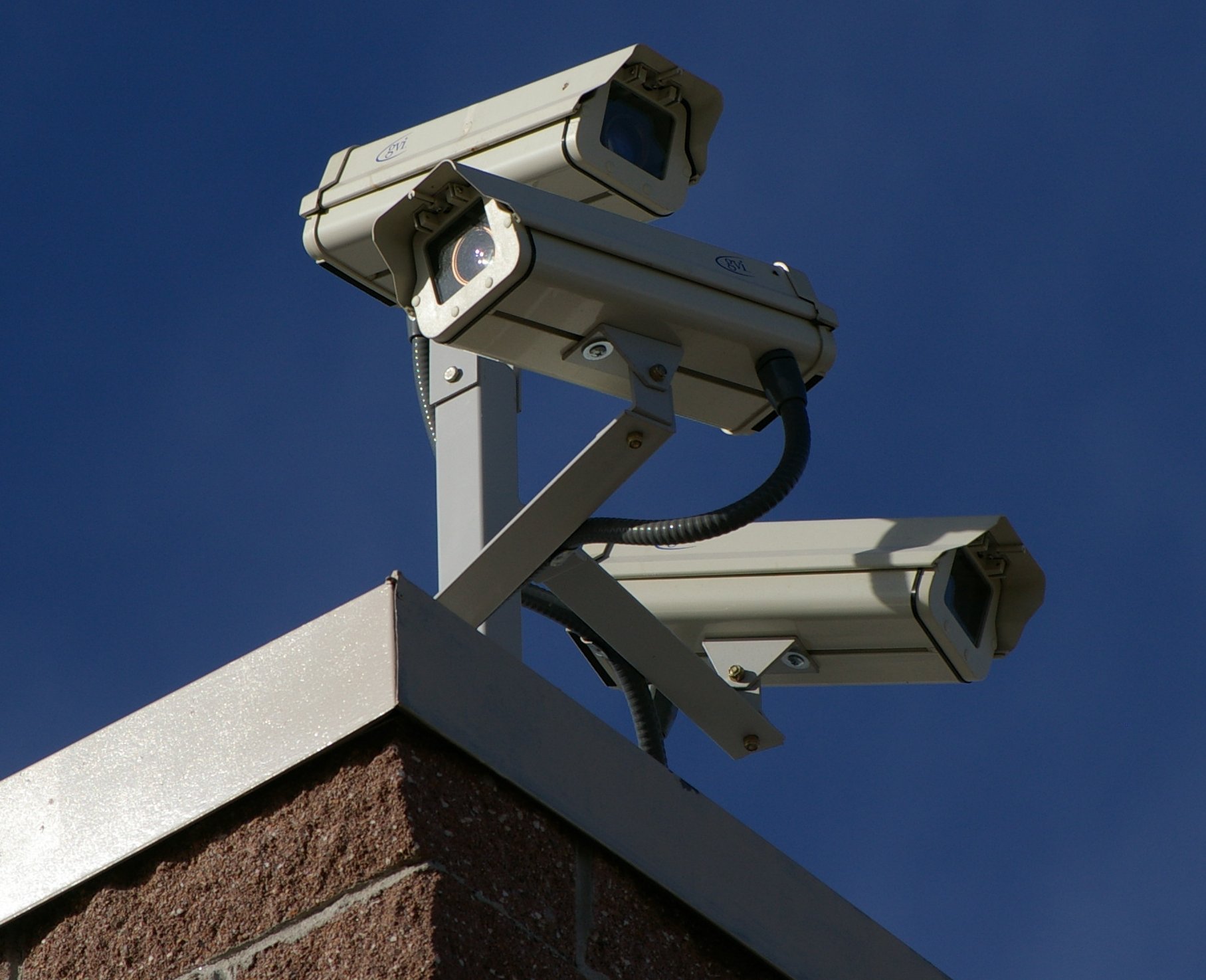
Flock and Meta are both instances of surveillance capitalism in which states outsource surveillance to companies who are glad to service them for a profit. They are also part of a larger pattern of multi-direction surveillance culture. We no longer find ourselves in Foucault’s panopticon — where one person has the power to constantly and invisibly surveil the rest — but rather in what sociologist Michael Corbett calls a poly- or “multiopticon.” Here, surveillance happens “simultaneously in multiple directions.” Meta-glasses are the ultimate “corporatization” of surveillance — you too can surveil if you can afford the $400–$800 glasses. Thus, these glasses reveal a cultural shift, one in which we all potentially become agents of a larger system of casual surveillance. At the same time, capitalist hierarchy is preserved through a continually looming panoptical tower, controlled by the companies servicing us with digital technology, which corporations and governments pay to get access to.
At the moment, Meta proudly lists 17 “AI glasses supported countries” on their website, including Ireland (which houses the European Meta headquarters). But what exactly counts as a “supporting country” remains unclear. Germany, having made the list, is also one of the countries sporting one of the strictest privacy laws in Europe, and it is also one of the first countries in which Meta’s sale of smart glasses is being investigated as a potential criminal offense. HateAid, a non-governmental organisation (NGO) focusing on democracy and human rights in the digital world, has filed a criminal complaint against Meta Platforms Technologies Ireland Limited, Ray-Ban, Oakley and eyewear retailers with the German Central Office for Combating Internet Crime. The advocacy group claims that the sale of smart glasses violates German privacy laws regarding telecommunication and personal data protection. CEO Josephine Ballon explains that with the sale of these smart glasses, “profits are once again being prioritized over safety,” and that Meta must face legal consequences.
More legal consequences may follow as Meta prepares its next updated smart glasses. In April, the ACLU and 75 other national organizations (ranging from advocacy work for domestic violence survivors to consumer privacy) published an open letter in response to Meta’s plan to add facial recognition technology to their smart glasses. These updated glasses would allow anyone wearing them to identify strangers by name — whether on their way home, at protests, or while accessing clinics. Kade Crockford, the director of technology and justice programs at the ACLU of Massachusetts, emphasizes how this technology could not only be used by people to spy on each other, but could also be implemented by federal agents and law enforcement to spy on their opponents. “It’s dangerous and dystopian, and Meta must disavow it,” so Crockford. Surveillance seems to sell, and if we can participate in it, we seem to forget to look up at the looming tower we have not destroyed, but rather supplemented with our own little towers.
Lastly, what our participation also does is service the growing entity we call artificial intelligence. AI already has access to all of our information, what it does not have access to is our experience. In September of 2025, Mark Zuckerberg voiced his vision for this new project: “Glasses are the ideal form factor for personal superintelligence, because they let you stay present in the moment while getting access to all of these AI capabilities that make you smarter, help you communicate better, improve your memory, improve your senses, and more.” What at first may seem like another call for bio-hacking and self-optimisation is really a ploy to optimize AI. As consumers and users of AI smart glasses, we enable a corporealization of AI, giving it the experience of being embodied. We are paying not only to train but to animate a machine — a large-scale human effort to become the eyes but also the arms and legs of AI.
By wearing these glasses and streaming what it is like to move with a body through the world to these giant data centers, we are giving AI the experience it needs to know what it’s like to be human. It is surveilling not only human beings, but humanity.