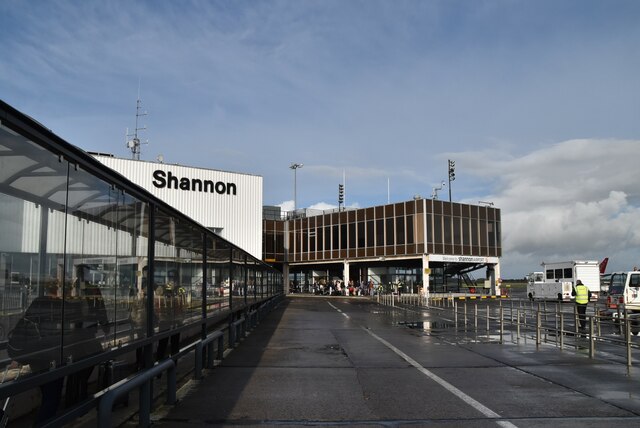

Earlier this month, NATO’s top military commander, General Alexus Grynkewich, paid his first visit to Dublin and delivered a stark warning: preventing the U.S. military from using Shannon Airport “probably would” damage diplomatic and security relations between Washington and Dublin. Characterising Shannon as a “very important logistics hub” that allows the U.S. to project power and keep global threats at bay, the General laid down a clear marker on what Washington views as the price of a healthy transatlantic partnership. The statement cut right to the core of an ongoing national debate. Is General Grynkewich simply stating a geopolitical reality, or is it high time Ireland adopted a far more defiant stance in defence of its established military neutrality? To answer whether the NATO commander is correct, one must look at the cold mechanics of diplomatic leverage. He is, in a purely pragmatic sense, likely right.
Shortly after it opened in 1945, Shannon Airport became a convenient transatlantic refuelling stop for U.S. military and diplomatic flights. The volume of U.S. military personnel and aircraft moving through the airport increased sharply following the 9/11 attacks and the subsequent wars in Afghanistan and Iraq. For over two decades, the stopover facility at Shannon has served as an essential refuelling and transit node for U.S. military troops and cargo. In Washington’s eyes, this logistical cooperation is not an occasional favour; it is a foundational pillar of the modern U.S.-Ireland relationship. Revoking access would undoubtedly trigger friction in Washington, particularly within political circles that view security cooperation through a strictly transactional lens. With Ireland heavily reliant on U.S. Foreign Direct Investment and deep economic ties, Irish governments have historically been terrified of upsetting this delicate equilibrium. From the perspective of Realpolitik, maintaining the status quo at Shannon is seen as the small price Ireland pays to keep the superpower happy.
However, accepting this arrangement comes at a devastating cost to the integrity of Irish foreign policy. A policy of non-alignment cannot exist solely in official speeches while our runways facilitate military transport. Opposition politicians and anti-war campaigners have long argued that Shannon’s military role completely guts Ireland’s moral authority on the world stage. As Sinn Féin’s Rose Conway-Walsh TD recently noted during a Dáil debate on defence, facilitating the transport of troops and equipment directly compromises our reputation as an independent force for peace, diplomacy, and international law.

The practical contradictions are jarring. Ireland routinely sends Defence Forces personnel from Baldonnell on peacekeeping missions under UN mandates, yet simultaneously allows foreign military flights through Shannon supporting the very conflicts that destabilise those regions. Furthermore, Labour’s foreign affairs spokesperson Duncan Smith TD recently raised the alarm over surging U.S. military traffic at Shannon, with over 3,000 troops passing through in a single month, calling into question how any government can claim non-involvement while hosting military operations on such a scale. When an airport in County Clare operates as a de facto staging ground for external military power, Ireland’s active neutrality ceases to be a living doctrine and instead becomes a convenience discarded whenever a superpower knocks.
What makes the Shannon arrangement particularly contentious is the legal friction between official policy and physical enforcement. Under the Air Navigation (Foreign Military Aircraft) Order 1952, foreign military landings require diplomatic clearance conditioned on the aircraft being completely unarmed, carrying no munitions, and non-engagement in intelligence operations. Yet, successive Irish governments refuse to conduct physical inspections on foreign military planes, citing the customary international law principle of sovereign immunity. Critics point to this “don’t ask, don’t tell” framework as a glaring loophole: civilian-chartered carriers (such as Omni Air International) regularly transport armed personnel under Transport Ministry exemptions, while military transport planes operate on unverified diplomatic assurances. In practice, Ireland’s operational stance relies entirely on honour systems extended to foreign militaries, creating an enforcement void where accountability is sacrificed for diplomatic convenience.
So, should Ireland take a more defiant stance? The answer lies in whether Ireland views its foreign policy as a matter of principle or pragmatic convenience. Defiance here does not mean hostility toward the U.S.; it means consistency in our own principles. True sovereignty requires defining foreign policy based on international law and human rights, not out of fear of political retaliation. The call for reform is no longer confined to street protests; it has moved directly onto the floors of Leinster House. Recent legislative efforts, including Opposition bills aimed at mandating random inspections and restricting military transit during active foreign conflicts, reflect a growing legislative appetite to close the Shannon gap. Furthermore, Ireland would not be an international outlier by asserting control over its sovereign territory. Other European nations with neutral traditions, such as Spain and Switzerland, have placed strict operational boundaries on external military usage of their infrastructure during active conflicts without causing a total collapse in their foreign relations. By choosing passive accommodation over active regulation, Ireland risks falling behind established European norms of non-alignment, mistaking diplomatic inertia for strategic diplomacy.
If Ireland wishes to champion multilateralism, advocate for global peace, and serve as an uncompromised voice for human rights, it cannot continue to offer a backdoor for global power projection. General Grynkewich’s warnings may reflect the views of military strategists in NATO and Washington, but Ireland’s duty is to its own constitutional traditions and foreign policy values. It is time for the Irish government to show real political spine by closing the military loophole at Shannon Airport, defending our neutrality in practice as well as rhetoric, and demonstrating that Irish principles are not for rent.