
Some days ago, I was leafing through a folder full of old ticket stubs. Among them were my parents’ tickets for Nina Simone at Dublin’s Point Theatre in 1999. She was in town as the headliner of that summer’s Guinness Blues Festival.
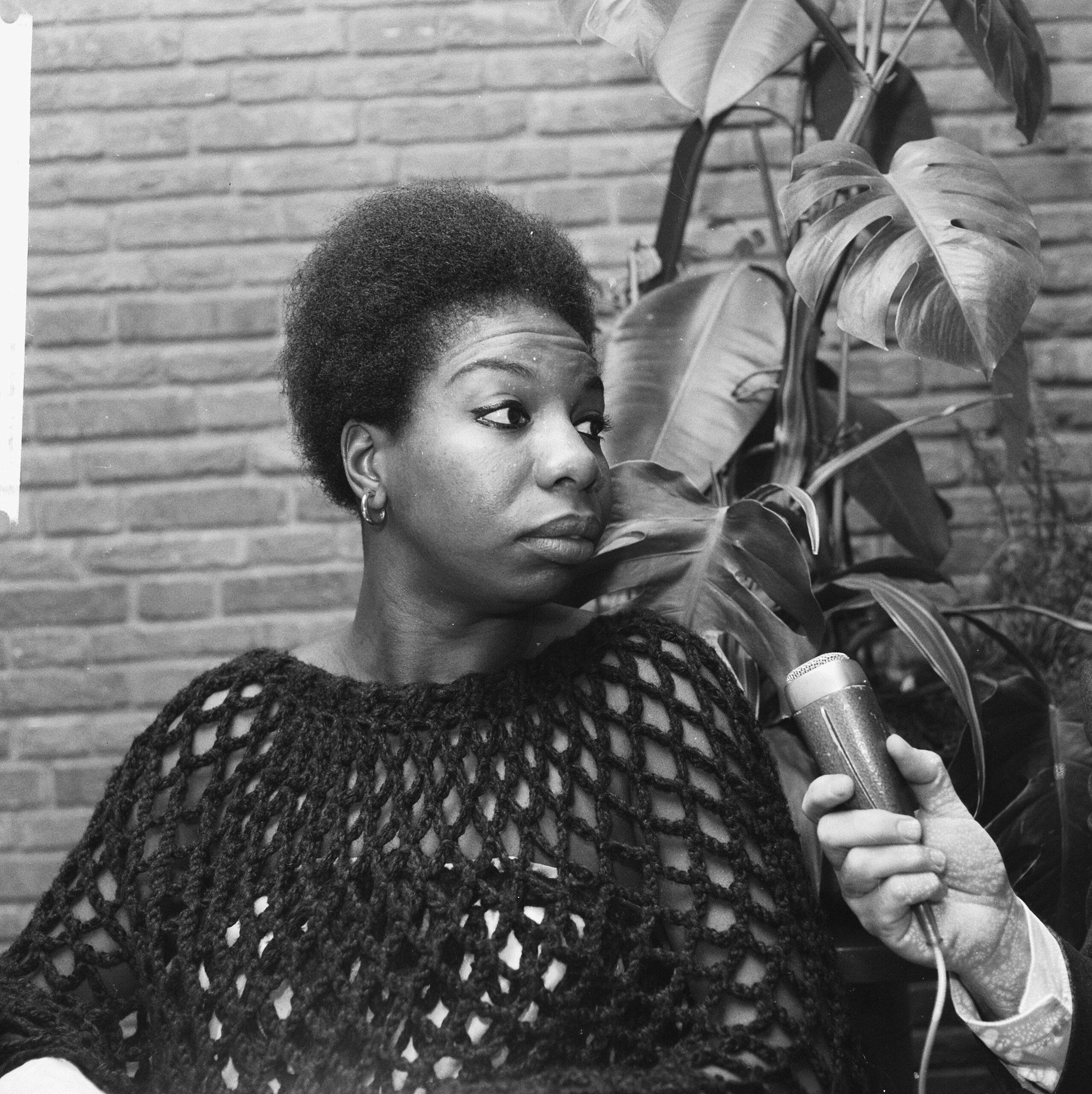
With this edition of Radius centred on the occult, the discovery intrigued me. After all, Simone’s life and music were unusually intertwined with the sacred and the spectral. Born Eunice Waymon, she grew up in North Carolina under the watchful eye of her mother Mary, a Methodist preacher. Through her maternal line, Nina carried Irish lineage tied to the tragedy of slavery in Barbados. She was raised in a crucible of gospels, spirituals, and hellfire sermons. Indeed, she adopted the pseudonym Nina Simone to hide from her mother that she was playing cocktail piano — which her family considered “the Devil’s music” — in an Irish bar in Atlantic City.
Simone fully embraced a dark, magnetic energy in her art. One of her defining masterpieces is the frantic spiritual “Sinnerman”, which chronicles a desperate man running to the devil to evade divine judgment. Then came “I Put a Spell On You” — a raw, spine-tingling tale of bewitchment and desire. Simone would later write in her autobiography that she truly felt she hypnotised audiences whenever she sang it. By infusing the religious fervour and ecstasy of her childhood with radical civil rights activism, Nina transformed jazz and blues into something new and transcendent.

Her persona as a musical sorceress only deepened with voodoo-influenced tracks like “See-Line Woman”. Later, her time in the Caribbean and her fascination with Black artistry inspired her more esoteric recordings, “Dambala” and “Obeah Woman”; tracks rooted in traditional Bahamian and Haitian spiritual magic.
Simone’s relationship with her only child, Lisa, was complex and fraught. Complicated by bipolar disorder, Nina was a formidable woman capable of both love and cruelty. She was brilliant yet broken; radical and resentful; disillusioned but defiant.
Which brings me back to Dublin. That summer night at the Point was deeply special: it was the only time that Nina invited Lisa to perform on stage alongside her. It was a moment of reconciliation and healing that Lisa recalled she had “always dreamed of.” Dressed in gold, a weathered but resolutely magical Nina passed the torch to her vibrant daughter.
Reviewer Celine O’Malley wrote that the performance “defied the measure of words. The best live performance I’ve seen in my lifetime and that still doesn’t quite cover how good Nina Simone was.” Simone danced to bongos, paid tribute to Irish icons from Christy Moore to Brendan Behan, and raised her fist in solidarity. “You’ve been fighting for 800 years,” Nina cried to the rapt crowd, “keep fighting!”
Widely revered as one of most talented and unique musicians in history, Nina Simone could entrance an audience like nobody before or since. As the October shadows lengthen, the brooding repertoire of the High Priestess of Soul feels more resonant than ever. Listening to her music remains an almost sacred experience. Her manipulation of silence, danger, and sensuality leaves you spellbound, hanging on every haunting cadence.
Though hounded by darkness throughout her life, for one remarkable night on that Dublin stage, Nina found the peace that had so often eluded her.