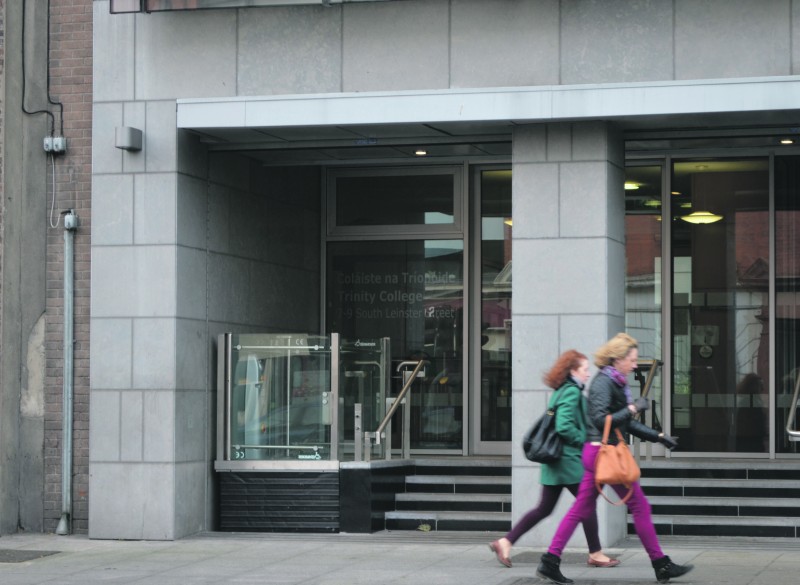
Trinity College Dublin’s Student Counselling Service (SCS) is one of the college’s busiest and most necessary services. Since its inception in 1993, SCS has aimed to “provide support for students to maximise their potential both personally and academically.” Clients now have access to emergency consultations, individual counselling, and group counselling services. However, their workload is vast. In 2025-26, TCD SCS served 2,402 students (over 1 in every 10 students), according to Chuck Rashleigh, Senior Counsellor at SCS. The 2024/2025 Annual Report revealed that the service’s Clinical Load Index score, a metric used to understand caseload per counsellor, was higher than 95 per cent of Higher Education Institutions internationally, which may signal an “overburdened service”.
In correspondence with a spokesperson for Trinity College Dublin, the University Times was told that Trinity has “invested strongly in ensuring that staffing levels are matched to the levels of demand” in response to questions about the service’s budget. According to the Student Counselling Service Strategic Plan, SCS claims to be dedicated to contributing to an “inclusive, compassionate college community supporting student success”.
Despite these efforts, certain groups of students may find it more difficult to access mental health support.
“The reasons vary”, stated a spokesperson for Trinity, “but may include stigma, cultural attitudes towards help-seeking, concerns about being judged, uncertainty about the counselling process, accessibility barriers, or doubts about whether counselling is intended for people like them.”
These groups may include men (who made up 26.1 per cent of students who accessed counselling), gay/lesbian students (8 per cent), and transgender students (3.6 per cent when totalling transgender men, women, and nonbinary people). Rashleigh provided these figures to the University Times and went on to say that if the college published its gender data, the SCS could assess whether transgender and nonbinary students were seeking help proportionately.
According to a spokesperson for Trinity, 25 per cent of 2025/2026 SCS clients were international students, and approximately 25 per cent of clients were registered with a disability prior to coming to counselling. Although the Student Counselling Service did not provide exact figures, it is important to recognise that students of colour, students from Traveller communities, mature students and other groups also often face barriers to accessing support.
Rashleigh stated that “understanding which students may be under-represented among service users, and ensuring that support feels accessible, welcoming, and relevant to all members of the student community” is one of the “key challenges” for any university counselling service.
Unfortunately, not all experiences with the Student Counselling Service have been positive. A third-year transgender student, who asked to remain anonymous due to the sensitivity of her case, spoke to the University Times about being met with transphobia during her first counselling session.
“It was so horrible I have never gone back, and have actively warned other queer people, especially trans people, from going there at all”, she said.
In April of her first year at Trinity, the student set up an appointment with the SCS to discuss her psychiatric and therapeutic options in Dublin, as she was an international student who had just moved to Ireland.
“The [counsellor] began to ask me increasingly probing and irrelevant questions about my gender identity and sexual history, before asking if I ‘identified with autogynephilia’…essentially, she was implying I could be a cisgender man with a fetish for the idea of myself as a woman,” the student explained.
Autogynephilia is a widely discredited theory coined by Ray Blanchard, most often used to disregard the experience of transgender women as being a misplaced sexual fetish. It has long been used to invalidate transgender experiences and deny gender affirming care.
“Needless to say, I was massively taken aback,” the student said. “As I attempted to inform her that using such terminology was massively hurtful to her future patients, she repeatedly remarked on how ‘defensive’ I was getting and spoke patronisingly to me when I expressed that intimate details of my gender and sexuality were irrelevant to the appointment where I was simply seeking recommendations for psychiatry and therapy clinics.”
“She was very clearly, like, smug that she had made me uncomfortable,” the student finished.
While trying to figure out her next steps, the student was recommended to meet with the head of SCS directly. Due to the treatment she received during her last experience with the service, however, she was unhopeful for any sort of meaningful change to be made from her complaint and chose to not pursue the issue further. “I felt like I couldn’t do anything…I don’t know what kind of consequences could exist for that kind of thing,” she stated.
On their website, The Student Counselling Service states that “all Clinical Team staff are bound by their professional code of ethics”. They go on to reference the Code of Professional Ethics of the Psychological Society of Ireland and the Statement of Ethical Principles of the EAP (European Association for Psychotherapy), which the Irish Council for Psychotherapy adheres to. Clause 1.1.2 of the Code of Professional Ethics of the Psychological Society of Ireland states that psychologists shall “not allow their service to clients to be diminished by factors such as gender, sexual orientation, disability, religion, race, ethnicity, age, national origin, party politics, social standing or class”.
Sophie Coonan, LGBT+ Rights Officer for Trinity College Student Union (TCDSU/AMLCT), commented that she would like to see improved use of preferred pronouns within both the SCS and the college community at large.
“I would like to see more training on that matter”, she said. “This is, once again, a much wider issue … they’re good people trying to do good work … institutionally, as with everything, it just needs work.”
In response to the allegations of discriminatory behaviour, the Student Counselling service told the University Times via email that they are “deeply disheartened to know that a student has had this experience… It is imperative that students feel able to express their sense of injustice and gain the support they deserve and choose to avail of.”
“Our commitment to inclusivity and valuing diversity is embedded in the fabric of our service and is evident through our mission, vision and values. We wholeheartedly align our service with these standards and this is evident through our professional status. All our therapists are either accredited psychotherapists or psychologists and proudly uphold the ethical standards involved,” they went on to write, referencing the Irish Association for Counselling and Psychotherapy (IACP) and the Irish Association of Humanistic and Integrative Psychotherapy (IAHIP).
Responding to questions regarding recent staff training, the SCS commented that “The Student Counselling Service is explicitly aligned with the university’s Gender Identity and Gender Expression Policy by embedding inclusivity, dignity, and respect into its core therapeutic framework.”
“We facilitate both internal and external CPD [Continuing Professional Development] events for the team, regularly coordinating sessions on working with diverse client presentations. Most recently, in November of 2025, a training was delivered and facilitated by an external provider on the topic of ‘best practices when working with gender diversity with clients’. The external trainer was a psychotherapist and clinical supervisor with over ten years’ experience working with young adults and with a specialist interest and expertise in GSRD (gender, sex and relationship diversity) client work”, they finished.