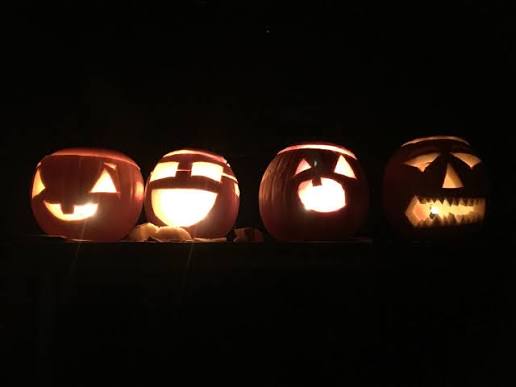

While searching for the perfect shade of red lipstick for your Elizabeth Holmes costume, or the right-sized yellow hoodie for Jesse Pinkman, does it ever cross your mind as to how we arrived at such a tradition which relies mostly on monetised American culture? ln an Ireland so currently concerned with commodified identity, how have we come to a point so distant from that original Celtic understanding of Samhain? What was once a tradition built on communal gathering and rather grounded acknowledgements of the great beyond, has now become another marketable tradition to be repackaged as the current unmissable event du jour. But what is most curious about this handover to western contemporary culture, is the overall removal of Celtic association with Halloween. How have we managed to incorporate a triskele into every material possession imaginable, all while disregarding a day that was created by the original Celtic ethos we claim to be reviving?
Samhain itself was primitively a pastoral celebration of winter, beginning at the end of October and lasting into the beginning of November. It marked the midpoint between autumn’s equinox and the winter solstice, allowing for a final gathering before the cold darkness settled in, quite similar to Pav Fest in many ways. The belief that during Samhain, the veil thinned and those from the spiritual world were welcomed to exist among the living, allowed for a sense of mischief to unfold. This lead to traditions involving masked costumes and grand bonfires, used to both ward off unwanted spirits as well as contribute to the hijinks (archaic horseplay for those at home). It was seen as a deeply spiritual and connective festival, which recognised what had passed and celebrated what the new farming year would bring.
Now, a modern understanding of Halloween is not so different. A night of festivity on which people come together and act mischievously in costume. Pretty similar. However, it is the ongoing spending and contemporary superficiality of tradition that is different, and somewhat alarming. In 2025, Irish adults were projected to spend a combined total of €61 million on Halloween, which is a little insane considering only 1 in 3 were planning to decorate their houses that year according to iReach Insights. But what is this money being spent on, because I personally have not received any invitations to excessively large feasts or luxury mischief retreats? Well, the obsession with spending probably began with the large quantity of Irish and Scottish emigration to the United States. Once capitalist utopia got word of polyester onesies, the road became endless. Into the 20th century, the new American additions of trick-or-treating and dressing as your favourite superhero came through on our televisions, and of course, the world bought in. Samhain became Halloween and ghoulish fairies became… William Shatner?

Of course, there is nothing entirely wrong with presenting your highly intellectual and ultra-specific costume, even if it does represent decades of commercialised heritage. Halloween is a night for expression and creativity, however, it is interesting that in light of a welcoming of Celtic art and ancestry through Irish fashion trends, we seem to ignore our own direct connection to Samhain every year. It seems that many aspects of ‘Irishness’ have been brought into the limelight in recent years, in music, film, jewellery, the list is endless. But to what end is this push to create an ‘Irish’ image if all that comes out is a bedazzled spiral lacking any sense of cultural depth?
In truth, perhaps the reason behind a lack of community engagement in Samhain is something beyond the public’s control. Safety on Halloween is a prominent problem in Dublin, with the Irish Independent reporting the highest figures of emergency service demand on the night in 2025, and An Garda Síochána’s Operation Tombolo seizing around 1,220 explosives in the past decade alone. With numbers like these, it’s no wonder that people stick to controlled house parties and early-evening neighbourhood loops. However, reports regarding gatherings by Dublin City Council on Halloween reduced calls to the Gardaí in the North Inner City by 40% in 2015, according to RTÉ. This would include events such as the Otherworld Festival and Scare D8.
And while festivals like these work to reduce the harmful behaviour that Halloween provokes and create safe spaces for crowds to gather in true Celtic fashion, there are other events which also deliver on celebrations of Celtic legend and heritage. This year, the MACNAS company celebrates 40 years of performance which incorporates myth and ancient storytelling into large-scale parades. Festivals like Gaillimh Ah-Boo provide spaces for parades such as this, and work with tourism initiatives like ‘Home of Halloween’ to create awareness of the historic connection to a holiday which globally, is barely recognised as our own. In Dublin, the Bram Stoker Festival hosts parades, carnivals, walking tours, and historic events throughout the city.
This is the collective awareness that can be brought into our Celtic revival to push ‘Irishness’ past its novelty and into the contemporary consciousness, not to mention the advantages of cultural integration across groups and the overall accessibility of these events. So, if the Halloween party falls through, or the Elizabeth Holmes wig never arrives, you can always partake in some good, Celtic-fashioned Samhain celebrations.