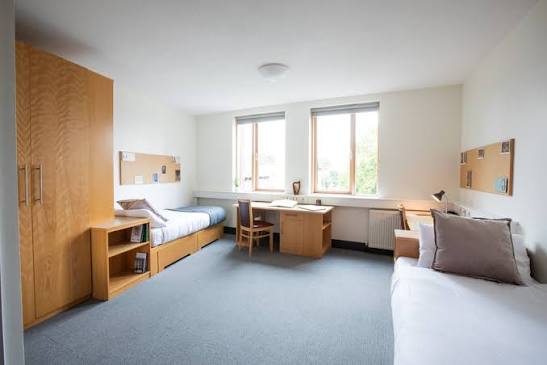

After nearly four months of waiting since applications for Trinity’s on-campus accommodation closed on March 2nd, thousands of students learned last week whether or not they had secured one of the 870 rooms available for the 2026-27 academic year.
For many unsuccessful applications, the decision came too late to easily secure alternative accommodation in an increasingly competitive market. One final-year student living approximately 150 km from Dublin said the delayed decision left them “struggling to find a room”, explaining that they had “no accommodation sorted” by the time offers were released mid-June.
According to figures provided by Trinity’s media spokesperson, the college received 3,258 applications for on-campus accommodation this year. With only 870 rooms available, just 26.7 per cent of applications could be accommodated, not including rooms designated to Foundation Scholars, leaving nearly three out of every four students who applied without an offer.
Many of those left disappointed said they expected factors such as distance from Dublin, disability-related circumstances or years of involvement in college life to strengthen their applications. Instead, they described an allocation process they found difficult to understand.
Sinead, a final-year student from the north of Ireland, told the University Times she had assumed distance from campus would be one of the strongest considerations. Instead, after hearing that students living in Dublin had received offers, she was left “extremely uneasy” about the coming academic year, having relied on the accommodation. Without a room, she now faces a two-hour commute each way to college.
Another final-year student living approximately 150 km outside of Dublin similarly believed that both distance and extracurricular activities would influence the allocation process. They said it would have been helpful if the process had been “more transparent”, arguing that while distance should remain the primary consideration, students should also have been able to demonstrate their contribution to college life.
For many students, uncertainty surrounding this year’s allocation began before decisions were released.
Applications in previous years for on-campus accommodation invited students to describe their “contribution to campus”, allowing applications to outline their involvement in societies. The section did not appear on this year’s application.
When asked whether there had been any significant changes to the allocation process compared with previous years, Trinity’s media spokesperson told the University Times there had been “no significant changes”. This apparent inconsistency puts into question what role, if any, contribution to campus has previously played in accommodation decisions.
One final-year student who chaired a Trinity society before going on Erasmus said they had not expected their extracurricular involvement to guarantee accommodation. However, they described it as “disappointing” that applications were no longer asked to include it and, more importantly, that students had not been informed that the application had changed.
Not all students believed “contribution to campus” should have remained a determining factor. James Ryan, a final-year undergraduate, said Trinity should instead place greater emphasis on economic and disability needs than societal positions. However, he also questioned how the existing criteria were applied, saying, “My understanding is that preferences are given to final-year students or people who apply with disabilities, although I know people in both categories who did not receive on-campus accommodation, which I felt was unjust.”
Frustration with the allocation process was compounded by the timing of the decisions. Applications closed on March 2nd, but applicants did not receive the outcome of their applications until nearly four months later, leaving unsuccessful students to search for accommodation at a point when much of Dublin’s student accommodation had already been filled.
One incoming final-year student from the Midlands who secured accommodation in Pearse Street said the delay created unnecessary uncertainty for students regardless of the outcome, noting, “Many landlords already have vacancies filled, and there’s no reason for them to wait for you to hear back about campus accommodation when someone else will take the room the next day.”
Other students echoed these concerns, asking for “more transparency in the process”.
In its statement to the University Times, a Trinity media spokesperson said that “in light of the acute accommodation crisis, priority for on-campus rooms is given to incoming final-year students on the basis of need”. However, for many applications, what constituted a “need” remained unclear.
One student, who applied via Trinity’s Additional Needs accommodation process with supporting medical documentation, said they had expected their application to be prioritised because of their circumstances. Instead, they were informed they had been placed on a waiting list.
The student shared the following correspondence with the disability service: “The number of rooms available under the Additional Needs category is extremely limited, and this year we have received over six times the number of applications than available rooms.”
When asked about their experience the student told the University Times, “I feel as if my application on the basis of additional needs was not taken into consideration. It is a seriously shocking precedent for a college that prides itself on looking after its students outwardly, yet it seems like they do not really care. There’s no real transparency in how the rooms are given out nor how my circumstances are taken into account.”
If the college is claiming that rooms are allocated on “the basis of need”, the figures raise broader questions about whether the number of rooms reserved for students applying through the Additional Needs category is sufficient to meet the level of demonstrated demand.
Questions were also raised by students who had been promised on-campus accommodation due to welfare roles.
One student who served on the JCR’s welfare team during the 2024-25 academic year said that of 15 welfare offices, only one had been offered on-campus accommodation this year.
This student described this as a significant departure from what they understood to be previous practice: “It was more of an informal arrangement, but it was always the case that welfare got on campus; we were given no indication that it would change.”
They further said they believed this expectation had been reinforced during a meeting with Provost Linda Doyle in Hilary Term of last year. “I believe Linda Doyle herself confirmed it when we visited her house as a group in Hilary Term last year.”
While there is no published policy guaranteeing accommodation for the JCR’s welfare team in their final year, the student’s account reflects the uncertainty expressed by many applicants about how different forms of need are weighed against one another during the allocation process.
Those questions extend beyond welfare roles to another group of students whose accommodation is formally guaranteed: Trinity’s Foundation Scholars.
Unlike “welfaries”, Foundation Scholars are guaranteed on-campus accommodation. The policy, long regarded as one of the principal benefits of earning a scholarship, has attracted attention amid this year’s shortage.
An investigation by the University Times in April 2025 found that while students educated in private schools make up approximately 30 per cent of Trinity’s student body, they accounted for 51.9 per cent of the Foundation Scholars sampled. The investigation also found that 44.4 per cent of the scholars examined were from Dublin. Of the Irish scholars whose hometowns could be identified, 68 per cent were from Dublin, despite Dublin students making up 57 per cent of the wider Irish student population. Additionally, the population of scholars grows every year, with 89 new scholars being named on Trinity Monday of this year. With the high demand for on-campus accommodation, the increasing number of Foundation Scholars leads to questions about how guaranteed accommodation for students who statistically might need it less works in a system where fewer than one in three applicants receive a room.
While the investigation did not examine students’ financial circumstances or housing needs, its findings have led to discussion about the guarantee of accommodation for scholars, the relative majority of whom live in close proximity to college, during a period in which only 26.7 per cent of applicants for general on-campus accommodation were successful.
This year’s accommodation allocations have exposed more than a shortage of rooms. They have exposed a shortage of clarity.
With only 870 rooms available for more than 3200 applicants, disappointment was always inevitable. But for many students, uncertainty did not end when they received their decision.
When applications changed but the allocation process reportedly did not, when students applying through disability found themselves on waiting lists, and when applicants waited nearly four months for a decision that left them with little time to find somewhere else to live, many were left asking the same question:
How was the decision made?
If accommodation is allocated on the basis of need, where do guaranteed rooms for Foundation Scholars fit into that equation, and how does Trinity decide whose need comes first?
Correction, 7th July, 2026, 9:33 a.m.: The original version of this article claimed that the “majority” of foundation scholars live in Dublin; in fact, at 44.4 per cent, only the relative majority of scholars live in Dublin. The text in the above article has been corrected accordingly.