
“I’m being told to have hope, but if I had it, this fight would be easier,” said BDS Chair Seán Radcliffe when asked about the recent sanctions placed by the United Kingdom, France, and Canada on Israeli settlers. These sanctions have been in the news recently, with many articles viewing them as a substantial change in policy towards Israel, as these states shift from reliable allies to critics. However, this perception is not universal. Over 130 international law experts in the United Kingdom have signed a petition arguing that the recent sanctions will do little and fall far short of the standards set by the International Court of Justice’s 2024 advisory opinion. Radcliffe holds similar opinions on the state of the BDS movement in Ireland and the Irish government’s inaction.
Senator Frances Black first introduced the Occupied Territories Bill in 2018. In the following eight years, it was repeatedly watered down and amended before finally coming into effect earlier this month. When asked, Radcliffe argued that the legislation enacted was a band-aid on a bullet wound, limited only to goods that could be proven to have been made in Israeli settlements. This accounts for about 0.1% of Irish trade with Israel, as several loopholes can obscure products’ true origins. Furthermore, the original draft of the Occupied Territories Bill included a section prohibiting the use of services operating in settlements; it has since been removed. Regarding these recent sanctions and the passing of the Bill, Radcliffe is fairly pessimistic in considering how effective they will be in limiting Israeli actions in the West Bank and Gaza. In his opinion, these recent sanctions show not only the slow pace of the FF-FG government. “We have been outdone by the British!” said Radcliffe when asked about Irish inaction regarding new sanctions.
Furthermore, these sanctions highlight the seemingly rampant political theatre regarding Israeli actions in Palestine. The sanctions introduced only target Israeli settler communities and the goods produced therein while drawing a hard line at an actual arms embargo or broader boycott. The BDS movement has a long history of opposition towards Israeli settlements, and Radcliffe argues that the reason states are willing to sanction these groups is that it will have a limited effect on their economies while allowing them to save face with an outraged voter base. This, Radcliffe believes, stems from a need to create a comfortable narrative in the media. By signalling that the Israeli government and the Israeli settlements are separate entities, it allows states facing electoral pressure to use half-measures to maintain economic stability. That’s not to say Radcliffe does not support the recent sanctions; he does, but he believes they are too little, too late.

While the global mood on Israel is shifting, these sanctions seem to show a pattern across many European and American nations. Many global states are increasingly speaking out against the actions of Israeli settlers or the Israeli government; direct actions have been limited. Many nations will call for peace and condemn the humanitarian crisis in Gaza, but sanctions on the Israeli government threaten national economies and interests in the region. Shared humanity is being put aside in favour of a global realpolitik. Radcliffe is aware of this, as he discussed how these actions are very limited in a global context. By ensuring that Palestine and the plight of Palestinians remain in the news cycle, larger crises like in Sudan or the Congo fly under the radar. Radcliffe’s frustration with the pace of change and the lack of the humanitarian goals these states espouse is not limited to student activists or aid organisations but rather a result of an international system based more on reputation than action.
The recent sanctions on Israeli settler movements, as opposed to the Israeli government, are simply the most recent outburst of a decades-old conflict between statecraft and sympathy. States often overlook humanitarian crises to further their own interests, paying them lip service but little else. Ed Miliband, the current Foreign Secretary of the United Kingdom, went so far as to say, “The sanctions regime will target illegal settlements and settlement expansion, not Israel,” during a speech in the House of Commons. This is the dichotomy of promoting humanitarian causes on the world stage. These half-steps are nothing new in the globalised world, as there is a long history of both democracies and dictatorships speaking on the importance of civil rights and humanitarianism while often funding the very states carrying out atrocities.
This is not to say that governments focused on foreign aid and alleviating suffering cannot succeed, as many genuine efforts across the globe to reduce global poverty and eradicate disease have shown marvellous results. Take, for instance, the great reduction in global poverty in the last 30 years. In 1990, the World Bank estimated that over 2 billion people lived in extreme poverty; by 2025, that number had been cut by half. However, states now view humanitarian aid not as a moral necessity but as a tool to influence the most vulnerable and outflank their rivals. Humanitarianism has become selective, implemented not based on its merit or moral value, but simply as a tool of political power. Hope is a dangerous thing in political activism, particularly regarding human rights. Hope can often lead to previously impactful groups losing focus on their real goals, blowing half-victories far out of proportion and losing focus.
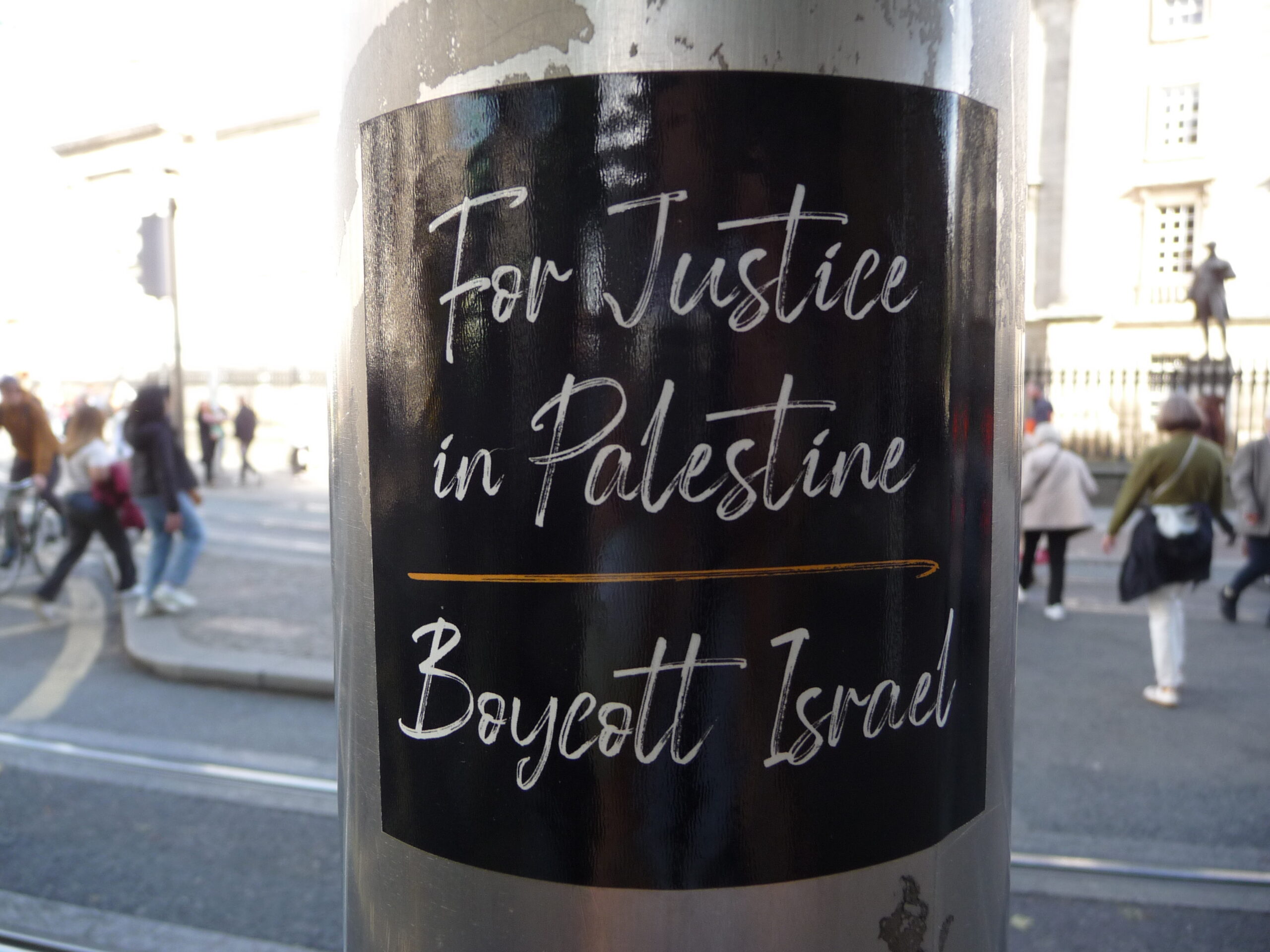
According to Radcliffe, while the BDS movement will support any sanctions, this new wave only serves to prove that states are more interested in political performances and showboating instead of saving lives. He warns against taking pride in these new sanctions, arguing that it will dilute the movement’s real goals and make it willing to accept limited actions in the future, making the movement as ineffective as the new sanctions.