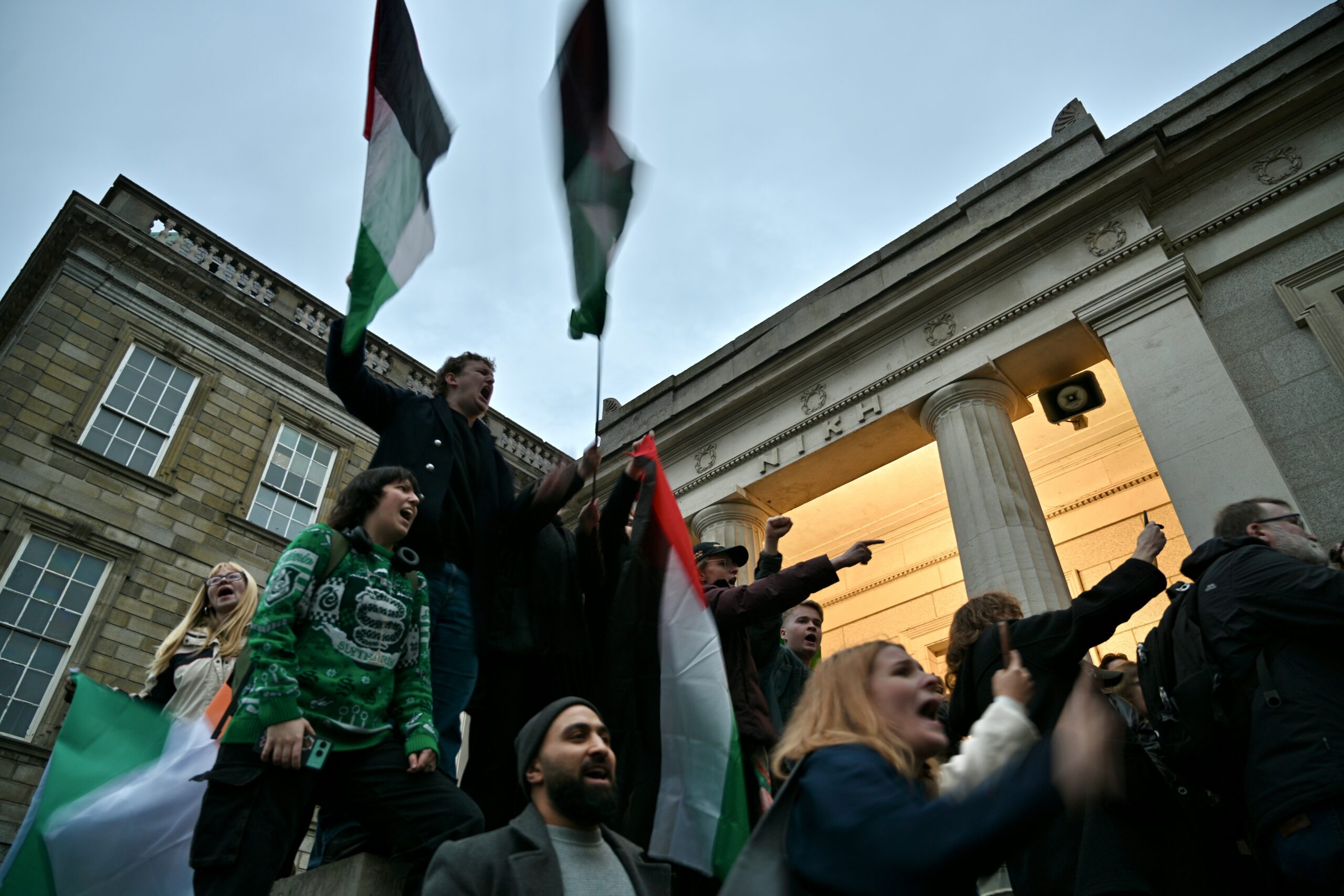
Across France, Spain, and Italy, protests are unfolding with shared frustrations and anxieties. First let down by a scholastic system that seems to be continuously decaying and inegalitarian, powerless in front of stagnant wages and an ever-rising cost of living, the youth of Europe are making their voices heard. In Paris, close to 90 per cent of those detained for protests between September 28th and October 5th were minors. In Italy, over the weekend of October 18th, the police recorded 271 detentions, of which 220 were minors, the youngest being under the age of 12. In Spain, over half of protesters detained were under 18 years old. The front lines of these movements are teenagers and college kids, a generation fed up with being locked out of their own future. And while these kids are admirable, a question remains: will these protests have any effect, or will they just be a short-lived uproar?
French protesters continue to lament overcrowded classrooms, teacher shortages, crumbling school infrastructure, and the need for increased educational funds. While the average size of a French high school class is about 30 students, nearly 20 per cent of classes have between 35 and 39 students, and fewer than 15 per cent of French school buildings have been renovated in the past decade. These students are subjected to poor school conditions such as water leaks, black mold, and rat infestations, which can impact their health and studies. These issues tend to be exacerbated in poorer, immigrant-heavy neighborhoods. These facts showcase the inequitable system that French schools are subjecting children to, and the environment that the youth of Paris are currently fighting to change.
Spain and Italy have followed suit with protests regarding their own educational systems. Italian students have taken to the streets under the slogan “Faisons comme en France” (“Let’s do like in France”), protesting for a significant increase in the public funds allocated to the national school and university systems, and physically occupying schools to protest the poor conditions and structural neglect. Public school teachers in Spain launched an indefinite strike on October 14th; both Spanish and Italian protesters have pitched massive tent encampments in central Madrid and the University of Rome Sapienza, in order to protest the extreme housing insecurity that students face, making access to education a privilege rather than a right. For these protesters, the right to a good education is fundamentally inseparable from the right to affordable housing; students should be able to afford to live in the cities where they study, and government officials should be concerned about fostering an educated youth.

Now, the protests have become centered around the cost of living, stagnant wages, housing crisis, and general frustration with governing bodies. Across all three countries, trade unions and workers are joining in on these youth-led protests. In Italy, major trade unions have called for nationwide general strikes and synchronized walkouts, disrupting public transit, air travel, schools, and government offices. In Paris, trade unions such as the General Confederation of Labor and the Yellow Vests have joined in on the demonstrations, formally backing the movement and mobilizing. In Spain, the two largest trade unions — The Workers’ Commissions and The General Union of Workers — are calling for a nationwide general strike on November 11th, which marks the first time in 14 years that both major unions have jointly backed a general strike. This joint effort between the youth, trade, and worker unions has expanded protest demands beyond direct educational needs. But at their core, education is a key component connected to all of these systematic issues. If the school systems are catastrophic and underfunded, the youth of that country will not have the same opportunities to get a quality education and prove their individual potential. If a country has an undereducated population, that population is less capable of recognizing and acting against governmental abuse. What’s left is a people who have suffered from dilapidated systems, and who want better for the current and future population; with students and workers coming together, they are able to mobilize as one against the current governmental bodies and work towards change together.
While these protests and demonstrations have gained traction, the students’, workers ‘, and citizens’ protests alone will not be able to conduct the changes they are aimed at. Given the fact that these educational and social issues work on a systematic scale, only action by the governing bodies will result in the changes that these protesters are looking for. France, Italy, and Spain are all in the same predicament when it comes to the rising cost of living and stagnant wages — they do not have individual control over the euro itself, having surrendered their individual monetary sovereignty to the European Central Bank when they joined the Eurozone. However, these governments do have power over their educational systems. They have the power to increase funding, to fix school buildings, to hire more teachers, and ensure that all of their citizens have the same opportunity and right to a quality education. They have the power to shape the futures of their youth, and to do better for the future generations to come.
For these students leading the charge, it is their lives, their futures, at stake. Governments have a responsibility to their youth. They cannot be expected to learn and prosper within disintegrating systems, all while being priced out of their own potential.