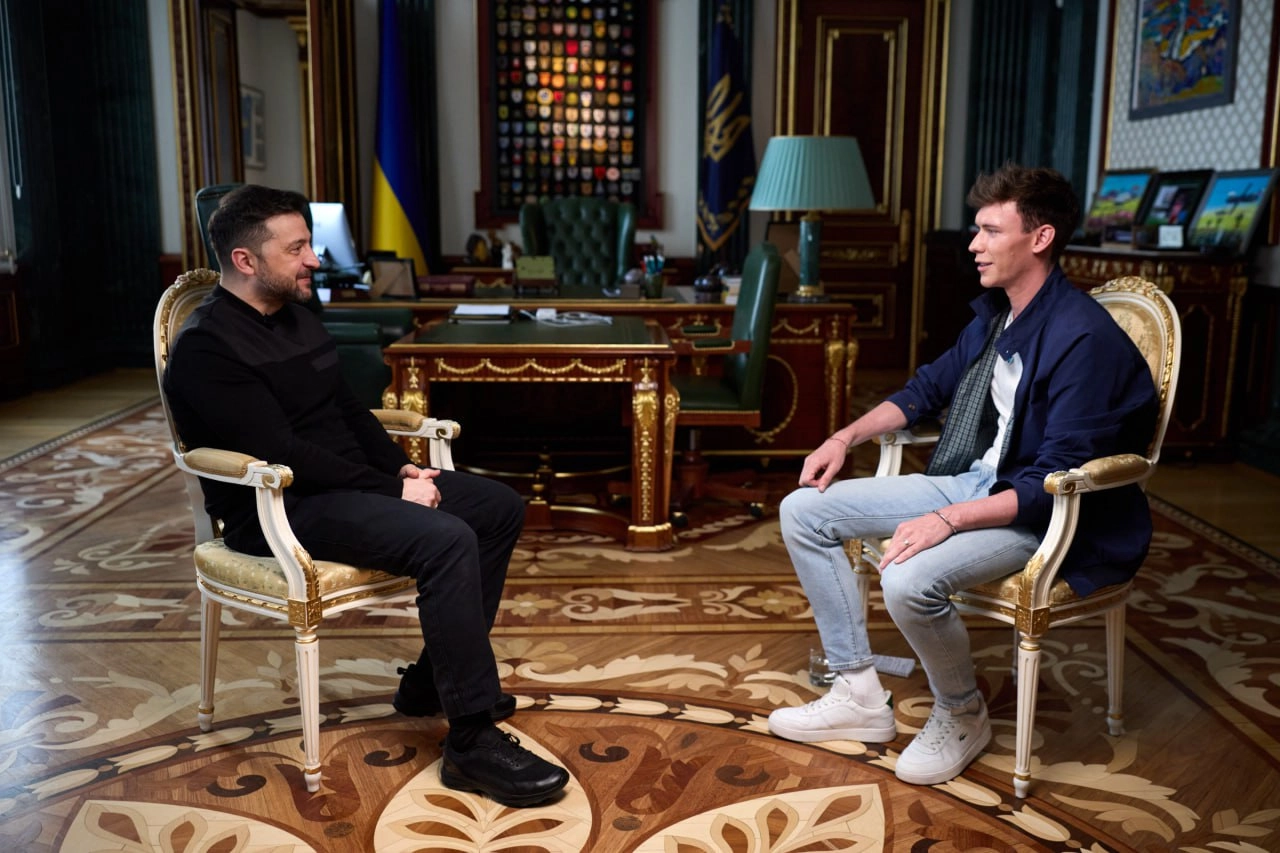
Drones of unknown origin circled overhead as Ukrainian President Volodymyr Zelenskyy’s plane touched down in Dublin. Irish authorities detected them not with radar — Ireland has none — but with the naked eye. The incident exposed what defence analysts have long warned about: Ireland, with maritime territory spanning seven times its land mass and carrying three-quarters of all international data cables, cannot defend itself. Yet as Europe embarks on its most ambitious military buildup since the Cold War, Ireland digs her nails into a policy of neutrality that could collapse beneath its own contradictions.
The question Ireland now faces is not if its neutrality will change, but if that change represents an overdue reckoning with strategic reality or demonstrates a betrayal of her moral identity. As EU defence spending soared to €326 billion in 2024, a 30 per cent increase in three years, and the European Commission projects €800 billion in military investments by 2029, Ireland’s position as Europe’s defence laggard has become politically untenable. Despite 75 per cent of Irish citizens supporting maintaining neutrality, the government quietly dismantles the legal and institutional frameworks that make that neutrality meaningful, leaving the Irish public to uncover this transformation after it’s complete.
Russia’s invasion of Ukraine shattered the illusion that large scale war had been permanently banished from European soil. In response, the EU has undergone what can only be described as a revolutionary transformation. The March 2025 White Paper on European Defence, “Readiness 2030”, commits the bloc to building a defence industrial base capable of operating independently of American support. The recently approved Security Action for Europe (SAFE) loan facility allowed EU countries to borrow up to €150 billion for weapons procurement, backed by the bloc’s shared budget, a form of debt mutualisation unthinkable even two years ago.

But the proximate cause surpasses Ukraine. President Donald Trump’s threats to annex Greenland from Denmark have destroyed assumptions about American reliability. When the leader of NATO’s most powerful member threatens a fellow ally with economic coercion and potential invasion, the security architecture governing Europe since 1949 crumbles.
In this context, European defence integration represents not militaristic adventurism but an attempt to answer: can Europe defend itself if America will not? The EU’s €48.3 billion military support to Ukraine, the expansion of the European Peace Facility from conflict-prevention to lethal weapons provision, and the creation of the European Defence Industry Programme all point towards Europe preparing for a world where it can no longer outsource its security to Washington, where Europe becomes a security provider, not merely a global payer.
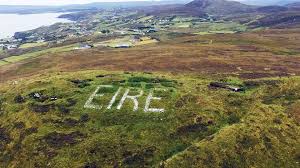
Ireland’s defence spending tells a damning story. At just 0.24 per cent of GDP, Ireland spends less than half of what Malta, another neutral state, allocates. The Irish Naval Service has shrunk from 902 personnel in 2020 to 719 in 2024. The Air Corps operates no combat aircraft. Ireland has no primary radar, no sonar, and no anti-drone capabilities. The 2022 Commission on Defence Forces assessed Ireland at “Level of Ambition 1”, meaning Irish forces could not defend against a sustained military campaign. This is not a theoretical vulnerability. Ireland’s 880,000 km² of maritime territory hosts critical subsea infrastructure carrying 95 per cent of international data traffic. When undersea cables were severed in the Baltic Sea in 2024, suspicion fell on Russian sabotage. Ireland’s cables remain entirely undefended.
Yet Ireland’s integration into European defence structures proceeds apace, largely outside public view. In February 2024, Ireland signed an Individual Tailored Partnership Programme with NATO focused on cybersecurity and undersea infrastructure. Ireland participates in six Permanent Structured Co-operation (PESCO) projects including maritime surveillance and critical seabed infrastructure protection. By early 2025, Ireland had committed approximately €350 million to the European Peace Facility, primarily for “non-lethal” support to Ukraine.
Most significantly, Ireland has committed forces to EU Battlegroups – rapid reaction units of 1,500 personnel designed to deploy within days, potentially without UN mandates. This directly contradicts the “Triple Lock” mechanism requiring UN Security Council authorisation for deployments exceeding twelve personnel. Over 400 academics wrote to Taoiseach Micheál Martin arguing that removing the Triple Lock would “effectively end Ireland’s military neutrality”, objecting to making explicit what is already occurring implicitly.
Defenders of Irish neutrality argue it represents a principled commitment to peaceful conflict resolution that gives Ireland unique moral authority. As then-President Michael D. Higgins stated in his 2024 Christmas message, “What a shameful statistic it is that in 2023 global military expenditure increased by 6.8 per cent to $2443 billion . . . All of this while so many human values cry out for recognition.” From this perspective, Ireland’s contribution to global peace comes not through military might but through UN peacekeeping, diplomacy, and the moral force of consistent non-alignment.
The question becomes sharper when one considers what neutrality actually requires. Switzerland maintains one of Europe’s most capable militaries precisely to make its neutrality credible. Ireland, by contrast, depends on RAF jets to police its airspace and the Royal Navy to protect its waters, making Irish “independence” in security matters a polite fiction. Yet the pro-militarisation argument merits equal scepticism. The Irish Defence and Security Association, a registered arms industry lobbyist, includes prominent academics among its directors and has secured government meetings with European Defence Agency officials to discuss procurement financing. This pattern mirrors developments across Europe, where the defence industry has successfully reframed military spending as productive investment.
Ireland’s dilemma reflects a broader European reckoning. The shift from American unipolarity to multipolarity, via BRICS expansion, de-dollarisation, and the search for alternative governance architectures, has created “one of the most unstable political systems” due to heightened uncertainty about state intentions. In this environment, Europe faces a choice between building genuine strategic autonomy or accepting subordination to either Washington or Beijing. Yet European defence integration faces profound obstacles. Hungary and Slovakia block consensus on Ukraine support. France and Germany disagree fundamentally on nuclear deterrence and command structures. The prospect of a single European army remains “impossible given the divisions over who would command it”.
From a global perspective, European militarisation contributes to escalatory dynamics that make conflict more likely. While EU officials claim to defend the “rules-based international order”, the selective application of international law has made this rhetoric ring hollow across the Global South. European defence buildup, rather than stabilising the international system, may instead accelerate arms racing through classic security dilemma dynamics.
Ireland will assume the Presidency of the EU Council in the second half of 2026, precisely when negotiations over the next EU budget will involve “considerable focus” on defence spending. European partners will expect Ireland not merely to administer these discussions but to demonstrate solidarity through enhanced commitments. The alternative, remaining Europe’s defence laggard while benefiting from collective security, has become politically untenable.
What is being lost in this transformation cannot be easily quantified. Ireland’s tradition of neutral peacekeeping, its role in UN missions, its diplomatic efforts toward disarmament and arms control – these represent genuine contributions to global peace that would be diminished if Ireland became merely another military power.
Yet the status quo – professed neutrality combined with military incapacity – is unsustainable. Those drones circling Dublin Bay in December were not detected by Irish systems but by Irish eyes. Ireland cannot indefinitely benefit from European security while refusing to develop even minimal defensive capabilities. The question is not whether Irish neutrality will change, but whether that change will be deliberate and democratically chosen, or imposed by incremental commitments and institutional drift – a betrayal not of neutrality, but of democracy itself.