On February 28th, the United States and Israel launched strikes on Iran, killing their leader, Ali Khamenei, and several other Iranian officials. Iran responded with drone and missile strikes against Israel and US assets across the region, more specifically, military bases in the Gulf. Tehran also successfully blocked the Strait of Hormuz, a key global oil trading corridor. The US initially stated their motivation for initiating this conflict was to “bring freedom” to the Iranian people. However, after days of back-and-forth attacks, their real motive, to destroy Iran’s military capabilities, has been made obvious. Decapitating their leadership, however, was not enough to achieve this goal. By the second week of the conflict, Iran chose Khamenei’s son Mojtaba to replace him as its new supreme leader, clearly signalling that collapsing the Iranian regime would not be a one-and-done operation.
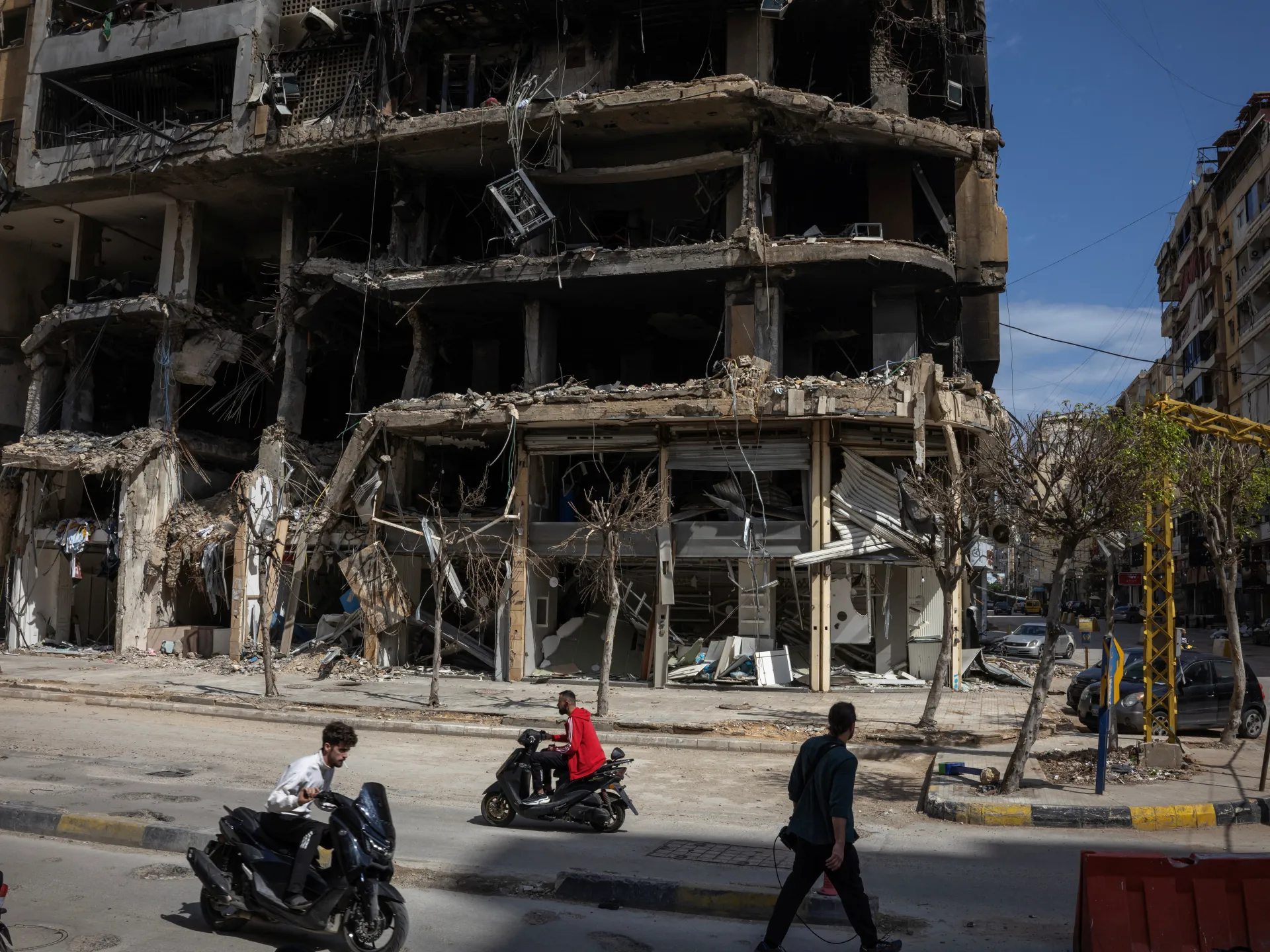
As the conflict continues, the civilian death toll in Iran has now climbed to 1,332 people, a stark contradiction of the US’s supposed goal to “free the people”. The situation in Lebanon is no better, with over one million people displaced and over 1,200 more killed. Hezbollah, an Iran-backed Lebanese Shia militia, joined in on the conflict by firing rockets at Israel in response to the killing of Khamenei and daily Israeli attacks on Lebanon, a blatant violation of the 2024 ceasefire. The Israeli military bombarded Beirut and its southern suburb, Dahiyeh, displacing its residents and issuing phone alerts to warn them against remaining in the area. This tension comes to a country that has spent the better part of a decade stumbling from financial catastrophe, to pandemic, to devastating explosion, to conflict, each punch landing before the wound from the last could heal. And now, the country finds itself pulled into yet another war it did not choose and cannot sustain.
A ceasefire between Hezbollah and Israel had taken effect in November 2024, requiring Hezbollah to move its fighters north of the Litani River, a 90-mile waterway that cuts across southern Lebanon, while Israel would begin withdrawing from the south. With this ceasefire came some hope for a small break for the Lebanese. The World Bank’s Lebanon Economic Monitor for winter 2025 showed that Lebanon’s economy recorded a positive economic growth with a rebound in tourism and cautious optimism around reform progress. The new government under President Joseph Aoun and Prime Minister Nawaf Salam had sparked some hope in the Lebanese people, and for the first time in years, Lebanon had a functioning executive.

However, all of this optimism and hope for the future was extinguished with the beginning of the US-Israeli strikes against Iran. Hezbollah’s decision to enter the fighting reportedly took the Lebanese political administration by surprise, with PM Salam declaring the group’s military activities a “strategic mistake”. His statement and clear disapproval, however, did little to stop the strikes.
The Lebanese state’s dilemma is extremely stark. In January 2025, President Aoun declared that disarming Hezbollah would be an aim of the state, and in August of that year, the government adopted the “Homeland Shield” plan to bring all weapons under state authority, effectively disarming Hezbollah. Hezbollah has responded by condemning the disarmament roadmap and the cabinet’s decision as a “grave sin” and has accused the government of succumbing to US pressures. As a result, Hezbollah and Amal ministers also walked out of a cabinet session in protest, showing the political and sectarian divide that exists within the country and government. In a country where Hezbollah commands significant parliamentary representation, suggesting disarmament has historically been political suicide that would weaken Lebanon’s capacity to resist Israel, especially without reciprocal Israeli concessions. In January 2026, Naim Qassem, Hezbollah’s secretary general, said that demanding disarmament while “Israel is committing aggression and the US is imposing its will on Lebanon” was working against Lebanon’s interests, not for them. But when Iran was attacked, Hezbollah’s loyalties were laid bare.
It is clear that Hezbollah’s decision to reopen conflict with Israel was meant not only to relieve some military pressure on Iran but to strengthen its own standing in the face of growing criticism in the country. That is to say, Hezbollah needed this war in a way, even though Lebanon clearly did not. The human cost is the adverse effect. With Israel forcing mass evacuation orders in the south and in Beirut’s suburbs, almost a quarter of the population is now displaced. According to Al Jazeera, aid workers are reporting that the most vulnerable people are migrant workers, Syrian refugees, people with chronic diseases, cancer patients on dialysis, people who cannot access insulin, and displaced people who don’t have access to a fridge to store their medicine. A Palestinian teacher who had been living in Tyre, southern Lebanon, but had relocated to Beirut, said the experience was “not good at all”, but having experienced displacement before with a previous Israeli campaign on Lebanon, she maintained that she came into this round “more prepared”, saying “it’s not the first time for us”. According to a report from Lebanon’s national mental health programme in March 2025, three in five people in the country currently screen positive for PTSD, depression and anxiety, and this was before the outbreak of the current war.
The country’s economy is doing no better than its civilians. Lebanon was already on its knees before the war began this year. In 2019, Lebanon’s currency lost 98 per cent of its value, throwing the country into the most catastrophic financial crisis in its history. By the end of 2024, Lebanon’s cumulative Gross Domestic Product (GDP) decline since 2019 had plummeted by 40 per cent. According to the World Bank’s Rapid Damage and Needs Assessment, by March 2025, conflict in Lebanon had cost the country $14 billion in total, with reconstruction needs alone reaching $11 billion. But according to the Middle East Institute, government revenues in 2025 were estimated to be around $5 billion, less than half of what the World Bank estimated Lebanon needs just to recover from the 2024 war with Israel.
Now in 2026, a new war has struck the country. The Lebanese state simply cannot take on this load. With no functioning banking system and no IMF deal secured, Lebanon cannot rebuild a country while simultaneously being bombed and while a militia within its borders wages war. But a country cannot afford a war it cannot pay for and cannot politically justify. However, somehow, Lebanon always survives. So the question here is not whether it will survive, but how much of it will be left when the war ends.
As for the Lebanese diaspora living in countries other than the one it calls home, they are forced to watch their country fall into destruction and conflict time and time again, with no certainty or reassurance for what might come next. The community of Lebanese living abroad is roughly twice the population living inside Lebanon itself. Many in diaspora communities across the world are organising efforts to help displaced families back home, glued to social media and the news, and feeling the familiar helplessness of watching the conflict from afar. But the crisis cuts particularly deeply for diaspora students who had planned to return this summer for family visits, weddings, or internships. The annual summer migration is now an impossible calculation. Internship programmes in Beirut’s once recovering financial and tech sectors have been suspended or relocated. Citizens of countries including Ireland and the United Kingdom have been urged not to travel there or leave immediately. For an entire generation of Lebanese students studying overseas, summer 2026 looks set to be another year of watching home burn from a distance as they are once again faced with the decision between safety and family.