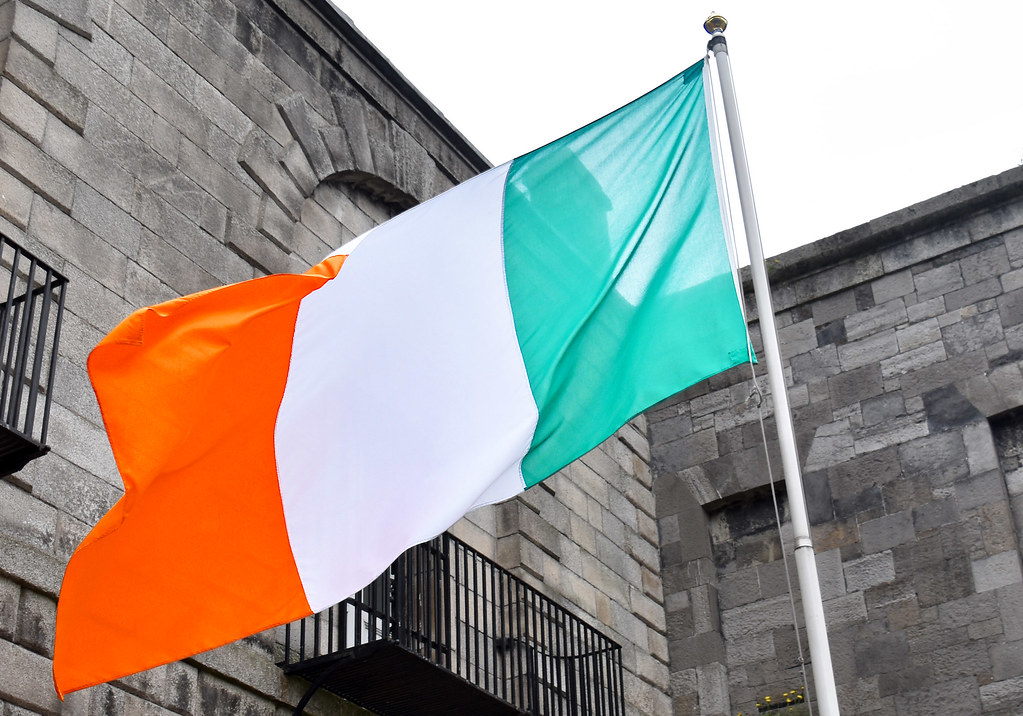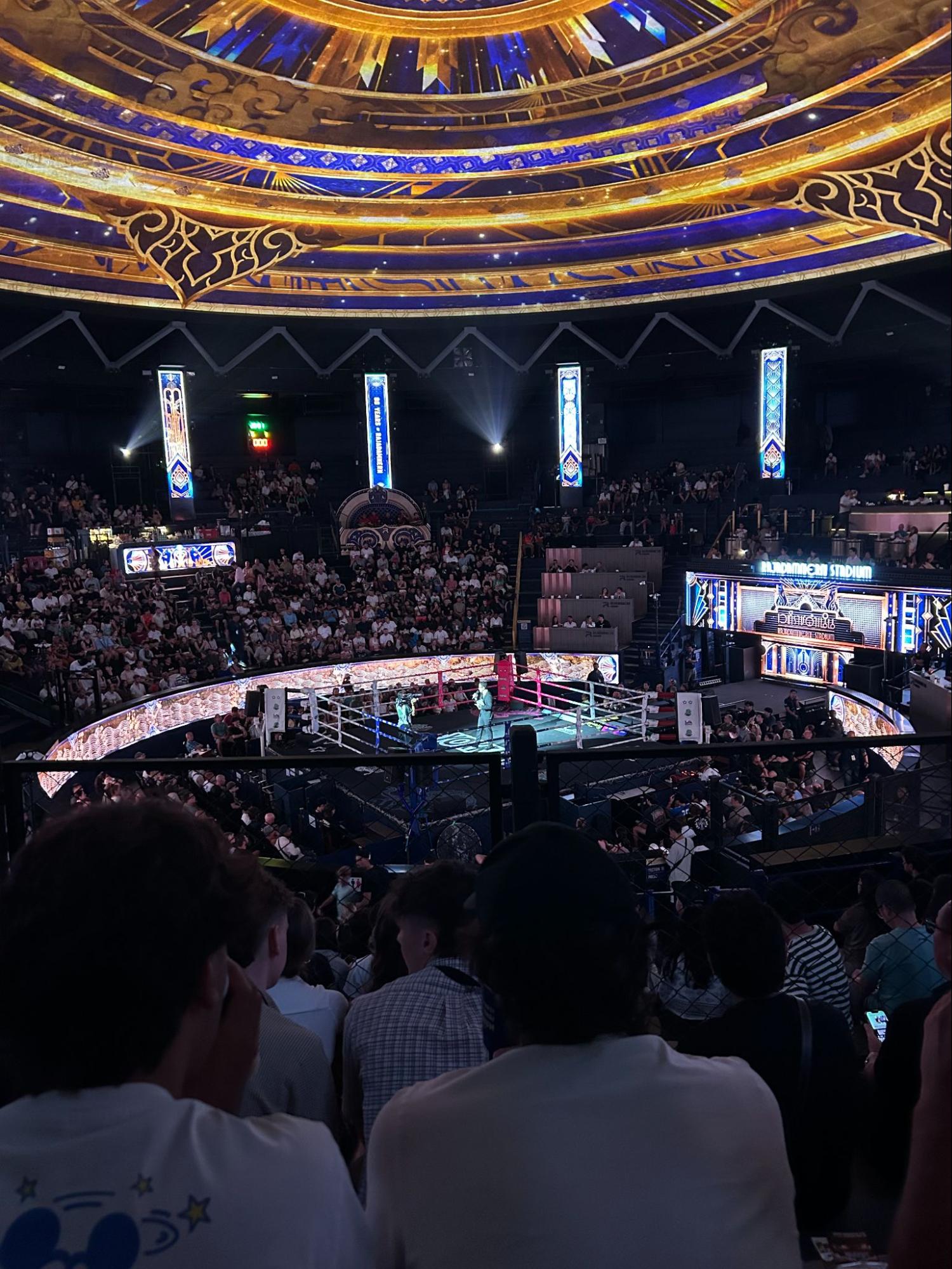

If any of those who find themselves in Bangkok today make their way to the famous Rajadamnern Muay Thai Stadium, they will find an interesting sight: among the electronic banners wrapping around the arena displaying the stadium’s champions of each weight class as well as the flag of their country (as one might expect, mostly Thailand) stands a lone Irishman — Niall McGreevy. On July 11ᵗʰ the Belfast native became the first Irish Muay Thai fighter to win a championship in the historic venue — considered the coveted birthplace of the professional sport in its modern form — after defeating Tapaokaew Singmawynn for the Welterweight title. After my own visit to Rajadamnern this summer and seeing his champion banner with an Irish flag draped behind, admittedly a Muay Thai novice, I decided to reach out for a short conversation, to better understand the road that led him to this special achievement.
Partially to further my own understanding of the sport, I asked him to explain Muay Thai in his own words: “You can punch, kick, knee. It’s called the Art of Eight Limbs.” It differs perhaps most visually from western kickboxing disciplines through the allowance of the use of elbows. McGreevy has been involved in the sport for over twelve years: “I first got into it [because] my friend asked me to go down to a class in school when I was 15. I used to play Gaelic and Hurling and the season was over so there’d be a season like that. I just wanted to keep fit and try something new and he asked me to come down to it and from then on I just grew into it.”
Muay Thai has become more known in the West, in part due to its prominence in the increasingly popular MMA, where Muay Thai striking techniques have become hugely influential. However, McGreevy has maintained a focus in this particular discipline, which includes many rituals and traditions that noticeably set it apart from other fighting forms. We discussed the Wai Kru Ram Muay, the traditional ritual in which fighters bow in each corner of the ring before commencing their fight, often wearing a mongkol, a headband placed on the fighter by their trainer: “That’s basically like a tribute to your coaches, trainer, family, and your opponent.” He reminisced on his humorous first attempt at the Wai Kru before coming to Thailand, in which without prior practice he made a valiant half way through. “Some of the [practices] are more for the Buddhist religion” he explained, “but we do it when we’re in Thailand, to obviously show respect.” Indeed, some of these traditional aspects are stripped down or not performed for a global stage; it was in this context in which McGreevy won the WBC (World Boxing Council) Muay Thai World Welterweight Championship in Verona, Italy in 2024, a title he’s successfully defended once to date. What makes McGreevy’s recent achievement so special is the fact that the Rajadamnern stadium is considered one of the pinnacles of the traditional, almost ritualistic presence in the sport, which perhaps allowed this achievement to feel as a big culmination of his career so far: “It’s a long journey, [and] obviously, a lot of bumps on the road, you’re not just smooth sailing. If anything is worth doing, [you’ll see] there’s gonna be a few.”

McGreevy hopes to build off his recent success: “I just want to defend [the title] now and stamp my name as a legend so that’s what I’m going to focus on for the next two, three years and then walk away.” A bittersweet note, but one that can only be easily said by a man that has won most of what can be won in his discipline. McGreevy’s success is just one example of the ability to see the achievements of Irish people in places you least expect.