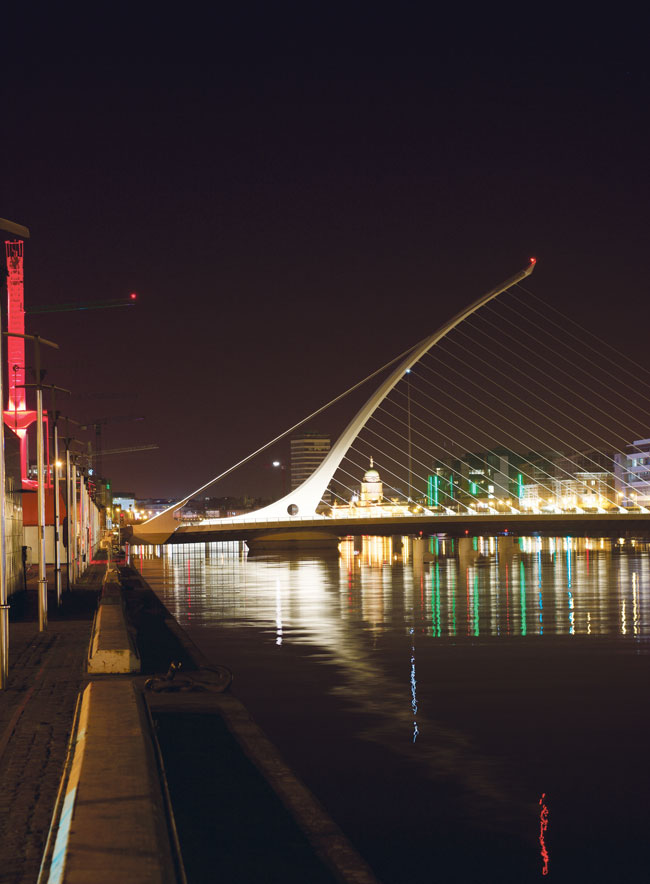

We hear talk of the City That Never Sleeps, the City of Angels. Well, under what title can we christen Dublin? Born into the sterile environment of the Rotunda, I have since grown accustomed to the edgier nooks and crannies of Ireland’s capital. My mere thirty-minute commute into College Green has become a daily ritual in recent years. I have gone from brief encounters of Grafton Street shopping district as a preteen to wine nights on Fade Street. Dublin has grown up alongside me. Yet, Dublin City, much like a 20-something-year-old woman, certainly has its own growing pains. It wears a full face; a centre of economic and political mayhem disguised as Europe’s upcoming urban hub. Any Dublin native would agree that Dublin isn’t always what meets the eye of your Instagram algorithm.
I have befriended many international students since my time in Trinity, all of whom approached their move to Dublin with rose-coloured glasses. Now, as Junior Sophister year kicks off, I can see their light has been slightly dimmed by the reality of what Dublin has to offer. The 2000s have been a cultural renaissance across all European cities, but Dublin has seemed to trail behind the romanticism of Paris and London. There seems to be a consecutive effort to paint Dublin in an aesthetic light, but the environment here is more than gloomy architecture and cosy pubs. What really characterises our city, for better or for worse?

What anyone would tell you about Dublin is that it has always been exceptionally tight-knit. It is not unusual to make acquaintances with an individual on a night out who just so happens to be your neighbour’s best friend or your cousin’s girlfriend. Dublin is interconnected through schools, sports and social groups; this has been a trait of the city from the get-go. Our parents’ generation would vouch that Dublin has always had an inescapable sense of community, one that offers comfort but can oftentimes be suffocating. In the wake of social media, Dublin is less scary to someone new to the county. It is easy to connect with other students, find student-packed spots and transform Dublin from an intimidating no-go zone into a socialite’s haven. Interconnectedness has always been the city’s forte, and this is only on the rise.
Community is not always joyous, however. Dublin’s youths and young adults have certainly united in the last decade through a unified experience of hardship. That’s not to say that our parents’ generation did not struggle entering adulthood in Dublin – they did. Nevertheless, economic and social issues seem to place a substantial amount of stress on the shoulders of our emerging adults today. Young adults have come together to support one another in the face of a depressing housing and cost-of-living crisis. Second-hand shopping and donations have become widespread, like Trinity’s ‘Trash into Treasure’ event, which allows students to donate both clothes and household items to avoid unnecessary expenditure when rent is so dear. Vintage shopping has resurfaced, encouraging students to buy second-hand as opposed to feeling pressured to spend an extortionate amount of money (that they don’t have) on cute back-to-school outfits. Students have combatted the cost of living crisis by cooking at-home meals together and, of course, drinking cheap wine on Drury Street instead of spending half their payslips in Ciss Maddens. In Dublin, with the right people, it is possible to find friendships that understand your budget.
Unfortunately, the novelty of communal brokenness is not long-lasting. It is not long till graduation ensues, and friendships shrivel with the impending doom of seeking post-graduate degrees and “grown-up jobs”. The dream of carrying out a life in Dublin seems far-fetched. A 2022 study claims that the average house price in the 80’s was 80,000, taking current inflation into account. Today, in Dublin, the average house price is 500,000 euro, a 7 per cent increase from last year. As a result, young adults feel forced to emigrate, and this number is only rapidly increasing. The National Youth Council of Ireland revealed that 7 in 10 young people in Ireland consider emigrating for a better life. Housing resides at the top of the pyramid of concerns but employment is posing major struggles as the years go on. 9 in 10 adults claim finding employment is becoming increasingly more difficult. Urban centres like London and Brussels seem to allure our youths with their employment prospects and hopeful population. Dublin has seemed to become a place that rejects Irish young adults until they can fully contribute instead of nurturing them so they can flourish. Dublin’s grim political polarity makes young adults feel discarded by government officials who prioritise anti-immigrant regimes over fixing the nation’s real problems – housing, inflation, jobs, support.
Over a century ago, Yeats wrote that ‘romantic Ireland is dead and gone’. This quote still carries significant weight today. Ireland is not the gimmick we see online. It is not all greenery, Guinness and gastro-pubs. The tourist experience of Dublin differentiates majorly from the residential experience. When you’re younger, Dublin feels like a melange of opportunities; everything seems so big and scary and exciting. Now, I wander down Dame Street, look up and see the same tall buildings, and think, “I’m never going to make it there.” Something about Dublin screams short-lived inspiration; college walls fuel your hope until your inbox is barren despite applying for every job on Indeed. It’s not a perfect place, and it certainly isn’t governed by perfect people. But corrupt governments come and go, and enriched culture depends massively on its contributors. Despite the hardships, if we continue to love the city, it will (hopefully) love us back one day. Love the city, not the system.