Micheál Martin and Zohran Mamdani filming an Instagram reel together on the New York subway was not on my 2026 bingo card. Speaking of bingo cards, seeing the pair host Wednesday-night bingo together was not on my bingo card either.
September 23rd saw the meeting of Irish Taoiseach Micheál Martin and New York Mayor Zohran Mamdani. With the cameras on them at all times, the duo began in the New York Irish Center to run the bingo numbers, and then “split the G” together on the G Train subway line. Conversation ranged from housing, to Israel, to the Irish diaspora, and even, to reunification.
The unceasing presence of the press throughout Martin and Mamdani’s meeting is telling of an overarching purpose to this diplomatic exercise. Their meeting was not merely in the interests of fostering international relations, but in the interests of fostering public relations too. Where international relations concerns the relationship between a government and that of other countries, public relations concerns the relationship between a government and its electorate. In the latter, public approval, populism, and propaganda, all play a central role.

There are clear benefits to be gained by both prominent politicians from their association with the other. As such, although the two may seem to be an unexpected pair, they are, from a public relations perspective, an obvious one. Let’s consider each politician in turn.
New York City Mayor Zohran Mamdani; the “cool new guy” in US politics who’s known to get the job done. GQ Middle East recently likened Mamdani’s cultural influence to that of the late Princess Diana’s – a striking yet fitting comparison to draw. Mamdani is considered a trailblazing politician, not only because he is the first Muslim immigrant to serve in the mayoral office, but also because his progressive policy and welfare initiatives have starkly pushed the boundaries of conservative US politics.
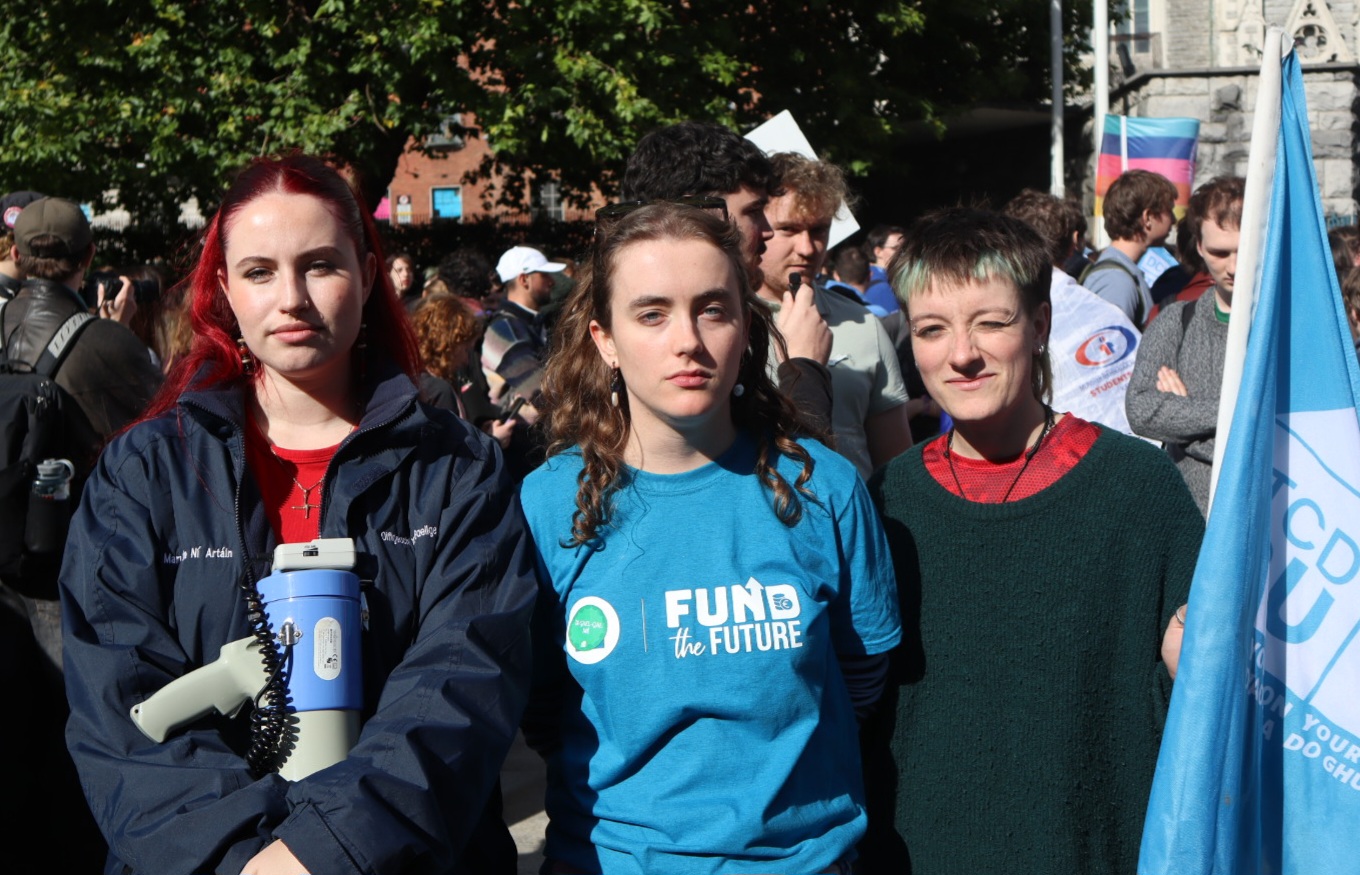
Irish Taoiseach Micheál Martin on the other hand, is probably the furthest thing from the “cool new guy” in Irish politics and is definitely not known to get the job done. In contrast to Mamdani’s youthful vigour and underdog status, Martin is a well-established figure in Irish politics who is arguably past his prime. Martin’s support is found predominantly in older generations, with a majority of the under-35 cohort rejecting Fianna Fáil’s politics and opting for left-leaning parties instead.
All considered, the exchange appears simple. The PR display of September 23rd gives Micheál Martin Gen-Z appeal back home, and gives Mamdani the support of the approximately 400,000 Irish immigrants residing in New York City.
At least, the exchange appears simple until we zoom out and consider the wider context surrounding Micheál Martin’s New York visit. The city hosts the 81st session of the United Nations General Assembly, with world leaders gathering since last month to debate the most pressing human rights issues of our time.
The theme of this year’s Assembly is “Restoring Trust, Managing Transformation: A United Nations That Delivers for All.” This admittedly vague theme does not lend itself well to the criticisms of the General Assembly as a facilitator of powerless resolutions, empty promises, and performative activism. For an institution designed to challenge the status quo, it seems to do an excellent job of maintaining it.
Attempting to challenge the status quo at the General Assembly was our very own Micheál Martin. In his speech, the Taoiseach set out Ireland’s stance on global humanitarian concerns. With respect to Palestine, Martin said that “the situation in Gaza remains an affront to all that is decent”.
“When the full truth of what has happened – what is still happening – in Gaza is finally known, when the evidence is gathered, when the testimonies are heard, when the true horrors are finally and fully revealed, it will shame the world. Nobody will be able to say that we did not know. Let it not be said that we did not act.”
Only one week previously, Micheál Martin’s own cabinet rejected the visa applications of 115 Gazan students who received scholarships to study at third level institutions around Ireland. Moreover, US war planes still regularly land in Shannon Airport, enabling them to transport ammunition to the Middle East.
As such, it seems that Micheál Martin is painting one picture with his words and a conflicting one with his actions (or lack thereof). As noble as it is to publicly condemn both the abuse of the Security Council veto and the opposition of the International Criminal Court, shaking hands with the primary culprit of both of these on St. Patrick’s Day diminishes the value of the sentiment. Time and time again, we see the Irish government vaguely condemn wrongdoing, without following through by applying any real pressure on the wrongdoers to change.
This is where Mamdani becomes a useful PR partner. Mamdani has been one of the strongest voices in the condemnation of Israel, consistently using the label of genocide, and actively applying real pressure on the US government and the United Nations to have Israeli Prime Minister Netanyahu arrested under the International Criminal Court warrant.
In essence, Mamdani condemns Israel in the way that many Irish people wish Martin would. By aligning himself with Mamdani, Micheál Martin is able to present himself to the Irish people as proactively opposing Israel, while not actually having to proactively oppose Israel and thus suffer the consequences. This boosts his approval among the (mostly pro-Palestine) Irish electorate, while keeping him out of the Zionist line of fire.
Mamdani, on the other hand, is a central target of Zionist movements, and this is where he can use Micheál Martin to his benefit. In his General Assembly speech, Netanyahu accused Mamdani of antisemitism in an attempt to undermine his criticisms of Israel, or as Mamdani says, “to sanitise [the] genocide against Palestinians.”
Despite domestic dissatisfaction, Ireland has an international reputation of being a strong and steadfast supporter of Palestine. In 1980, Ireland was the first European Union nation to support the establishment of a Palestinian state. In a 2023 poll, 53 per cent of Irish respondents expressed greater sympathy for the Palestinian side of the conflict, compared to around 18 per cent of US respondents.
As a national government that is on good terms with both the EU and NATO, the Irish government holds a level of legitimacy and respect with even the most politically opposed of nations. Instead of challenging Israel alone, Mamdani is legitimised by having a respected national government behind him, and the Irish are an obvious choice.
This is not the first time that Mamdani has associated his pro-Palestine stance with the Irish State. In his St. Patrick’s Day address, Mamdani said, “In 1980, Ireland was the first EEC nation to call for a Palestinian State. For years afterwards, leaders like former president Mary Robinson stood steadfast in their support for Palestinian freedom.”
“If solidarity has so often been withheld from the Irish, it has never been withheld by the Irish,” Mamdani shared.
Mamdani and Martin’s day out in NYC illustrates just how strategic diplomacy can be. International politics is a game and our politicians are playing it…bingo!