
In 2022, Gaelic games in Ireland embarked on what promised to be one of the most consequential transformations in their history: the amalgamation of the GAA, LGFA and Camogie Association into one organisation built on the principle of equality. In October 2022, the Steering Group unanimously agreed that the integrated structure would become one association, and by February 2024, all three associations had publicly identified 2027 as the proposed date for integration. This September, that promise suffered its most serious setback. On 8 September, Mary McAleese, former President of Ireland and independent chair of the integration process, resigned following the GAA’s decision to withdraw its commitment to the 2027 timetable. Four years later, the greatest threat to this vision may not be opposition to integration itself, but disagreement over what equality will cost and how quickly it can be delivered. The collapse of the agreed timetable therefore poses the question, not whether integration within Gaelic games will occur, but whether equality remains non-negotiable when delivering it becomes difficult.
This was neither wishful thinking nor a half-developed proposal conceived six months ago. In 2022, the GAA, LGFA and Camogie Association Congresses passed motions prioritising integration. A May 2025 Steering Group update reported 92% support across the three Congresses. This was not merely a fringe project proposed, or indeed imposed, by McAleese; it was a concrete and well-supported plan. More than 30,000 members participated in a membership survey in 2023, with the Steering Group reporting that 90% viewed integration positively for their membership experience. Working groups were established in November 2023 to address facilities, finance, fixtures, HR and staffing, membership, and player welfare. Organisational complexity, facilities, and finance were therefore not unexpected obstacles; they had been explicitly identified as central challenges almost three years earlier. This history makes the recent breakdown so striking and difficult to dismiss as simply another missed administrative deadline.

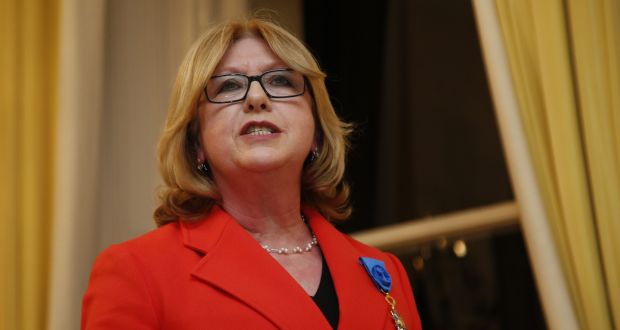
In September 2026, the GAA informed the Steering Group that it could no longer commit to the integration timetable, while RTÉ reported that it had proposed extending the process by up to five years. McAleese stated she was “devastated”, concluded that the roadmap was effectively blocked, and subsequently resigned. McAleese strongly criticised the GAA Management
With the Committee, describing it as “less than impressive” and lacking in vision. Most controversially, she said she suspected some people were “not entirely happy about the idea of including women in decision-making at the top level of Gaelic sports.” It was an extraordinary allegation, but it remains McAleese’s assessment of the impasse rather than an established explanation for it.
McAleese’s suggestion of misogyny was rejected by GAA Director-General Tom Ryan “in the strongest possible terms.” Ryan described the GAA as inclusive, family-oriented, and progressive, pointing to One Club structures and women’s participation in leadership. While progress had been made on common membership, Ryan argued that members should not be asked to join an organisation that was not yet clearly configured. Integration has not been cancelled, however. The GAA said it “remains firmly committed to building a single Association.” These concerns are not unreasonable. Merging three national bodies, their memberships, finances, staff, and governance structures is undoubtedly an enormous institutional undertaking. But that complexity explains why integration requires careful planning. After four years of precisely that planning, it does not justify replacing an agreed roadmap with uncertainty.
Financial concerns have been a major factor in the stalled process, with GAA President Jarlath Burns raising the implications of funding male and female inter-county teams. The Irish Examiner reported that GAA leadership had emphasised “equity” rather than “equality,” including concerns that Central Council could need to provide more than €10 million annually towards female inter-county team costs under equality commitments. Burns has argued that men’s inter-county teams currently cost approximately €45 million annually and that replicating that level of expenditure across the women’s games could push overall spending towards €90 million, which he described as unsustainable with current resources. There was unanimous agreement within the Steering Group in October 2022 that the future association should be “built on the principle of equality.” It is reasonable to question what equality will cost; it is unreasonable to allow its cost to transform equality from a founding principle into an indefinitely postponed ambition. Equality need not mean identical expenditure from day one on all men’s and women’s teams across the island. It should, however, require a transparent commitment to fair access, representation, and opportunity, alongside a measurable process for addressing historic disparities.
The consequences of integration extend far beyond arguments over budgets and organisational charts in Croke Park. At grassroots level, Mayo LGFA’s 21 September statement, We Love It Too, positions female players not as outsiders attacking the GAA, but as members of the same Gaelic-games community who care about it just as deeply. Mayo LGFA calls for “a timetable people can trust.” According to Mayo LGFA, each county was instructed in November 2025 to establish a County Integration Committee. Yet in Mayo, it says, “no such meeting has taken place in 2026. Not one. No minutes have been returned.” Strikingly, despite representing 7,015 members across 36 clubs and five inter-county teams, Mayo LGFA owns no pitch, astro, clubhouse, office, storage container, or even a shed. What can equality within one association mean when the organisations entering it begin on such unequal playing fields, in this case almost literally? Until the current season, Mayo LGFA says its senior, intermediate, and junior championship games were scheduled for 11am on Sundays, limiting spectators’ and journalists’ ability to attend multiple matches. Inequality in sport does not always announce itself through a multi-million-euro budget; sometimes it appears in something as ordinary as who gets the desirable fixture slot. The existing imbalance cannot be both the problem integration promises to solve and an indefinite justification for delaying it.
This crisis cannot be reduced to a battle between heroic reformers on one side and an obstructive GAA on the other. The LGFA’s official reaction to McAleese’s resignation was notably measured. It described her departure as “somewhat unexpected,” thanked her for her service, and maintained that integration represented the best opportunity for a unified, inclusive, and sustainable future. Meanwhile, Camogie Association President Brian Molloy accepted that warning signs over the 2027 timetable should have been recognised sooner. However, recognising this complexity does not eradicate the responsibility of all three organisations, particularly the largest, to demonstrate how integration will be completed.
The Steering Group reconvened on 21 September to consider its next steps and the appointment of a new independent chair. Camogie Association President Brian Molloy has proposed January 2028 as a new target for full integration, alongside an implementation committee and functioning integration committees across counties and provinces. The Government also reiterated its support for integration, stating that gender equality across sport is a Government priority and requesting quarterly progress updates. However, at this point, another statement of commitment is not enough. What integration needs is measurable progress against publicly understood deadlines.
The GAA is entitled to argue that the original timetable was too ambitious and to raise difficult questions regarding money, structures, and governance. What players should not be expected to accept is an indefinite promise that equality will arrive eventually. The future prosperity and unity of Gaelic games require agreed deadlines, published milestones, functioning local integration structures, and clarity on how equality will be realised within the combined organisation. The answer to a difficult integration process is not reckless haste, but neither can it be indefinite delay. If one association is to be the future of Gaelic games in Ireland, women should not have to keep waiting at its door.