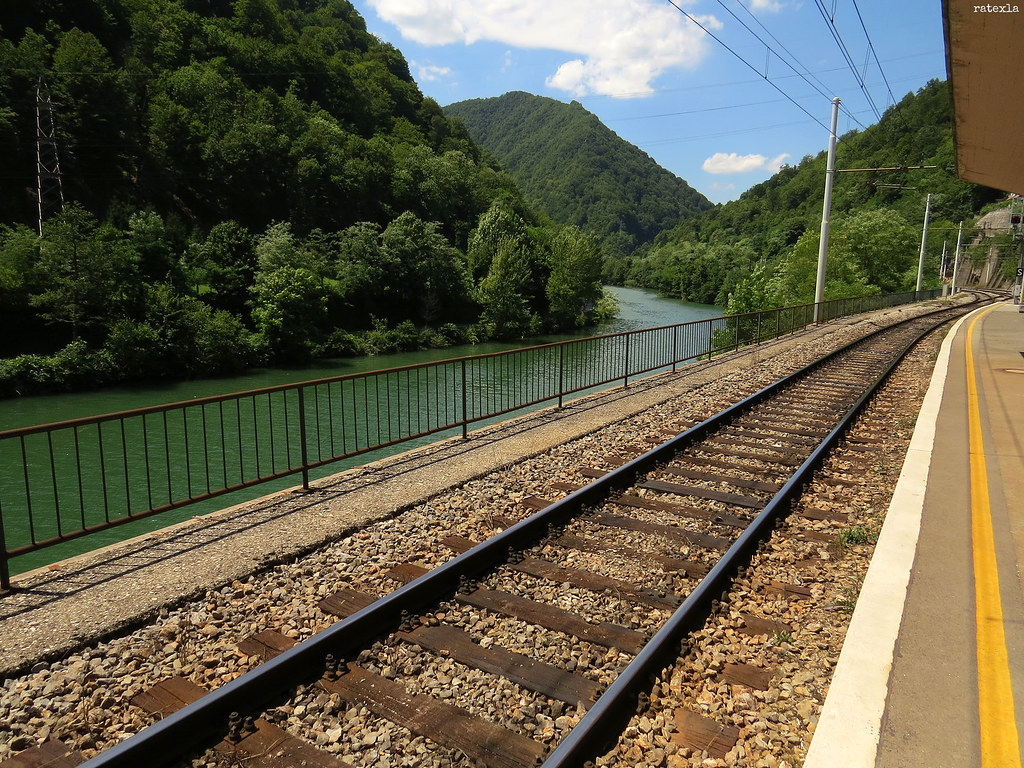

It’s summer. You are experiencing a tragic case of emotional dread accompanied by a sense of impending doom. Diagnosis? Being stuck in your hometown for approximately two months. Solution? Reconnecting with your friends through one true bonding experience. Interrailing.
Nothing brings a group of people more together (or apart!) than this rite of passage, together with seedy hostels, overpacked backpacks, and a stale baguette for breakfast. And yet, it feels as if the concept of interrailing has shifted its meaning over recent years. When your Instagram feed is being bombarded by friends of friends embarking on self-discovery journeys straight out of “Eat, Pray, Love” while staying in hotels well outside your tax bracket, it makes you wonder: is interrailing (or what has become of it) slowly morphing into yet another form of lower-class cosplay, or is it simply another case of social media skewing our perception of reality?
Interrailing has gone through many phases, but one thing stayed the same – it is primarily directed towards young adults in search of adventure. First established in 1972, on the 50th birthday of the International Union of Railways (UIC), the InterRail programme was intended to encourage young Europeans to travel and take advantage of the rapidly developing railway system. A ticket for the trip of your dreams cost £27.50 and covered 21 European countries. Today, the cheapest pass costs €212 and allows you to travel by train for a total of 4 days. While the price of the pass itself remains somewhat affordable, the entire experience becomes less so in its new edition.

Initially, the appeal of interrailing was contingent on the low costs to students embarking on their first unchaperoned adventures. Tents and portable gas cookers were a necessity for affordable travel, but also contained some of its charm. The question now lies in whether choosing convenience over tradition ought to be crucified. On one hand, there is a sense of abusing the sanctity of the ritual in modern instances of “euromaxxing”. On the other, we may simply fall victim to nostalgia by denying the fact that the world is evolving and there is no need to inconvenience ourselves on purpose.
There is nothing inherently harmful in adjusting the idea of InterRail to your needs or wishes. After all, the point of vacation is not to return from it exhausted after days of backpacking. And yet, this seems to be the very point of the experience – interrailing is travelling, not vacationing. In some way, then, to interrail is to experience the best and the worst that cheap travel has to offer, without room service awaiting you afterwards.
The paradox of the situation lies in people’s simultaneous need to perform as struggling knowledge-hungry underdogs and be Instagrammable vacationers. We all, to some degree, ache for the aesthetic vision of a perfect holiday – some just have the funds to achieve it. Still, the idea of interrailing gets lost when the end goal becomes to eat at another “secret must-visit spot!” in Prague or Vienna.
I am not advocating for a return to merciless hours of hiking as a go-to interrailing experience, but it should be noted that behind each small change lies a gradual shift in what interrailing means. A concept which, for decades, implied equal travel opportunities will only remain so long as it is perceived this way by the public. It would be ridiculous to imply that a rich person going interrailing means stolen opportunities from others – it is more so that a “Euro Summer” under the guise of interrail raises concerns about the future of a programme promoted as accessible. The more “high-end” interrailing becomes, the more wealthy travellers will be prioritised. This affects costs of accommodation, food, and all other activities.
At the same time, has interrailing not always been a bit of a luxury? InterRail, as it was first established, mostly catered towards British youth, arguably one of the best-situated groups in 1970s Europe. The typical interrailer was most definitely not an underprivileged Yugoslav teenager. Today’s shift in the experience of interrailing may just be an inevitable and natural development of a system that was never as diverse as it claimed to be. After all, not many can afford to purchase the monthly pass instead of working a summer job to afford college tuition.
Contrary to what it sounds like, I don’t believe that the art of budget travel is dead just yet! Real interrailing, if such a thing exists, is still an immensely popular initiative that revolutionised European travel. The implications of a new-age wealthy interrailing are certainly worrisome, but should not entirely overshadow the advantages the programme brings. It’s quite a tired take to say that no travel is bad for you when it broadens your horizons, but there is some truth to latitudes like this, and really, all you can do is eat your stale baguette and catch the next train.