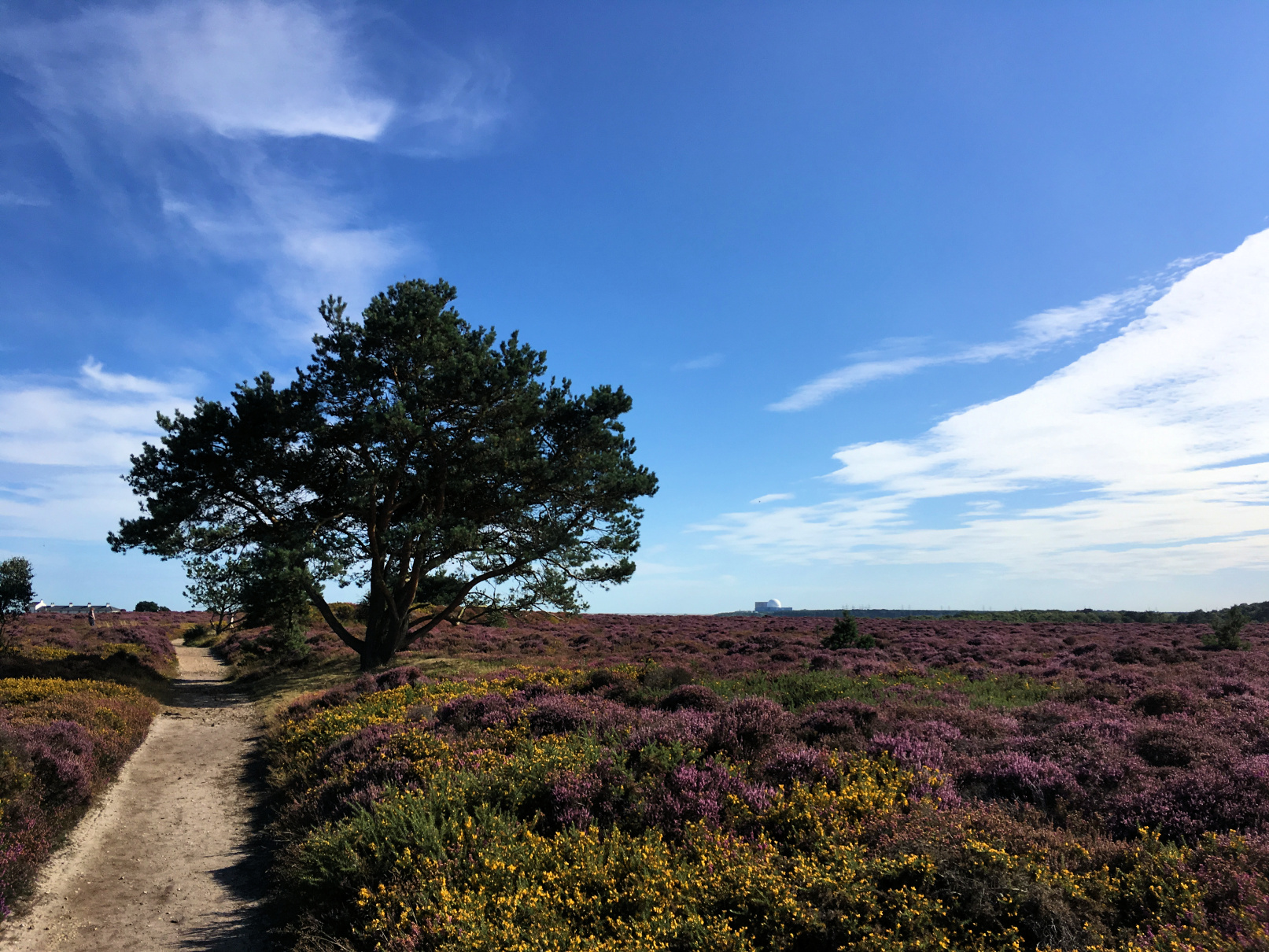

The worst of the oppressive heat that lingered over England had passed by the time I joined my family in Suffolk in the second half of July. My parents had warned me about the weather, but the temperature in Westleton – the little village that four generations of my family have called home – was surprisingly tolerable. It was only when I went for a walk that I realised how very wrong things still were.
Immediately, I texted my friend a picture of the common beyond the village. It was the driest I had ever seen it, parched by the heatwave – the gorse almost brown, the heather barely surviving. A nearby sign warned me of the risk of wildfires. It felt like a disaster waiting to happen. I returned to Dublin feeling unsettled.
The next day, the heath three miles away went up in flames.

A catastrophic scene ensued as the fire ripped through acres of rare flora and fauna, across the heath and the bird reserve adjacent to it. Our village hall was turned into a relief centre for holidaymakers and residents alike fleeing the fire. Climate refugees in rural England. Just down the road, in my grandpa’s cottage, there are pictures of my siblings and me, and my mother and her siblings, smiling on the heath that will now take a decade or more to recover. There is a good chance that my young cousins, who I was in Suffolk with, will be old enough to have their own children before they are able to witness the heath as I remember it. My grandpa described the view as “apocalyptic”.
I wish my story were a unique one. But fires far worse than the one in Suffolk have been raging across Europe all summer, especially in France and Spain. The fire near Madrid is almost the size of London at the time of writing, and people are dying from the extreme heat at record levels. With a highest temperature of 46.5°C, Western Europe has just experienced its hottest July in history. The climate emergency is reaching everyone’s front doors.
At home, I turned on the news to find that the new Labour Prime Minister, Andy Burnham, had weighed in on the Suffolk fire, pledging that the local emergency services would receive all the support they required to tackle the blaze. Days beforehand, he had announced his support for the resumption of drilling for oil in the North Sea, just off the coast from where the wildfire is currently consuming 200 football pitches worth of heathland. The contradiction speaks volumes as to whether his government is in any way serious about tackling the climate crisis. I am utterly nauseated by his lack of political urgency. The apathy extends beyond party lines and to the local level, where just two weeks before the fire, the Reform UK-led Suffolk County Council voted to rescind their climate emergency declaration.
The climate breakdown on the Suffolk coast has been radical and drastic. I remember what the heath used to look like when I was a kid. It didn’t always look like a tinderbox. I also remember what Europe used to be like in the summer. It wasn’t always on fire. I am sick and tired of people treating this like it isn’t the end of the world as we know it.
Of course, the Irish government is practically in lockstep with their British counterpart when it comes to a lack of action on the climate emergency. A few months ago, the Climate Act was gutted in the name of “critical infrastructure”, meaning certain large projects no longer have to adhere to climate regulations. A countrywide hosepipe ban is in effect at present, while data centres continue to demand extraordinary amounts of water and energy to operate. We are extremely lucky not to have experienced a severe fire on this island yet, but on our current trajectory, I suspect that will not remain the case for long. We’re already being battered by ever-worsening floods and storms each winter. If these fires can happen in England, they can happen here too. It is truly only a matter of time.
There will be a moment, for almost everyone on this planet, when the climate crisis stops being an abstract reality, when it stops being something that you see on the news, when it stops being something that happens to other people, and instead becomes something that happens to you, as it starts to directly affect people and places that you know and love. For many in the global South, that moment happened a long time ago. They have been sounding the alarm bell for decades. For me, it is today, as the heath where I made so many childhood memories burns beyond recognition. When will yours be? And will you wait for the flames to reach your front door before you act?
I swear we all cared more about this, once upon a time. We had ten thousand kids and young people out protesting on Molesworth Street back in 2019, demanding climate action, demanding a better future. I was one of them. Maybe you were too. The Covid-19 pandemic swept in the next year, and by necessity, priorities changed. But of course, climate change has no respect for the competing issues that similarly harm our lives, and while our attention has been elsewhere, the climate crisis is deepening with every year that passes. You no longer need facts and figures to tell you that – you can see it in front of your very eyes.
It’s true that advocacy when the political focus is elsewhere is exhausting, and it has burned me out more times than I can count. Yet if it’s the choice between that and another place that I love going up in flames, I have no choice at all. We are long past the point of being able to engage in comfortable ignorance.
The canary in the coal mine, just like the bird on the heath, is long since dead.