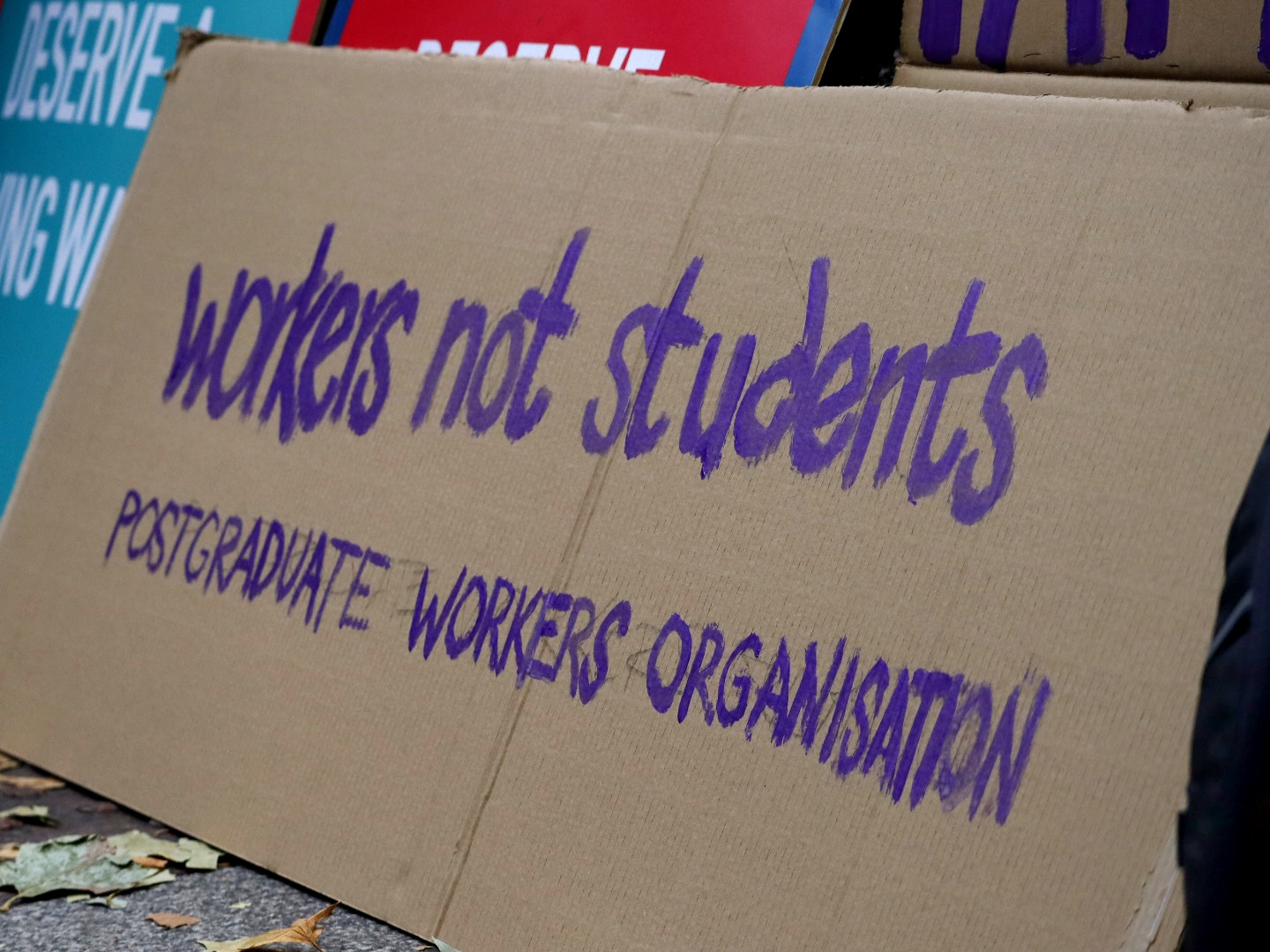

Industrial action is still on for postgraduate researchers across the country. Despite the suspension of the October 21st strike following the opening of negotiations between the Irish Congress of Trade Unions (ICTU) and the government, the Postgraduate Workers Organisation (PWO) plans to continue pushing for demands it feels will still not be met through the talks. PWO branches will meet Monday to determine a specific course of action, holding recognition of the fact that many postgraduates are precarious workers making less than minimum wage, and may not want to jeopardise their position.
College has yet to release a statement or course of action in response to the PWO. In light of the October 14th strikes, Vice Provost and Chief Academic Officer Orla Sheils announced a preparedness group established by the Chief Operating Officer, which has since provided updates to staff and students about College operations in relation to the strikes.
In a social media statement, PWO President Eden Skehan wrote, “Because graduate workers do not have the same kind of recognised employment as most public sector workers, we will be largely excluded from this deal no matter what it brings.” Skehan noted that the deal will largely fail to address PWO’s biggest issues, including “standardisation of work contracts, access to public services, and years of reckonable residence for all graduate researchers.”

Ireland is one of the few countries in Western Europe that lacks worker recognition for PhD researchers. Such circumstances not only prevent official unionisation, but in turn, do not allocate PhD researchers sick leave, maternity or paternity leave, eligibility for healthcare, or government benefits. On average, PhD researchers are awarded a stipend of €25,000 for every year of their degree, which sits at a deficit of 15 per cent compared to the minimum wage. Minimum wage rates are adjusted yearly in accordance with inflation and the cost of living, but PhD stipends remain fixed.
This further unrest comes at a time when Irish universities are on a “cliff edge” in regard to funding by the government, with universities lacking the funds necessary to fully invest in the future. Provost Linda Doyle put the deficit at €250 million. Minister for Further and Higher Education James Lawless announced a complete overhaul of university funding in an informal meeting with EU education ministers on Friday, declaring plans to present an updated paper to the government by the end of the year that will examine “the adequacy of existing funding arrangements, the changing financial requirements of our universities and the opportunities to develop a more sustainable funding model.”
Currently sitting in 36th place out of 37 Organisation for Economic Cooperation and Development (OECD) countries, Ireland has yet to make up for the massive economic losses sustained in the 2008 recession. Per student State investment is 34 per cent lower than it was in 2008, which is how the higher education funding deficit is calculated. The State has failed to abide by the 2022 Funding the Future plan, which initially pledged an annual €25 million to university core funding to bridge the then estimated €307 million deficit. This year the government allotted less than half of that pledged amount, providing €10 million to universities.
“Universities can get away with underpaying and mistreating us because they expect no one to notice or care,” Skehan wrote. “Recognised staff members often normalise this treatment […] The government sees us as a convenient way to save money by underfunding universities while knowing no one will meaningfully push back against them.”
The PWO officially called upon university staff, students, and members of the community to join them in action on the 21st. “Otherwise, the status quo will swallow us whole,” Skehan wrote.