
In January 2026, Trump announced that the United States would intervene in Iran should the Iranian regime kill any civilians in the ongoing anti-regime protests. Negotiations with the US and Iran in Oman in February has yet failed to produce any agreement, with the US threatening that “bad things” will happen to Iran if it does not agree to abandon its nuclear weapons programme, reduce its missiles arsenal and terminate support to regional armed groups like the Houthi rebels in Yemen, Hezbollah in Lebanon and Hamas in Palestine. The Iranian regime is in a fragile position with widespread regime protests and setbacks for its proxy militias in Palestine and Lebanon. Foreign sanctions on oil exports, skyrocketing inflation coupled with the political and material losses from losing the war against Israel and the US in the summer of 2025 has undermined the regime further, possibly forcing Tehran into a diplomatic agreement. Recently on February 28, 2026, there were US–Israeli attacks on Iran, killing Ayatollah Khamenei and other officials.
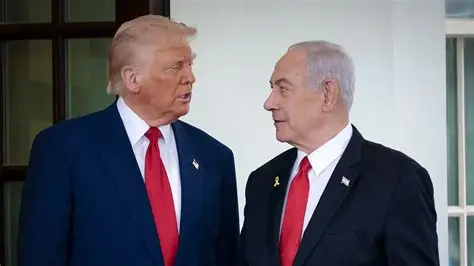
Nonetheless, analysts deem it unlikely that Iran will comply with US demands, even in the face of recent military threats, as nuclear weapons are deemed indispensable to national security, while simultaneously being an important source of pride and national identity for Iran as the first nuclear power in the region. Moreover, Israeli President Benjamin Netanyahu reportedly pressured Trump in a meeting in early February to harden its demands on Iran to reduce its strategic missile arsenal, with the aim of ensuring a US strike on Israel’s longstanding rival. Besides, Trump’s demands for the complete elimination, rather than mere restrictions of Iranian uranium enrichment used for the manufacturing of nuclear weapons are much more sweeping and far-reaching than previous American policies. Thus, Trump’s diplomatic strategy appears unlikely to succeed, whether due to ignorance or willful disregard of the demands of the situation.
However, Trump’s military threats have met domestic and international opposition. The Joint Chiefs of Staff of the US military has warned the President that an attack on Iran would likely produce a quagmire, entrenching the US in long-term conflict in the region, while placing strain on the US’s already low munitions stocks, possibly forcing the US to reallocate weapons from other tense regions, and thereby expose other areas like the Baltics and Taiwan to the risk of aggression from Russia and China. In addition, key American allies have refused to offer support for a potential attack, with Saudi Arabia and the United Arab Emirates reluctant to risk stability and economic interests, fearing that Iran would retaliate by attacking oil infrastructure and regional US bases. Moreover, there are concerns that American attacks will disrupt global shipping — including 20 per cent of global oil trade — through the strait of Hormuz, as happened in 2024 and 2025 when the Iranian-linked Houthi rebels attacked Western ships passing through the strait. Indeed, Iran issued threats to close the strait, with supply shortages and surging oil prices as a result. Thus, Trump seems to be heading for an operation with assuredly great material and human costs, in return for benefits that are limited and uncertain at best.

It is possible, however, that Trump’s military actions may remain limited, as a large-scale intervention would contradict his policy of “America first” and his pledges to avoid extensive global commitments as outlined. Even so, Trump has also shown himself keen on acting as a global peacemaker in conflicts between countries like Thailand and Cambodia, India and Pakistan, and Rwanda and the Democratic Republic of Congo. This suggests that Trump may attack Iran in pursuit of his strategy of “peace through strength”, believing that demonstrating force might push Iran to agree to a nuclear “deal” or use military means to promote regional stability by enforcing regime change in Iran, similar to American actions in Venezuela in the beginning of 2026.
However, Trump’s diplomatic record suggests that the risk of conflict and instability would not be entirely eliminated even if the threat of force might succeed in pushing through a negotiated agreement. Unlike earlier agreements with Iran, like the 2015 agreement forged by the Obama administration, and monitored by the International Atomic Energy Organization until Trump’s withdrawal in 2017, Trump seemingly lacks a long-term strategy and institutional framework to ensure that diplomatic agreements are upheld in the long run. Indeed, the faulty implementation of the US-mediated ceasefires between Israel and Palestine, and Rwanda and the Democratic Republic of Congo in 2025 suggest that the results of Trump’s diplomacy in relation to Iran will be meager in terms of enduring stability in the Middle East, if not outright counterproductive, with the US conveniently withdrawing after placing a diplomatic band-aid on a bleeding geopolitical artery of its own making, leaving a stream of suffering and chaos behind it.
Furthermore, it is by no means certain that a US-induced regime change would ensure a stable democratic government in Iran, as the country lacks a coherent political alternative to the current regime. Indeed, analysts deem it likely that the US ousting of Iran’s highest leader Ayatollah Khamenei may simply pave the way for another repressive government by the terrorist-classified Islamic Revolutionary Guard. Alternatively, the exiled Reza Palavi, son of Iran’s last Shah could be reinstated with US endorsement, returning Iran to monarchy. However, Pahlavi would not necessarily enjoy wide support among the Iranian people due to the Shah’s history of authoritarian repression. Indeed, the historical record suggests that military intervention is unlikely to produce stability, with the removal of Saddam Hussein in Iraq in 2003 and Muammar Gaddafi in Libya in 2011 resulting in power vacuums, proxy wars, mass displacement and long term instability. Moreover, Iran is larger, and more deeply involved in regional dynamics through its ties with groups like Hezbollah in Lebanon, than any of these past cases. Consequently, US intervention is likely to produce a geographically extensive and drawn out conflict, rather than deliver on Trump’s promises of peace, freedom and stability.
Uncertainty and ambiguity has continued to characterize American diplomacy in recent days. New negotiations between Iran and the US are planned in Vienna for the first week of March, but might already be undermined as tensions increased further on February 25, with President Trump accusing Iran in his State of the Union Address of fabricating nuclear weapons with the purpose of striking the US mainland, arguing that Iran has “spread nothing but terrorism and death and hate”. Such inflammatory rhetoric arguably raised the risk of conflict further, echoing the “war on terror” and US justifications for invading Afghanistan in 2001 and Iraq in 2003. Indeed, US mobilization in the region has continued, culminating on February 28, 2026 with US-Israeli attacks on Iran, killing Ayatollah Khamenei and other officials.
The peoples and governments of the Middle East and beyond will watch the developments of the coming days closely.