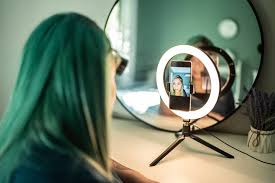
In the last decade or so the “responsibilities” of influencers has metastasized to include business, social commentary and politics. As they have assumed more and more duties, they have caught an increased amount of flak for an increasing number of reasons. While this is the case, influencers’ place in society has not diminished, even if it has gone through significant changes.
A central aspect of the influencer class is their incessant advertisements and business ventures, a genre of practice that makes up the bulk of their income, supplementing the comparatively low revenue from the social media platforms that host their content. As much as this makes sense, it comes at the price of accelerating consumerism, especially among younger generations. By pushing products and trends, these microcelebrities perpetuate and enforce an atmosphere that equates one’s coolness to their participation in the latest trends. It would be innocent and incorrect to say that this sort of culture is a new one; it would be equally so to say that the preeminence and ubiquity of influencers has not exacerbated this phenomenon. At the same time, this reality of fads has been homogenized by the fact that the internet negates the constraints of geography. No longer are kids in Ireland looking up to a different set of personalities than kids in America who in turn look up to different stars than kids in Japan. Stanley cups, Labubus and Sephora’s latest products have replaced the more local toy, food and social trends.
To say that influencers have lost their relevance is to misinterpret how their place in today’s zeitgeist has changed — no longer is their ethos one of just entertainment, it’s now one of education, too. Platforms which were once reserved for content creation have become soapboxes from which online personalities opine to their audiences, audiences whose initial following was for something unrelated. This fusion of entertainment and information is a dangerous one. While it has its obvious upsides (such as an increased accessibility to data and a more diverse selection of sources), this type of content lacks the accountability that is expected of — expectations that can be enforced by governments — established media sites. Additionally, the effect of getting one’s information from a variety of online figureheads is the fact that it is often wrong or disingenuous. The distrust that this creates is compounded by the habit of influencers to blur the line between what is sponsored and what is not, a practice that, while lucrative for the producer, is misleading at best.
In response to these, and other, aspects of today’s influencers, a growing number of people have begun to disengage from their content. Whether by simply no longer consuming their content on a personal level or by “canceling” them by joining a larger portion of a personality’s fanbase to do the same, while viewers do have the agency to abstain from consuming this style of media — though their agency is lessened both by the fact that the internet is becoming so ubiquitous and by the power of social media algorithms. On a wider scale, it is difficult to say that the public as a whole has lost or begun to lose its interest in influencers, even if, in recent years, far more scrutiny and grassroots accountability has been realized.
But holding these types of stars to a higher standard does not do away with many of the core and inherent problems in the profession of influencers. The consumerism that is pushed so strongly by content creators is not solely their doing but also that of social media algorithms. From X to Instagram to YouTube to Facebook to TikTok (the latter two having established entire Amazon-type markets themselves), ads and product placement is omnipresent, escapable only by a monthly subscription. The milieu created by profit-maximizing computer programs that know more about users than nearly anyone else is the root issue that led to the rise of influencers in the first place; influencers are just the product (though it would be impossible to say that they do not perpetuate the problem) of a free market system. Obviously the solution can only be found in the guillotine.
Kidding. As tempting as an increase in legislation aimed at protecting those on social media is, that can (and probably will) lead to an erosion of what makes the internet such a powerful tool, that being its freedom. While the need for governing bodies is apparent (as was clearly illustrated by Elon Musk’s acquisition of what was then Twitter several years ago), authorities should not be intimately involved in dictating how influencers — a word that is itself difficult to precisely define — operate across the internet. There are already laws on the books in many countries, and terms of use for many social media platforms, that prohibit, for example, undisclosed advertisements. This sort of law is understandable, justified, and a continuation of pre-internet legislation on the subject.
As the online environment evolves, it makes sense that the role played by influencers will as well. Though their presence has never been vital, it has been constant through the age of the internet and built on a foundation of consumerism. It is hard to imagine the media landscape of today without the theatrics, commentary, and presence of influencers. Through cancellations and controversy, the influencer has stood steadfast as a new point of contention in our world.