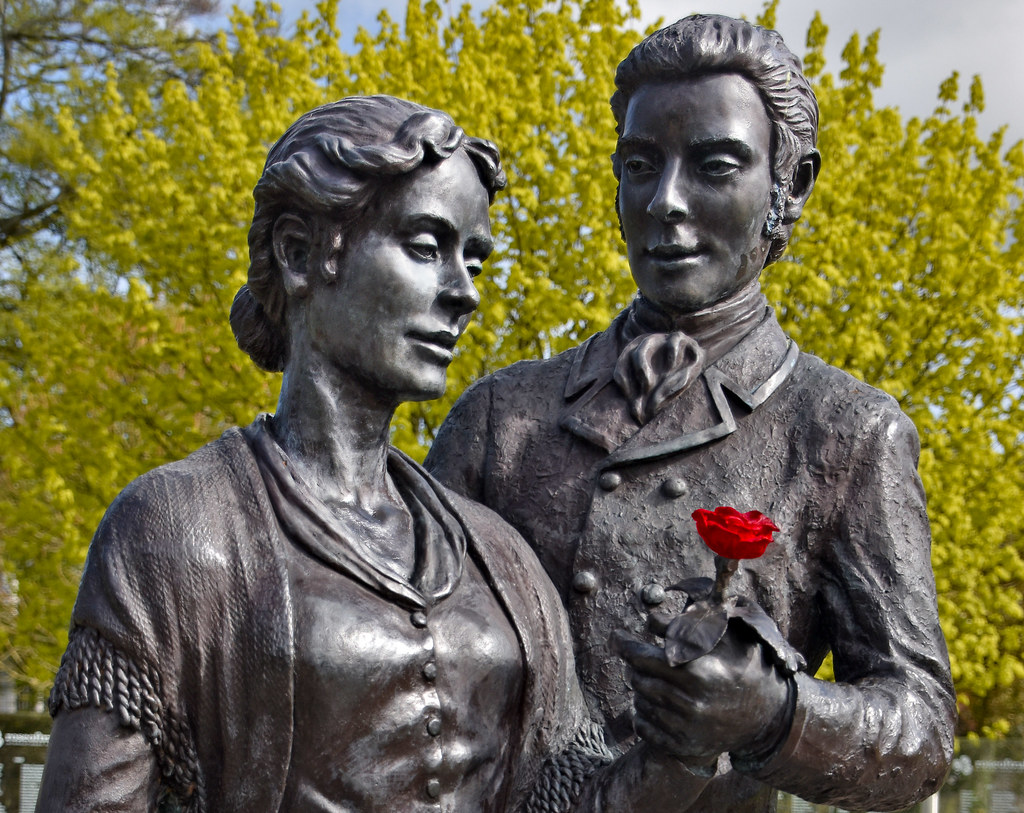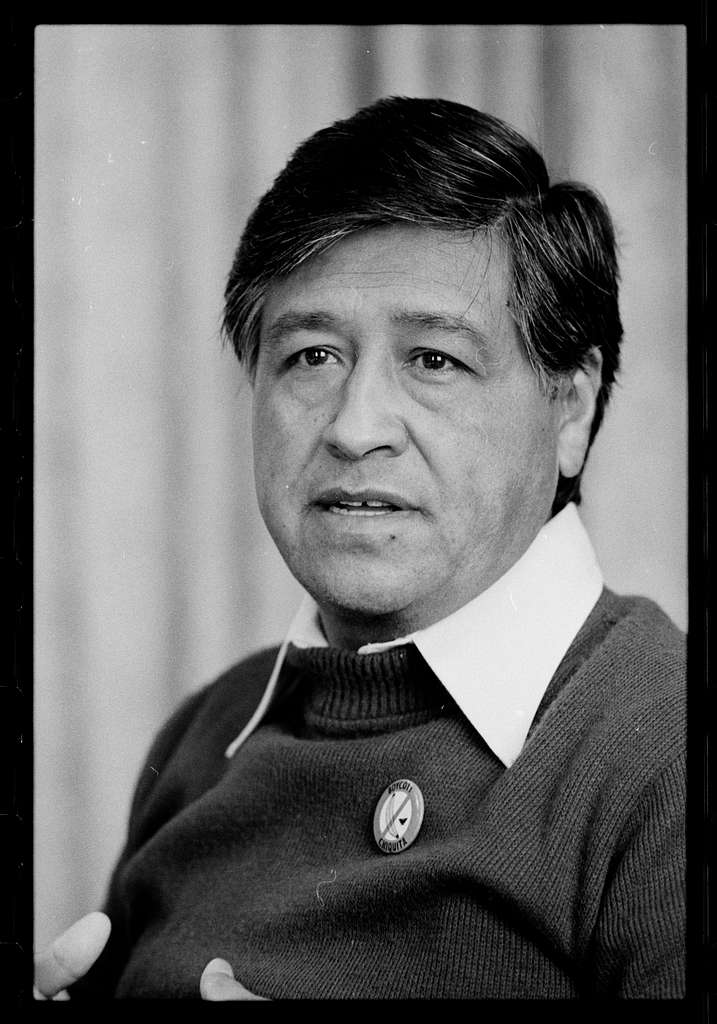

In the Peace Garden of California’s Fresno State University, a statue of civil rights icon Cesar Chavez stood triumphant for 30 years. As cofounder of the National Farm Workers Association (NFWA), now known as the United Farm Workers (UFW), Chavez improved wages and working conditions for migrant farmers, and in doing so, amplified the voice of Latinos in the American civil rights movement. His face and name are plastered on school murals and street signs, his own birthday a national holiday. In California alone, over 60 institutions and landmarks are dedicated to him. Chavez was effectively canonised in American and Californian history as a champion for the abused and neglected.
On March 18th, an investigation by the New York Times revealed that Chavez sexually harassed and abused multiple women within the movement. That same day, Fresno State’s statue was shrouded in a black tarp and swiftly encased in plywood. It was removed by that Friday, and the state of California, along with the rest of the country, has followed suit in a frenzied dismantling of Chavez’s institutional imprint: Cities like San Francisco, Sacramento, and Los Angeles are moving to expunge his name from public streets, schools, and landmarks, and cities like Milwaukee and Denver have removed statues in his honour. California Governor Gavin Newsom additionally signed a bill renaming Cesar Chavez Day as Farmworkers Day with bipartisan support, casting a veil over a once lustrous legacy. It was one Chavez alone who was tarnished.
The New York Times investigations centred on the stories of Ana Murguia and Debra Rojas, who had been routinely sexually abused by Chavez from 1972 to 1977 as children. Murguia met Chavez when she was eight years old, and when she was 13, in his California office, Murguia was assaulted for the first time. He was 45. In that same office, Chavez groped Rojas’s breasts when she was only 12, and when she was 15, he had sex with her in a motel during a weeklong march in California. Under state law, she was not able to consent: it was rape. Their fathers had walked alongside Chavez in rallies. Murguia was thoroughly traumatised, and she had attempted to end her life multiple times by the age of 15. She said that she “wanted to die”.
It wasn’t only the daughters of his peers that Chavez used for his own sexual gratification, but also his presumed equals. His fellow co-founder of the NFWA, Dolores Huerta, also spoke out in a recent interview. She claimed that on one occasion, he “manipulated and pressured” her into sex, and on another, he forcibly had sex with her in a “trapped” environment. Both of these assaults resulted in pregnancies, which she kept secret.

The decisive consensus is that we should be horrified, and it is reasonable to expect that the people in power will do everything within their immediate capacity to tangibly condemn this. The UFW called the allegations “shocking” and “indefensible”. Gavin Newsom agreed, stating that “we’re for justice. We’re for the truth. We’re for transparency. We want to have the backs of our victims”. Former Speaker of the House Nancy Pelosi echoed a similar sentiment: “We must… uphold the values of dignity and justice in the face of conduct that deplorably betrays those principles”, she said, “No legacy is above accountability.” While they can’t arrest the dead, politicians will make sure Chavez’s legacy will forever be intertwined with his moral contradictions. Yet when it comes to sexual abuse, another posthumous precedent has already been set.
The Epstein Files Transparency Act in late 2025 resulted in a furious, public moral outcry against the Trump Administration, or more specifically, the Department of Justice (DOJ), after they failed to provide timely and transparent documentation of sexual crimes committed by Jeffrey Epstein and his affiliates. Former US Attorney General Pam Bondi was floundering and flippantly mishandling the files, meticulously exposing only whose takedown would be politically congruent with the Trump Administration’s coy, partisan fabrication of the Epstein narrative. Transparency is replaced with redactions. Certain elites enjoy plausible deniability behind solid black rectangles.
What is transparent to the public, though, is that any and all global elites are predictably implicated. It is not solely conspiratorial to assess that the natural progression of such noxiously excessive wealth is an entitlement to the bodies of our most vulnerable. The Chavez allegations, in the general public’s consensus, were unpredictable. He was a labour leader, a defender of the ignored and exploited, a figure who stood, supposedly, in stark opposition to all that Epstein represents. Naturally, this systemic hypocrisy and moral incongruency pose a question: is this systematic teardown of Chavez’s legacy so swiftly propelled because we inherently expect better of our progressive men? If this is the diagnosis, it is one in need of serious revision.
Feminists have long noticed how women function as the sex dolls and secretaries of left-wing movements. Writer Susan Sontag noted that the women of The New Left and other civil rights groups in the 1960s and 1970s were treated as “second-class members”, relegated to taking the minutes or fixing coffee while their male peers steered the serious conversations. Radical feminist Andrea Dworkin stated the reality in less bureaucratic terms: “They wanted the women for fucking, not revolution”.
This objectification is not a contradiction to the socially sympathetic values of progressive men. Just because they take issue with the plight of the marginalised worker or races does not mean they take issue with misogyny. Yet, progressives across the US struggle to wrap their minds around this fact. They grieve Chavez’s sullied legacy and the unexpected nature of the allegations. They stress the necessity of migrant and Latino empowerment in the US as ICE proliferates into both the domestic and labour sectors of daily life. But just because we’re uncomfortable with the reckoning that leftist men are not progressive feminists, and that justice is not always politically advantageous, doesn’t mean women should self-censor for the sake of reputation.
Dolores Huerta kept her abuse a secret for nearly 60 years, and at 95, she recites it plainly. One night in 1966, in Delano, California, she claims that Chavez drove her to a deserted grape field and raped her. Her silence on this event was not evidence of indifference, but rather a clear “strategic necessity”: She couldn’t report the assault to the police or to the union for fear of jeopardising the movement or her place within it. Huerta was silenced, stagnant between two forces of opposing hostility.
Women are paradoxically expected to swallow the degradation inflicted upon them by men in their movements, so they don’t take away from the fight against larger structural degradations. These men do not think of sexual abuse as a broader social ill but rather as an unfortunate entitlement that is better kept quiet. The public thinks of Epstein as a conspirator and Chavez as a random misfortune when, rather, both injustices are part of a larger, hushed patriarchal consensus that transcends socioeconomic status. Sexual abuse is not satanic or sporadic, but rather a clear symptom of the patriarchy’s depravity.
From 1965 through 1970, Cesar Chavez participated in the Delano Grape Strike, which is widely considered to be a watershed moment for American agricultural labour rights. Its legacy is one of migrant solidarity and empowerment, but its grapefields are the backdrop of Huerta’s once stifled, secluded abuse. We must grapple with the contrast and let these facts sit in uneasy contradiction, lest we betray the farmworkers and the women who built this movement in the first place.