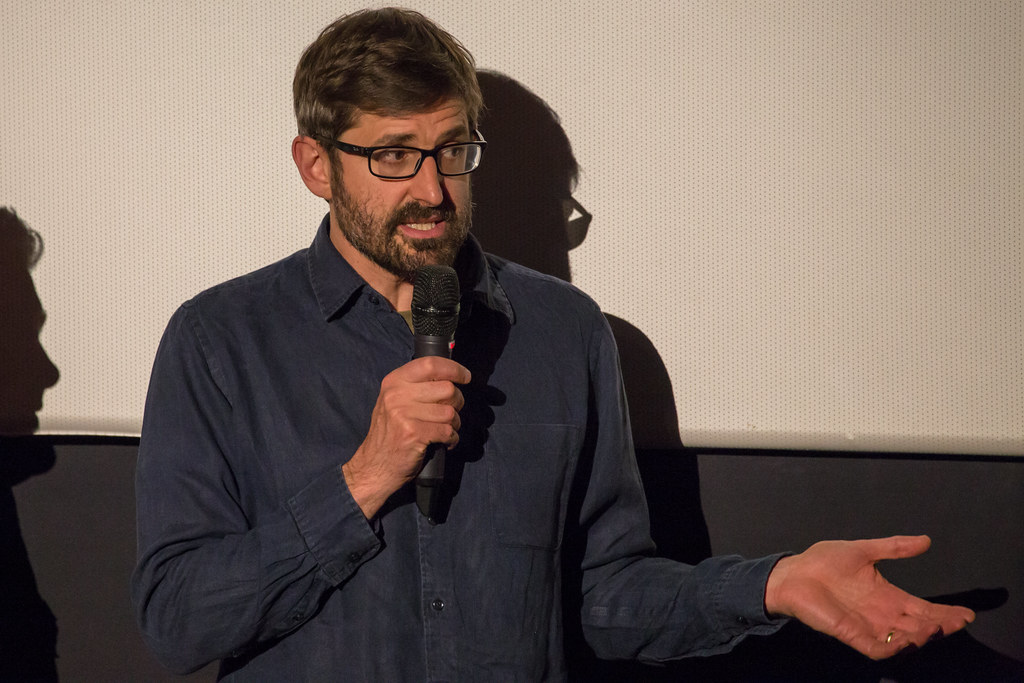

Renowned documentarian Louis Theroux exposes the pressing issue of reborn misogyny in his new Netflix documentary, “Inside the Manosphere”. The documentary has predictably sparked a series of heated debates online, as viewers rush to express their shock at its controversy. But women have not been oblivious to this crisis, and it didn’t take a mainstream documentary for us to recognise that misogyny is still around. In fact, it never left at all.
Diving deep into the inner psyche of the ‘manosphere’, a group of red pill content creators, Theroux sheds light on the figures who have spawned their web of discriminatory views across social media platforms, corrupting impressionable teen boys with their backwards ideologies. Despite the feeling of alienation one might experience when watching the documentary, the ‘manosphere’ is not an overseas issue. These ideas are not only festering in niche LA communities of content creators; this is your quiet next-door neighbour. The reality is that the internet is a petri dish for the multiplication of these viral ideologies, and when COVID faded into the past, another pandemic arose: a silent killer targeting women.
But what is the manosphere, really? At its core, it can be defined as a network of like-minded males, perpetuating misogynistic views and the notion of male superiority online. However, some women would liken the concept of the “manosphere” to the feeling of waiting for a bus in the company of several young men. Paranoia, fear, anticipation of an inappropriate comment; this is the essence of the “manosphere”. It is unsettling to pass young boys in the street and deliberate whether they too have fallen into the grasp of red pill content. What are they watching at night? How do they feel when a woman passes them by on the street? Do they see us as humans or sexual fantasies?

Red pill content is not a new revelation. The term, derived from the 1999 film The Matrix, suggests the idea of a “real world” is lying beneath the surface of “woke” propaganda. The red pill agenda twists femininity into a curse upon society. It’s founded on the belief that women desire superiority over men, that men should refrain from expressing emotion, that wives are unfit to work unless they are dressed in aprons, or lingerie for their pleasure. The manosphere treats this theory as a secret club that only intellectuals can access, grooming boys into believing they are a part of something special, something important. From an educated, outsider perspective, it is almost juvenile and humorous. Yet, nothing about this is innocent.
We’ve all heard the term “boys will be boys”. But, how much damage has to be done at the hands of said boys till we wake up and realise that we are regressing as a society? In Ireland, a 2024 study showed that more than 1 in 3 women have experienced psychological, physical and/or sexual abuse from a partner. In the same year, An Garda Síochána reported an average of 1,250 domestic abuse incidents every week. Statistics show 1 in 7 women in Ireland have experienced severe domestic abuse, compared to 1 in 17 men. This is a pandemic, and the manosphere is a contagion.
Viewers without social media have been particularly taken aback by the documentary and are even under the impression that this is a new phenomenon. This is not necessarily the case. Sexism and misogyny have always been around, brewing online through graphic pornography and in real life through gender pay gaps and anti-abortion legislation. However, social media outlets such as Reddit and X are a cesspit for anti-feminist rhetoric, and this is certainly on the rise.
Additionally, the emergence of online cult groups which target young men is a major factor in the concerning recent increase in viral misogyny. A recent survey has shown that a third of Gen Z males believe that wives should obey their husbands. This is a startling revelation which can be linked to the increase in extremist conservative videos circulating on these platforms. It is not long after a funny video goes viral online that people incorporate the joke into their everyday vocabulary; misogynistic jokes are not an exception to this. People say actions speak louder than words, but what we say matters. Hateful speech cuts like a knife, and for the most vulnerable of society, those cuts are likely to scar.
The manosphere is not a harmless joke amongst boys and men. It is an acute strain of misogyny which defies legislation and laws; it is a social and cultural issue, ingraining its roots in the inner psyche of young boys. The boys subjected to this content will go on to enter the working world of medicine and government, introducing their personal viewpoints into their positions of power. Every day, women around the world are stripped of their bodily autonomy by negligent male doctors and are undermined within their well-deserved jobs. Every day, to this day, men continue to push heavily on the shoulders of women until they submit to where men think they should be – under their control.
We need to combat this crisis at its core. The government can put age restrictions on pornography, but as long as it is even remotely accepted, women will continue to be oversexualised. The government can ban pay discrepancies between genders, but as long as men have the underlying impression that they are harder workers than women, the pay gap will persist in secret. Social media apps can censor hate speech, but as long as measures aren’t put in place to investigate and eradicate these red pill, anti-woman groups online, boys will continue to absorb these ideals and perpetuate them in their real lives. As long as sexism is accepted, in any shape or form, the manosphere will live on. We must report hate speech, block podcasters, and protect what our younger generation sees on the internet. We must call out men and boys on any incident of misogyny. We must listen to Louis Theroux. More importantly, we must listen to women.