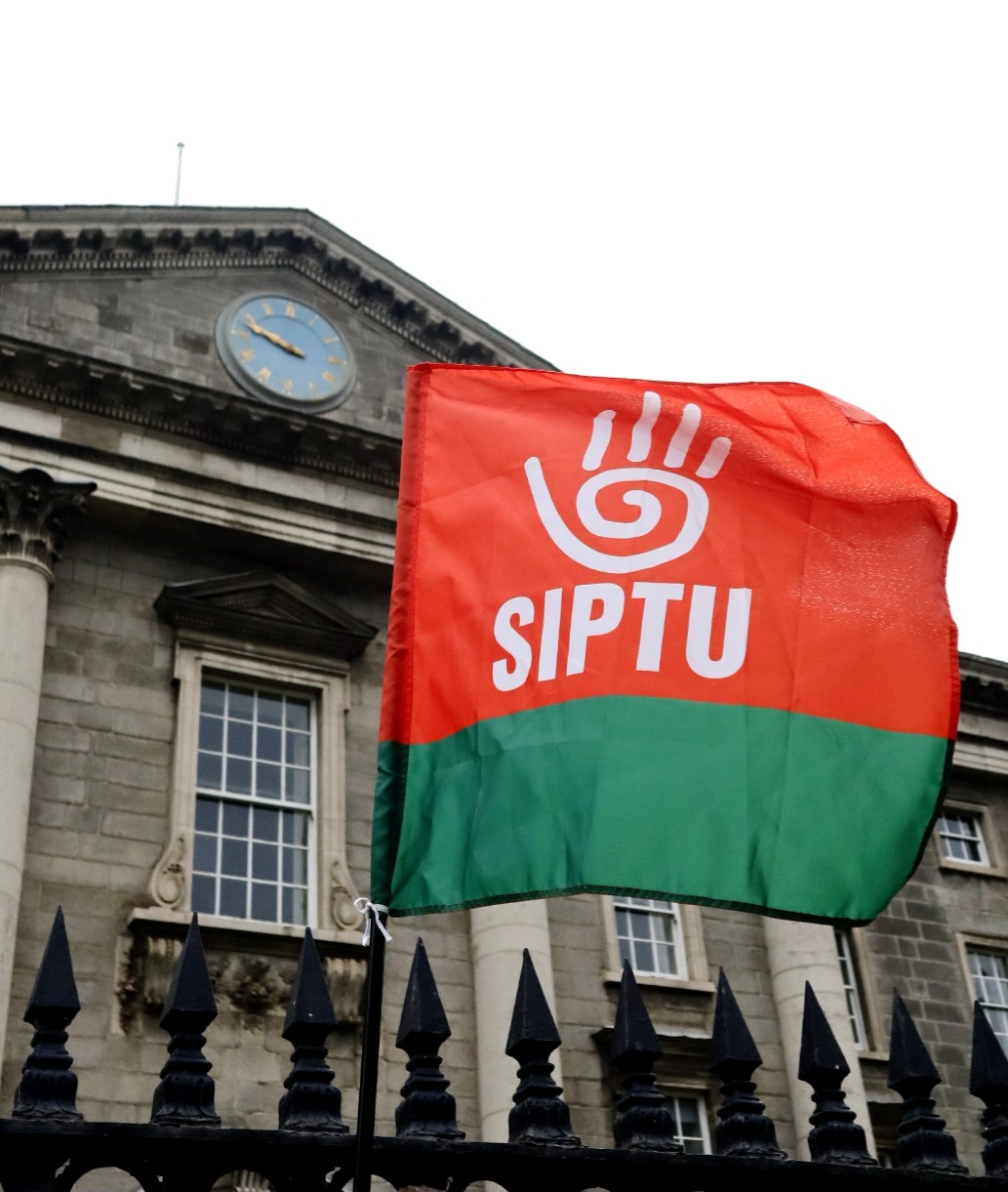

Strikes are back on for the public sector. Ireland’s largest trade unions, including SIPTU, Forsa, the Irish Federation of University Teachers (IFUT), and the Irish Nurses and Midwives Organisation (INMO), among others, have demanded that the government come to a fair pay settlement after the previous scheme expired on June 30th, alongside other key demands. Industrial action paused after nationwide strikes on October 14th following the opening of negotiations between the Irish Congress of Trade Unions (ICTU) and the government.
Currently, a 24-hour work stoppage is planned for November 12th, coinciding with European leaders meeting in Dublin as part of Ireland’s EU Presidency. The decision was made after a meeting of the Public Services Committee of the ICTU, where it was determined that the Irish government has not provided any satisfactory offers to resolve the dispute at hand.
College has yet to release a statement or provide a course of action for next Thursday and has yet to reply to a request for comment.

In light of the October 14th strikes, Vice Provost and Chief Academic Officer Orla Sheils announced a preparedness group established by the Chief Operating Officer, which has since provided updates to staff and students about College operations in relation to the strikes.
Over 300,000 public sector workers took to the streets on October 14th. Many of them were members of Ireland’s biggest trade unions, including Services, Industrial, Professional and Technical Union (SIPTU), Forsá, Irish Federation of University Teachers (IFUT), the Association of Secondary Teachers Ireland (ASTI), and Irish Nurses and Midwives Organisation (INMO). The Postgraduate Workers’ Organisation (PWO), Aontas na Mac Léinn in Éirinn (AMLÉ), and the Trinity College Dublin Students’ Union (TCDSU/AMLCT) were also in attendance.
The unrest arrives at a precarious time for Irish universities regarding government funding, with higher education institutions at a deficit of the funds necessary to fully invest in the future. Provost Linda Doyle placed the deficit at €250 million. Minister for Further and Higher Education James Lawless announced a complete overhaul of university funding in an informal meeting with EU education ministers on October 16th, declaring plans to present an updated paper to the government by the end of the year that will examine “the adequacy of existing funding arrangements, the changing financial requirements of our universities and the opportunities to develop a more sustainable funding model”.
Ireland currently sits in 36th place out of 37 Organisation for Economic Co-operation and Development (OECD) countries, having yet to make up for the massive economic losses sustained in the 2008 financial crash.
Trade unions, including IFUT, see the strikes as a “last resort” after exhausting all avenues of proper communication between themselves and the government. IFUT’s emergency committee is set to meet at 6pm tonight to determine a course of action for the organisation. PWO has been an active participant in recent industrial action, not only committed to standing in solidarity with university employees, but seeking recognition as employees themselves. Ireland is one of the few countries in Western Europe that lacks worker recognition for PhD researchers. These circumstances prevent official unionisation, sick leave, maternity or paternity leave, eligibility for healthcare, or government benefits.
PhD researchers are awarded a stipend of €25,000 for every year of their degree, which sits at a deficit of 15 per cent compared to the minimum wage. Minimum wage rates are adjusted yearly in accordance with inflation and the cost of living, but PhD stipends remain fixed.
“Workers have had enough of austerity and poor working conditions”, PWO Trinity branch president Daniel O’Laocha wrote to the University Times. PWO will hold a ballot later this week to determine the organisation’s plans for the strike. Due to the precarious condition of postgraduate researchers and their lack of legal protection as an unrecognised union, their positions could be at risk should they choose to participate in strike action. O’Laocha called for undergraduate students to continue to provide support to all university staff, including “security, administrative, catering, and cleaning roles” whose roles are largely unappreciated.
This is a developing story.