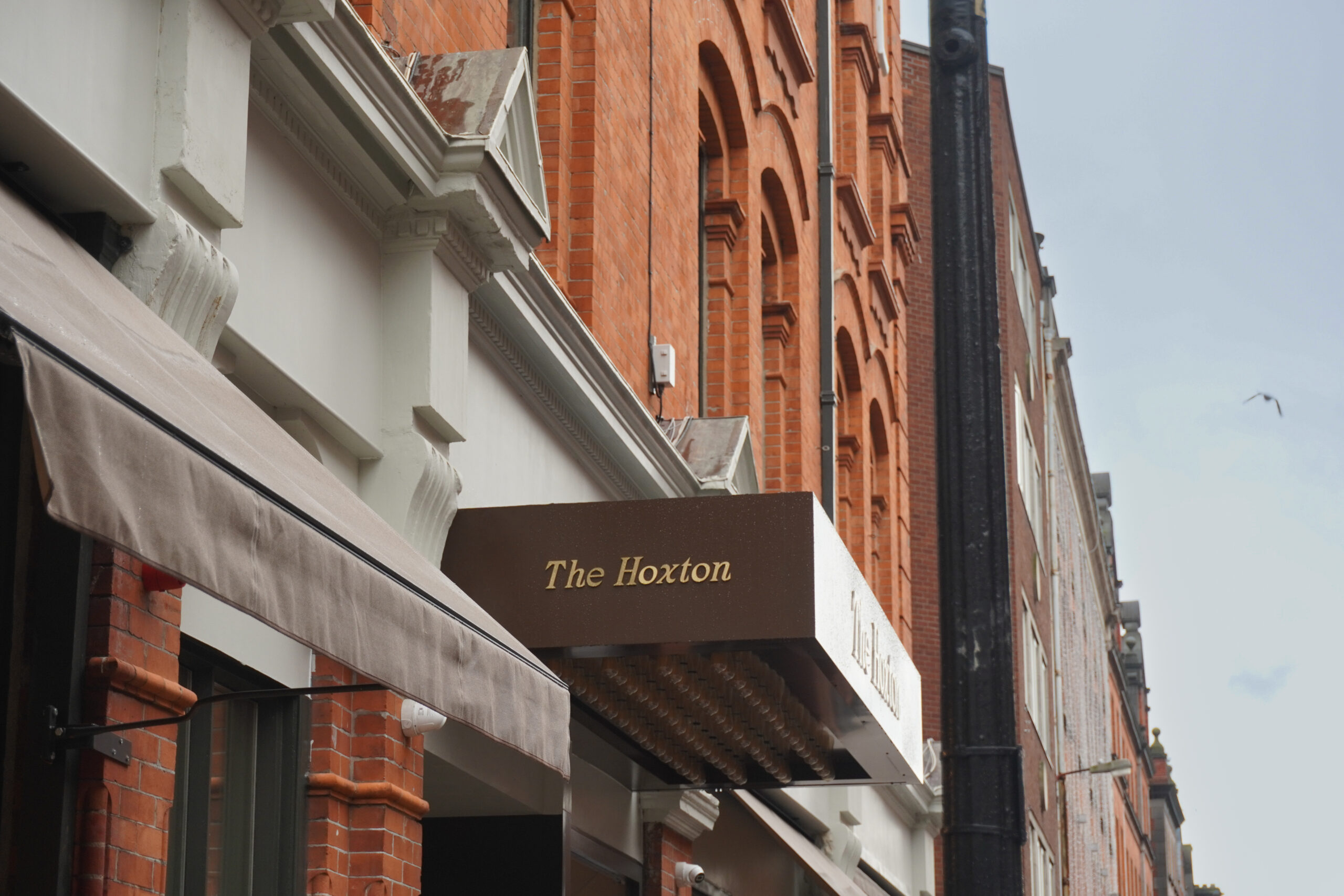
“Clubbing is culture”, states the hand painted cardboard sign carried through the stretch between Exchequer Street and Dame Court, as protesters gathered outside the Hoxton Hotel Dublin. In recent weeks, a legal dispute between the hotel’s leaseholder and Yamamori Izakaya has pulled the city’s nightlife culture into the High Court, as well as onto the streets. What began as a technical dispute over noise has progressed into a large-scale debate about whether there is still room in Dublin for music after dark.
Trinity Hospitality, the leaseholder of the newly opened Hoxton Hotel, initiated proceedings seeking limits on sound travelling from the late night venue next door. The hotel claims that the late-night noise has forced many rooms out of use. Yamamori, a Japanese restaurant with a long running underground music space, disputes the extent of the impact and says it initiated independent sound reports during the hotel’s refurbishment. The case has since been adjourned with the consent of both parties to allow for further testing, engagement and dialogue.
Yet, these details only go so far as to explain how the dispute began. The public’s response — hundreds gathering in the street to dance, handwritten signings calling out the loss of cultural spaces in Dublin and petitions gathering thousands of names — reflect years of frustration regarding the steady disappearance of late-night venues in Dublin.

The successive closure of clubs, music venues and late night spaces in favour of developments that prioritise hotels and high-end apartments has been at the heart of this issue. The Hoxton–Yamamori case feels less like an isolated dispute and more like a tipping point as it follows a long established pattern in regards to the displacement of nightlife.
At the core of this tension is policy failure, particularly through the unaligned nature of urban reality and governance. Irish planning and licensing frameworks were designed for a city where nightlife is neatly separated with homes and hotels. Dublin is not organised into neatly separated zones of living and socialising. It is a compact, mixed-use city where a plethora of activity shapes the same buildings and streets. Where regulation does not reflect this density, conflict is central. The absence of binding frameworks that anticipate the impacts of redevelopment in areas with late night venues leave a hollow result open to extensive disagreement, such as in the Hoxton–Yamamori case.
Evidently, other European cities have developed more coherent approaches to these challenges. For example, in Berlin, planning policies treat nightlife as a core pillar to cultural infrastructure, with vast protections for established venues and clear obligations on new developments. Internationally, many cities apply the Agent of Change principle, which places responsibility for soundproofing onto the new establishment in an area, not on the venue that was there originally. However, in Ireland, this principle exists more as guidance than law. Without strong statutory backing and consistent enforcement by Dublin City Council, disputes tend to result in extensive legal action between neighbours rather than being resolved by preexisting planning standards designed to both anticipate and prevent conflict.
Licensing frameworks add another layer of structural problems. Late night opening remains restrictive and costly, encouraging informal workarounds or limiting the ability to plan for the long term or invest in strong infrastructure. Although event legislation, such as the Sale of Alcohol Bill 2022 signalled an intention to modernise late night regulation, implementation has been uneven and slow. In reality, this leaves venues operating in an environment of uncertainty. Planning decisions also shape the conditions for conduct. Without legal safeguards, courts are left to resolve conflicts that originate in design and policy choices, while cultural spaces absorb all of the financial and operational risk.
The Hoxton has stated publicly that “first and foremost, [they] don’t want to see Yamamori Izakaya close, nor do [they] want to see nightlife venues curtailed”. This acknowledgment has been welcomed as collaboration is a far preferable solution to litigation. However, in a city where large hospitality operators and investors seem to possess greater legal and financial capacity than independent or small music venues, this form of negotiation may also produce uneven outcomes. The intentions of any single business are not the issue, but whether the regulatory legal environment offers any protections at all for long standing cultural activity when developments shift around it.
The discussion has moved more towards concerns about the direction that the city is going in. To many, nightlife is at the heart of the social fabric of a city, it is a place to meet people, hear local DJs and just have a bit of fun. Many remark on how early the city falls quiet in comparison to other European capitals. The steady erosion of nightlife culture is tied to the wider idea that Dublin is becoming less accessible to young people — not only financially, but in terms of curtail participation and creative freedom.
When it comes to protecting nightlife, it is not a requirement to choose between residents’ needs and cultural freedom. It requires frameworks that recognise their coexistence. Implementing the Agent of Change principle in law, modernising licensing so that legitimate late night activity can operate within clearly defined parameters, supporting sound related upgrades in long established locations and recognising the importance of night time districts within development plans would move policy from a place of reaction, to one of prevention.
This does not mean ignoring hotel guests who deserve to sleep in peace. It entails designing a framework for a city where music and sleep can coexist because policy anticipates conflict and resolves it. Cities that succeed at this do not treat nightlife as something that can only be managed down, they intentionally design their policies around their coexistence.
The Hoxton–Yamamori dispute will soon return to court. However, the broader significance lies in what follows. If we move forward without reform, the message is that cultural spaces do not matter. This would speak to the fact that their survival could be contingent on each new development that arrives beside them. However, if it does prompt government action or policy change, it could mark a step towards a Dublin that recognises late-night life as a core element of its culture, public life and identity.
A Dublin that makes space for music, for late nights and for people to come together is one that understands that music and nightlife are not extras, they are a part of the heart of the city. They shape how a place feels and who a place is truly for.