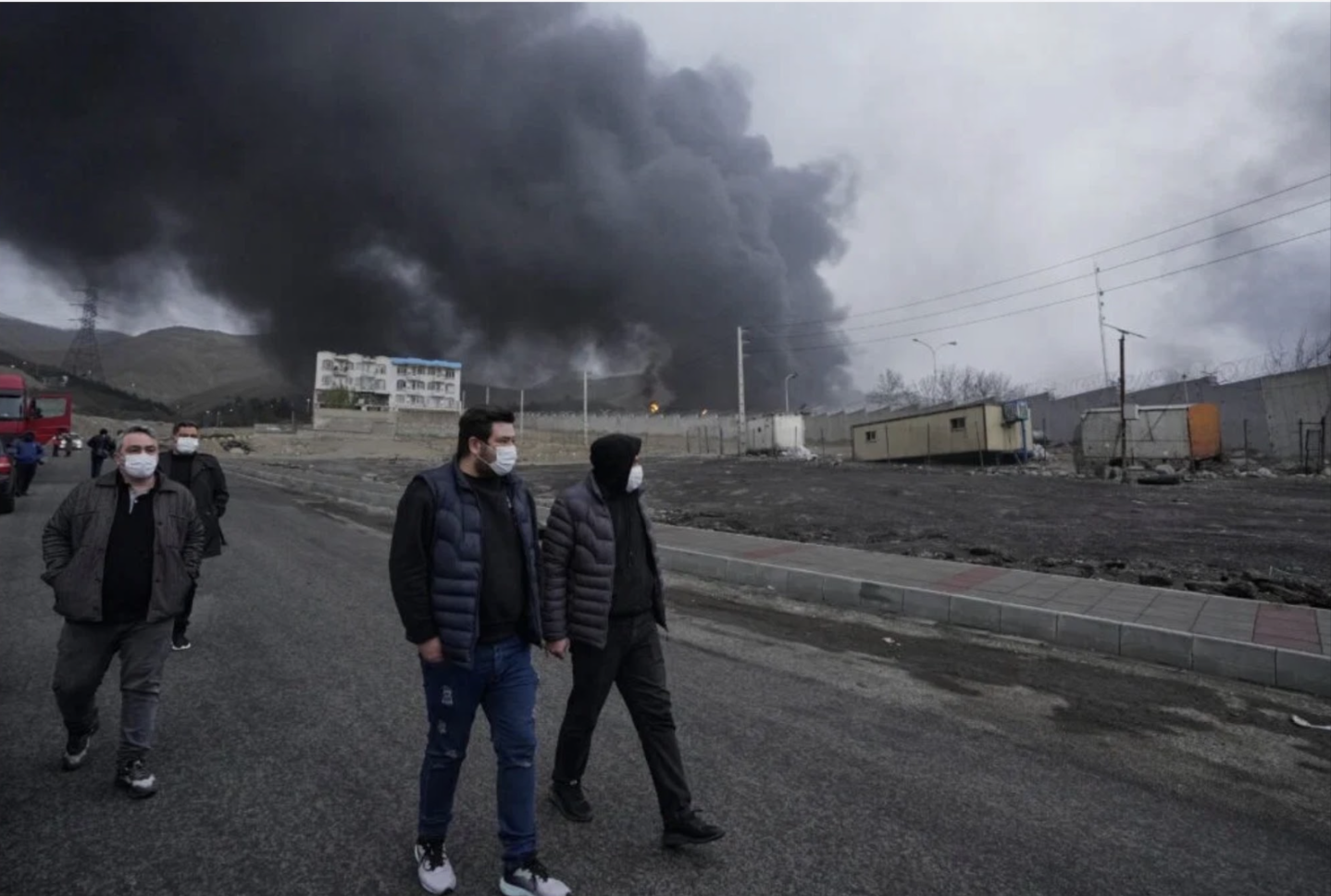

After the US and Israel attacked Iran on February 28th, Iran closed the Strait of Hormuz, in effect choking 20 per cent of the global trade in oil and natural gas — the two biggest energy sources in the world. Consequently, oil prices have skyrocketed, approaching the levels of the 2008 Financial Crisis, and the average price of petrol has soared nearly a third since the US and Israel attacked Iran. Meanwhile, Iranian attacks on natural gas facilities in Qatar have led to a 50% increase in European gas prices, with Irish consumers having seen drastic increases in heating costs. As a result, the International Energy Agency recently warned that the world is approaching an energy crisis worse than the record oil crisis of the 1970s.
Beyond immediate economic impacts, these supply disruptions jeopardise the global production of vital products like medicines, medical equipment and nitrogen-based fertilisers, all of which contain essential chemical components derived from fossil fuels. This threatens to diminish food production, possibly leading to food shortages in low-income countries. Thus, the Iran war exposes the world’s dependency on fossil fuel and its multidimensional consequences.
The Russian invasion of Ukraine accelerated the phase-out of European independence on fossil fuels by restricting imports of Russian natural gas. However, this process has been slow and incomplete, as the EU faces internal division and domestic challenges, with countries reliant on Russian gas, like Germany and, more recently, Hungary, resisting decoupling efforts. Now the EU is paying for this with skyrocketing oil prices, threatening to spill over into widespread economic inflation, hiking already elevated costs of living, which economists warn create an overhanging risk of plunging the continent into a recession. To make matters worse, higher interest rates and levels of state debt means that the EU now has fewer monetary tools like credit-funded subsidies, economic supports and adjusted interest rates to cushion the energy blow compared to the energy crisis that followed Russia’s invasion of Ukraine in 2022.

Even so, various European countries, including Ireland, have introduced energy aid packages and have temporarily lowered taxes on fuel. While possibly providing a short-term solution for the economy, this is arguably counterproductive in the long term if not followed up by planning to address the dependency of global economies on fossil fuels, which made Europe economically susceptible to global energy shocks in the first place. Thus, it appears that Europe might miss yet another opportunity to accelerate a green transition by broad public investment in renewable energy — a transition that would not only bolster energy and economic security against future global instability, but also national security in a broader sense, as renewable energy facilities like wind power are much more decentralised, and thus harder to extensively damage in a single attack, compared to the highly concentrated production of fossil fuels, exemplified by the aforementioned attacks on Ras Laffan in Qatar, the world’s biggest single supplier of liquid natural gas.
Thus, war-inflated oil prices may incentivise a market shift toward renewable energy. However, some experts argue that the opposite may happen. Energy price hikes might lead Europe to either relax its economic sanctions on Russia to import Russian gas, which war experts argue may prolong the war in Ukraine by bolstering the faltering Russian economy. Alternatively, European and other import-dependent countries may shift to cheaper fossil fuels, such as coal, with aggravating consequences not just for climate change, but also for local environmental and social issues like air pollution. Furthermore, a green transition may be slowed down by the war in Iran as fossil fuel companies profiteer from skyrocketing prices, disincentivising a market shift toward renewable energy sources.
Moreover, war itself exacerbates climate change. For example, military operations of the first three years of the war in Ukraine produced 230 million tonnes of carbon dioxide — comparable to the annual emissions of Hungary, Austria, Czechia and Slovakia combined. Indeed, if the world’s militaries were a country, they would constitute the world’s fourth-largest emitter of greenhouse gases. In addition, aerial weapons give rise to severe and lasting pollution, as illustrated by the ”black rain” and acute respiratory problems that have befallen civilians in Tehran and elsewhere in the wake of US-Israeli attacks. Simultaneously, the struggle for control over the Strait of Hormuz between Iran and the US can result in attacks on oil tankers traversing the Strait, which would likely result in oil spills causing widespread damage to aquatic ecosystems and fish-dependent economies.
Yet, “green policy” discussions rarely address the impacts of the world’s militaries, buying into the narrative of militarised national security propagated by the powerful interests of the global military-fossil industry complex. In a tragic irony, such military-based security efforts undermine not just the wellbeing of the planet, but the very peace and security they are ostensibly designed to protect, as climate researchers predict that the fallout of human-caused climate change and other environmental issues, such as water scarcity, dwindling crop yields, and forced migration will make violence conflict more likely, trapping the world in a vicious circle of ecological and humanitarian destruction.
Consequently, reducing global reliance on fossil fuels would alleviate the humanitarian as well as the environmental consequences of war, lower the risk of war by reducing the ability of states to weaponise strategic energy sources by exploiting national vulnerabilities created by global fossil-fuel dependency, and bolster economic resilience against energy shocks. Hence, the war in Iran points to a common source of contemporary issues around environmental degradation, economic instability, national security and geopolitical tension: global fossil capitalism. This suggests that resilience and security are less about economically decoupling from individual countries through boycotts or tariffs, as pursued by the West against countries like China, and instead about a more systemic decoupling from the global fossil fuel industry.
Thus, the world should arguably extend climate goals and public scrutiny to the area of armies and military spending, which have often been given a virtual carte blanche of unquestioned expenditure of money and resources. Such measures may simultaneously contribute to international peace and disarmament efforts. Furthermore, Europe could implement windfall taxes on fossil fuel companies to offset the market incentive of the war boom in fossil fuel profits, and subsidise renewable energy projects to improve European resilience against future shocks.
It remains to see whether the world’s governments this time will learn the lesson of the interconnectedness of environmental sustainability, human rights, national security, economic prosperity and global peace.