
Imagine a world where global actors are fiercely competitive, staunchly patriotic, and bursting with nationalistic superiority and pride. Where each actor fights to be the sole remaining champion, ruthlessly eliminating any and all opposition in its path. Where women are pushed to the sidelines, out of sight and out of mind. Where brute strength and cunning tactics are the key to world domination.
Such an image depicts patriarchal anarchy. It also depicts international men’s football leagues.
Generally speaking, sporting leagues are fondly anticipated and widely supported across the world. International sports matches have the ability to foster connection, empathy, and respect between even the most politically opposed of nations. However, just as international sports games can unite nations, they can also be inherently divisive. International leagues are nationalistic, with vibrant political undertones that should not be ignored. We’re all familiar with the phrase “everything is political”, but what does that really mean in the context of sport?

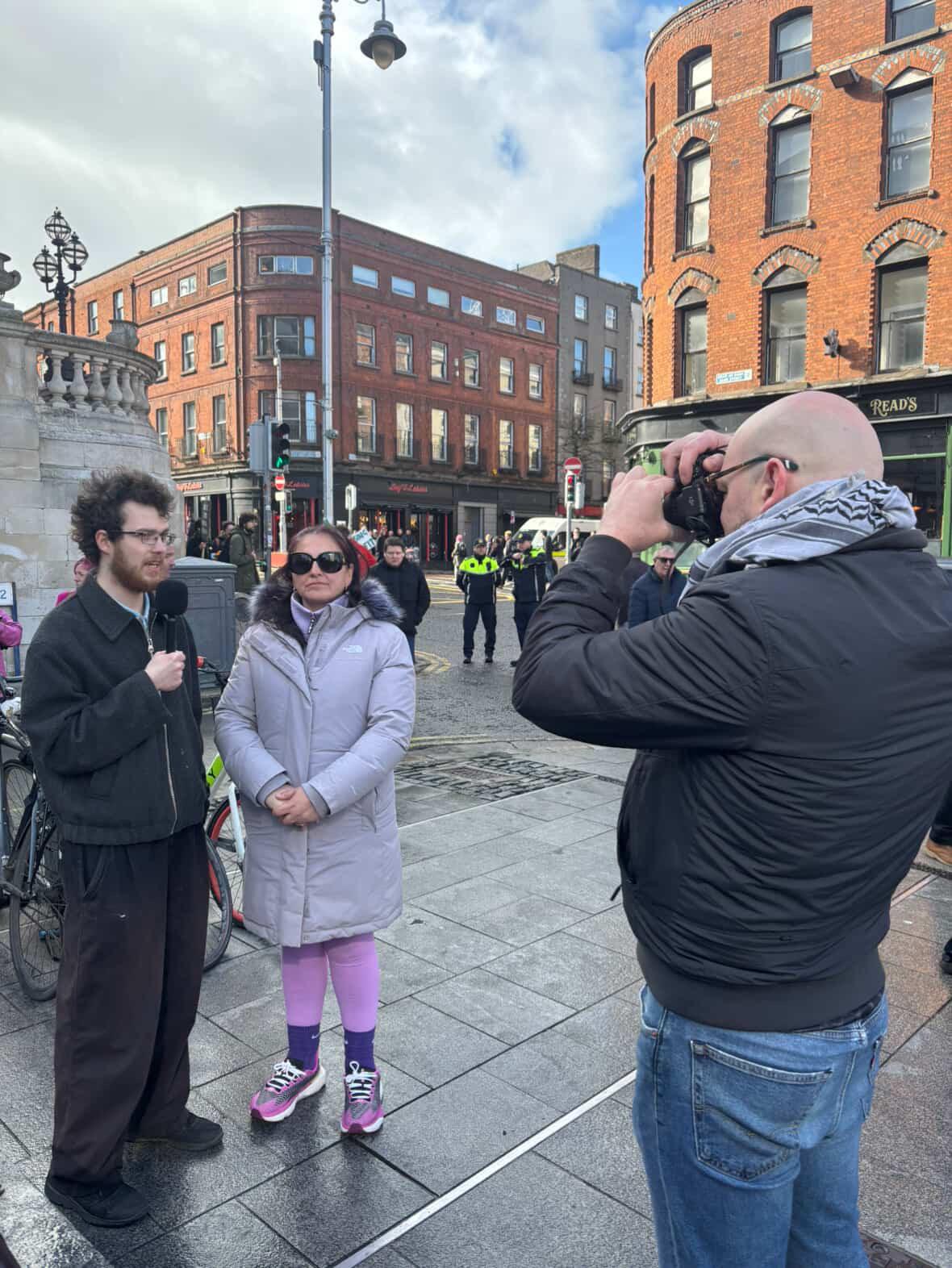
Sport and politics collided on February 25th when the Football Association of Ireland (FAI) announced that Ireland would play Israel on October 4th of this year following a randomised draw. The UEFA Nations League match is set to take place in Dublin’s Aviva Stadium, as confirmed by David Courell, chief executive officer of the FAI.
Since this announcement hit the press, disapproval has been expressed by politicians, football fans, and the general public alike.
SIPTU, Ireland’s largest trade union, has called on the Government and the FAI to boycott the match, or else risk workers refusing to run the event on moral grounds. Greg Ennis, Deputy General Secretary of SIPTU, stated, “International sport is inherently political; it showcases a nation and its people to the world. Israel, as other states have before them, has sought to use the spectacle of sport to hide blood-stained hands”.
“If the FAI and the Government do not see sense and boycott these games, they shouldn’t expect footballers or other workers to follow them into infamy.”
SIPTU has also raised security concerns around the event, should it go ahead. An Garda Síochána has assured the FAI that security requirements will be met. Courell of the FAI, remarked that “An Garda Síochána have been very clear that they are confident that they can deliver a safe and secure environment for this game to proceed… If they maintain that they can deliver [the game] in a safe and secure manner, then who am I to challenge that?”
People Before Profit leader Richard Boyd Barrett believes that UEFA “should do the right thing” and sanction Israel. “There were sanctions against apartheid South Africa, there’s been sanctions against Russia for what it’s doing in Ukraine, there were sanctions against Yugoslavia for what it was doing against Kosovo…So why is there not sanctions against Israel for the crimes it’s committing against Palestinians?”
According to a poll by District magazine, 91 per cent of respondents believe that Ireland should boycott the match.
When turning to the other side of the debate, one finds a paradox. Those in support of the match seem to be in agreement with those against it.
Retired Irish footballer Alan Cawley commented, “If we were all to sit down in an ideal world and say should this game be going ahead, we’d all agree it shouldn’t…[however] it could lead to the ruination of football here. We just don’t know in terms of the sanctions [that may be imposed]. The FAI are already in financial peril.”
Taking a similar position is RTÉ soccer analyst Richie Sadlier, who said that it would be “an act of self-sabotage” from the FAI were they to boycott the match, “because I think UEFA will absolutely crush them to make such a strong deterrent to prevent anyone else from doing the same.”
“The difficult and horrible and spirit-crushing reality that we have to accept is that in the world of football at the moment, the punishment for taking a moral stance against all of the crimes that I outlined is far greater than the punishment that is meted out to the country that is alleged to have carried out those crimes.”
Were Ireland to boycott the match, there would be “serious consequences” as described by Paul Cooke, FAI president. “It would result in the forfeiture of six points, could lead to relegation to League C of the Nations League, and would damage our seeding for Euro 2028 qualification as well as our overall FIFA ranking. Such outcomes would materially harm the long-term sporting interests of Irish football.”
Cooke also referenced “financial and regulatory consequences” that would be imposed from the boycott, stating that “the board cannot act in a manner that would […] expose the FAI to severe sporting, financial and reputational sanctions”.
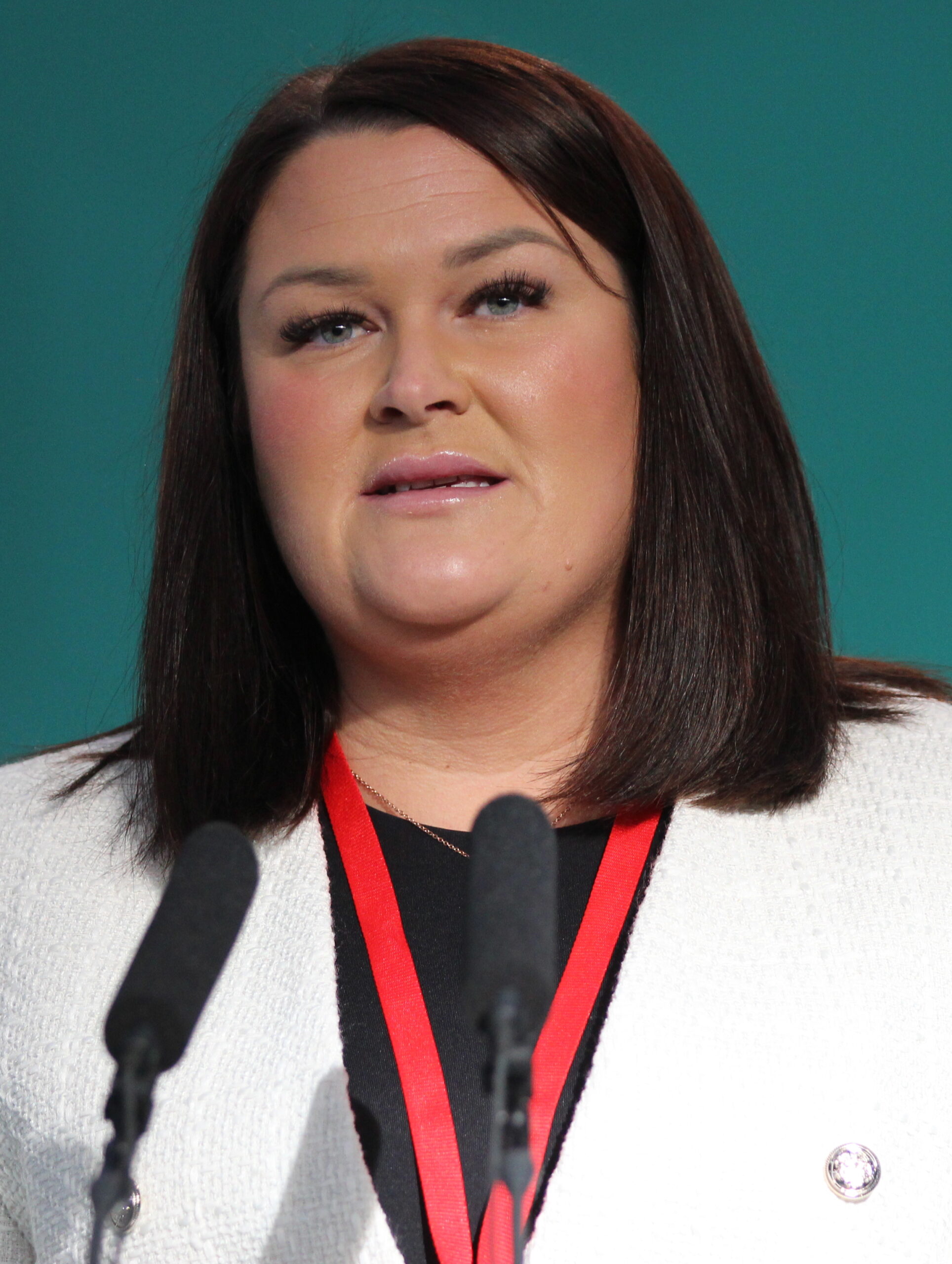
TD Joanna Byrne is the Sinn Féin spokesperson for sport, and has expressed disapproval of the fixture on behalf of the party. Shortly after doing so, on March 18th, Byrne was required to step down from her position as Director and Co-Chairperson of Drogheda United, a League of Ireland football club located in County Louth.
The resignation order was publicly issued by Trivela, a US-based investment group that acquired Drogheda United FC in 2023. Trivela claims that “this decision [to dismiss Joanna Byrne] was not taken in any way on the basis of Ms Byrne’s political views or beliefs,” but rather “this decision followed a statement made regarding private discussions with Club ownership.”
“[T]hese matters have triggered an internal review at Trivela regarding the practicality of having an individual with political obligations simultaneously serve as a director of a football club. That review concluded that this is not a workable arrangement and should have been addressed previously.”
Byrne disputes the claims of Trivela, insisting that their decision is a result of her condemnation of the Ireland vs Israel fixture. In a statement published to her Instagram page, Byrne wrote that the “underhand move by Trivela… was planned and co-ordinated without any consultation with me.”
Byrne explained that she discussed her potential conflict of interest with Trivela after her election as a TD for Louth, but that “they were happy for me to stay on in my role [as Director and Co-Chairperson].”
“[T]he underlying issue here is […] my strong stance that Ireland should not play Israel in the UEFA Nations League while a genocide against the Palestinian people continues.”
Speaking to the University Times, Byrne did not wish to comment on the incident with Drogheda United, but instead reiterated her position on the Ireland vs Israel match.
“Israel is an apartheid state who have engaged in ethnic cleansing and genocide. Their slaughter of footballers and bombing of football pitches cannot be accepted or normalised. Front-line Israeli soldiers with blood on their hands lining out against our National Team cannot be accepted or normalised. Sportwashing cannot be accepted or normalised.”
“I am proud to have stood up and to speak up despite the consequences”, Byrne shared.
Joanna Byrne’s position within the club has been taken over by her partnering Co-Chairperson, American founder and CEO of Trivela: Benjamin Boycott. No pun intended…
The Ireland vs Israel fixture and its resulting controversies demonstrate how sport is inextricably linked to politics. The politicisation of sport is not a modern phenomenon – sporting history demonstrates how the pitch has always been political.
In September 2016, San Francisco 49ers quarterback Colin Kaepernick took to one knee during the US national anthem in protest of racial injustice. The “taking the knee” movement has become a symbol of Black Lives Matter protests across various sporting leagues and across the world. Kaepernick was not signed after the 2017 season came to a close, leading many to believe that he had been blacklisted for his actions. The player went on to file a grievance against the National Football League (NFL), accusing the league of colluding against him. He reached a settlement with the NFL in 2019.
Four years ago, the 2022 Qatar World Cup was boycotted by many due to claims of “sportswashing” founded on alleged human rights violations by the Qatari government.
In February 2024, the Irish women’s basketball team made headlines when they refused to shake hands with the Israeli team during the Riga-based play-off. The Irish team had considered forfeiting the game altogether; however, John Feenan, head of Basketball Ireland, believed that doing so would be detrimental. Speaking to RTÉ, Feenan said, “Not only would we be out of international competition for the next five years but it would probably take us another five years to get back to where we are now, so in real terms we’d lose a generation of players.” At the time, Israeli player Dor Saar described the Irish team as “quite antisemitic”.
Closer to home, the 2025 Leinster Camogie semi-final catalysed a successful campaign against patriarchal traditions in women’s sport, when the Kilkenny and Dublin players were forced to change their shorts to skorts before the game could commence.
Both home and away, the examples are countless. When it comes to Ireland making political statements on the global stage, the debate centres around the persisting tension of self-sabotage on one hand and moral duty on the other.
Moral duty won out on Ireland’s decision to boycott the Eurovision 2026 over Israel’s participation, a decision shared by Spain, Iceland, Slovenia, and the Netherlands. However, it was self-preservation and diplomacy which motivated Taoiseach Mícheál Martin’s decision to visit Washington on St Patrick’s Day despite the moral outrage of Irish citizens.
As the Ireland vs Israel match looms closer day by day, it will be interesting to see which way the verdict falls. The FAI faces a big decision that may shift the goalpost of sporting politics for years to come.