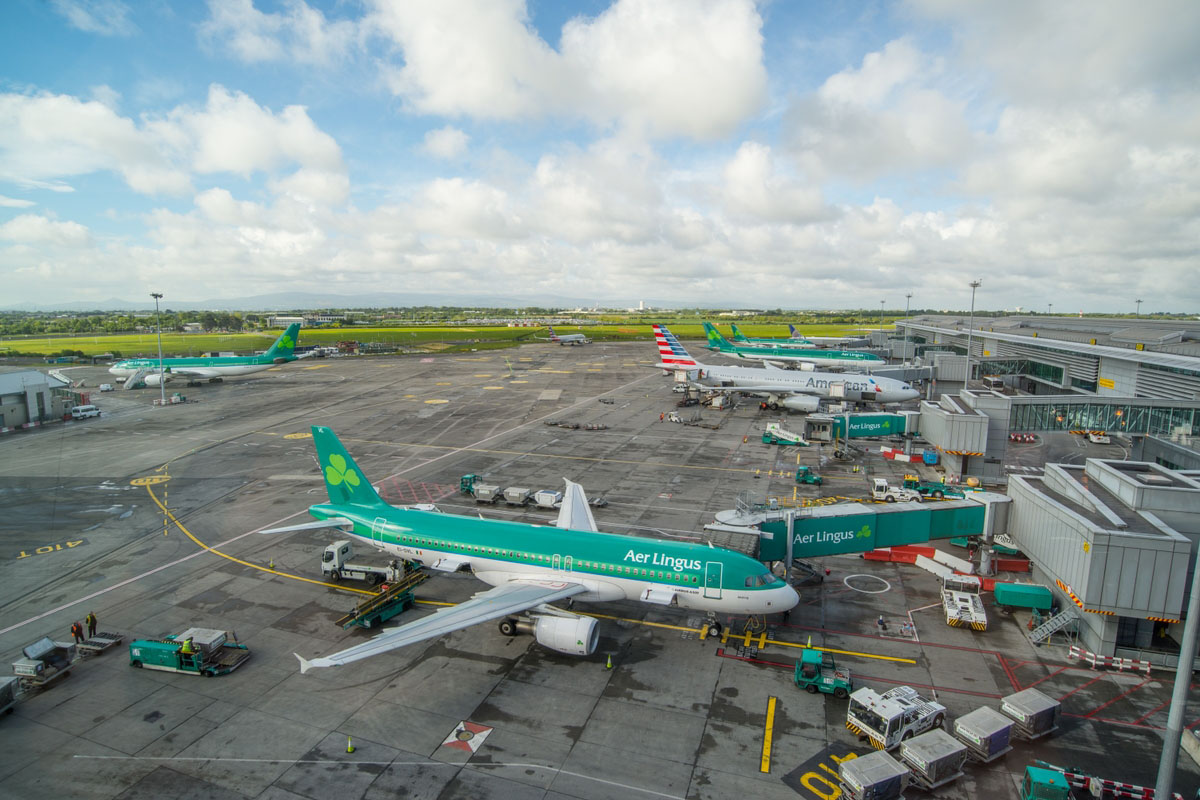

On March 18th, protesters of the Children’s Rights Over Flights gathered in front of the Dáil to protest against the Bill to eradicate Dublin Airport’s annual passenger cap proposed by the Minister of Transport. The measure is expected to lift the 32 million annual passenger cap, which was exceeded last year, reaching a record 36 million passengers.
The movement to lift the cap has also been expected and advocated by aeroplane
companies that wish to expand their businesses. Aer Lingus CEO recently told TDs that the cap would lose flights to the United States. Similarly, Ryanair’s CEO warned that the 2007 passenger cap plan is outdated, unlawful, as designated by the EU-US Open Skies Agreement, and would reduce the number of flights as well as increase fares for consumers.

By removing the cap, Dublin Airport is expected to maintain its growth and provide significant economic benefits to the city and Ireland as a whole.
So why did the cap removal become such a contested debate? According to residents of Greater Dublin, especially those who live by the airport, the cap removal would further reduce neighbourhoods’ quality of life and bring more public health risks.
It has been pointed out that the growth of the airport’s infrastructure would extend even further the competition between the airport and nearby residents for access to basic public infrastructure, such as electricity, water supply, and sewage, needed for residents and future housing plans. Some even reported that water pressure in Swords has already been reduced to supply the airport’s demand.
Additionally, locals and experts have noted that disturbances are mainly caused by ill-planned flight paths – arguing, therefore, that opposition is not necessarily against the growth of the airport, but against poorly-designed runways. Gareth O’Brien of the North Runway Technical Group said that authorities should be aware of such shortcomings before the Bill removes the last control.
Others have criticised the public health impact of the low flights, ranging from increasing risks of high blood pressure, cardiovascular impairment, strokes and also psychological impacts such as depression and anxiety disorders. Furthermore, it has been duly noted that the removal of the airport passenger cap would produce heavier environmental damage. An increasing carbon footprint and both air and noise pollution are expected if the Bill comes through.