
Today, 48 Gazan students seeking to study in Ireland whose visas were initially refused by the Department of Justice have been granted permission to study in Ireland following appeals.
The next step is evacuation, which the High Court heard today will be limited to 20 students. It appears that students who received letters from their universities saying they could register later in November are being evacuated. One student of the 64 who appealed was refused again.
Labour Party Leader Ivana Bacik TD called the news “really positive” in a statement on Instagram, but added, “these students must now urgently be facilitated in evacuations from Gaza.” She called on the government “to do all you can now, get the students out so they can take up their places studying here in Ireland”.

This follows months of public pressure. In July 2026, it was reported that only 9 of 69 visa applications from Palestinian students had been granted, with 20 refused. Trinity Boycott, Divestment, and Sanctions (BDS) Chairperson, Seán Radcliffe, published a guest essay in the University Times describing the actions of the Department of Justice as a “scholasticide.”
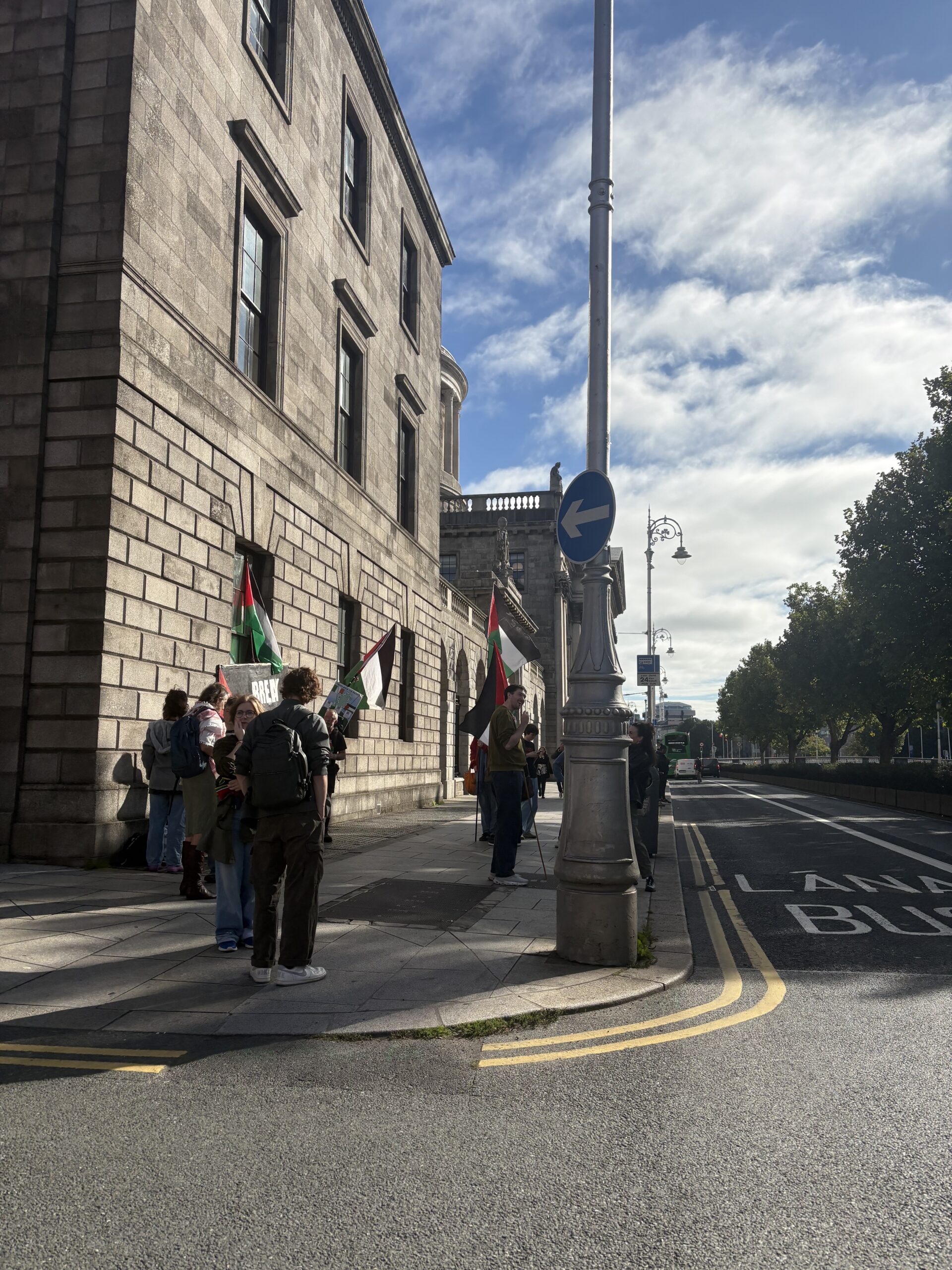
By August, the University Times reported that 51 students had been refused, with 22 accepted. Following this, over 100 people, including the Trinity College Dublin Students’ Union (TCDSU/AMLCT) and Trinity Boycott, Divestment and Sanctions (BDS), staged an emergency protest outside the Department of Justice demanding to “Let them Study”. Trinity also sent a college-wide email urging students and staff to “contact their local TDs, the Minister for Justice, Home Affairs, and Migration, Jim O’Callaghan TD, and the Minister of State with responsibility for Migration, Colm Brophy TD, to express concern and to encourage an urgent review of the situation.”
On CAO offer day, seven Gazan students arrived in Dublin to take up their studies. In an exclusive comment to the University Times, Trinity’s outgoing Vice President for Global Engagement, Emma Stokes, said that last year “Simon Harris was on the airway celebrating how his department had been very involved in the evacuation, how we’re welcoming [Gazan students] to higher education institutions in Ireland. And now we have silence.”
In September, the University Times reported that 103 students from Palestine were denied visas and only 39 had been granted. Following this, members of TCDSU/AMLCT and Trinity BDS chained themselves to the steps of the Department of Justice in advance of the deadline for the government to approve the visas in time for students to register for university. TCDSU/AMLCT President Amy Kennedy described the rejections and actions of Minister for Justice Jim O’Callaghan as “blatantly unfair, discriminatory, and racist,” and “void of any humanity, empathy, compassion, or understanding”.
The deadline lapsed the next day at noon, and activists pivoted to pressuring universities to extend their registration deadline for students awaiting appeals. On the day of the deadline, the University Times confirmed that 115 visas for students from Palestine had been refused and only 50 were granted.
At the end of September, the Gazan students’ case was taken up by Phoenix Law, which represented Trinity student Hafez Alrayyes, and the state opposed the legal challenge. The University Times reported that Alrayyes’s attorney, Blinne Ní Ghrálaigh, said the challenge was “grounded on our view that the Minister’s position is irrational, unreasonable, and fails to react to the necessary urgency of our client’s situation and is discriminatory.” The core of the legal argument was that the state unfairly expected students to supply original documents despite infrastructure in Gaza having been significantly diminished since Israel began its genocide, in addition to significant financial requirements and a high standard of proof of English fluency. Alrayyes’s visa was expedited and granted.
In October, the University Times reported that the court heard that the refusal rate for Palestinian students could be due to a visa processing shift from the Irish Embassy in Tel Aviv to the Department of Justice in Dublin, which was called “fundamentally unfair”. It was also discovered that, in the case of Shauna Abudalu, whose appeal was being heard by the court, she had submitted evidence of English proficiency by email to the Department of Justice that was not considered in her application. Judge Anthony Barr called it a “substantial hole”.
Following the legal challenges, the Department of Justice was made to expedite appeals for 64 students from Gaza who had applied, and today’s decisions reflect the department reversing its position on at least 48 students.
The next step will be evacuation and ensuring that students who have visas to study in Ireland can take up their places. However, the Department of Justice told the court today that the Irish Government has no control over the evacuations.
The Department of Justice has been contacted for comment.